
You've got the keys. The rooms are empty. There's a kettle somewhere in a sealed box, your phone battery is dropping, and every shopping list online seems to assume you've got endless money and endless space.
That's the wrong approach.
When people search for things to buy new home, they usually start with buying. I'd start earlier. Plan first, prioritise second, buy third. If you don't, you'll fill your new place with duplicate items, panic purchases, and furniture that looked sensible online but makes no sense once it's in the room.
A better move is simple. Get the basics sorted for the first night. Work out what your home needs room by room. Keep anything non-essential out of your way while you settle in. If you want extra inspiration once the practical side is covered, these steps for styling your first house are useful for thinking beyond the obvious without buying everything at once.
Your New Home Journey Starts Here
You open the front door, stack the boxes in the hallway, and realise you've already made your first expensive mistake. The lamp you panic-bought on move day has nowhere to go, the side table blocks a cupboard, and you still can't find the kettle.
Start with function. Your new home needs to work before it needs to look finished. Buy the bed before the bedside tables, a frying pan before decorative shelving, and toilet roll before framed prints. That order saves money, space, and a lot of frustration.
The biggest mistake I see is buying too early. People measure badly, duplicate things they already own, or order “temporary” bits that turn into clutter within a month. A cheap plastic drawer unit for the bathroom is a classic panic purchase. It often ends up wobbling in a corner because nobody stopped to check what fit the room.
Use a simple rule.
If you haven't chosen where it will live, don't buy it yet.
That's why the best move is declutter, store, then shop. Clear out what you no longer want. Put non-essential furniture, spare boxes, and “maybe” items into temporary storage so you can see the rooms properly. Then buy what the space actually needs. Used well, self-storage is not a last resort. It gives you breathing room and stops your new home filling up with the wrong stuff on day one.
Once the practical side is under control, you can start making the place feel like yours. If you want ideas after the basics are sorted, these steps for styling your first house are useful for adding personality without buying everything at once.
The First Night Survival Kit and First Week Essentials
The first night is never the time to dig through twenty boxes looking for a toothbrush or your charger. Pack one clearly labelled box or suitcase and keep it with you, not in the van.
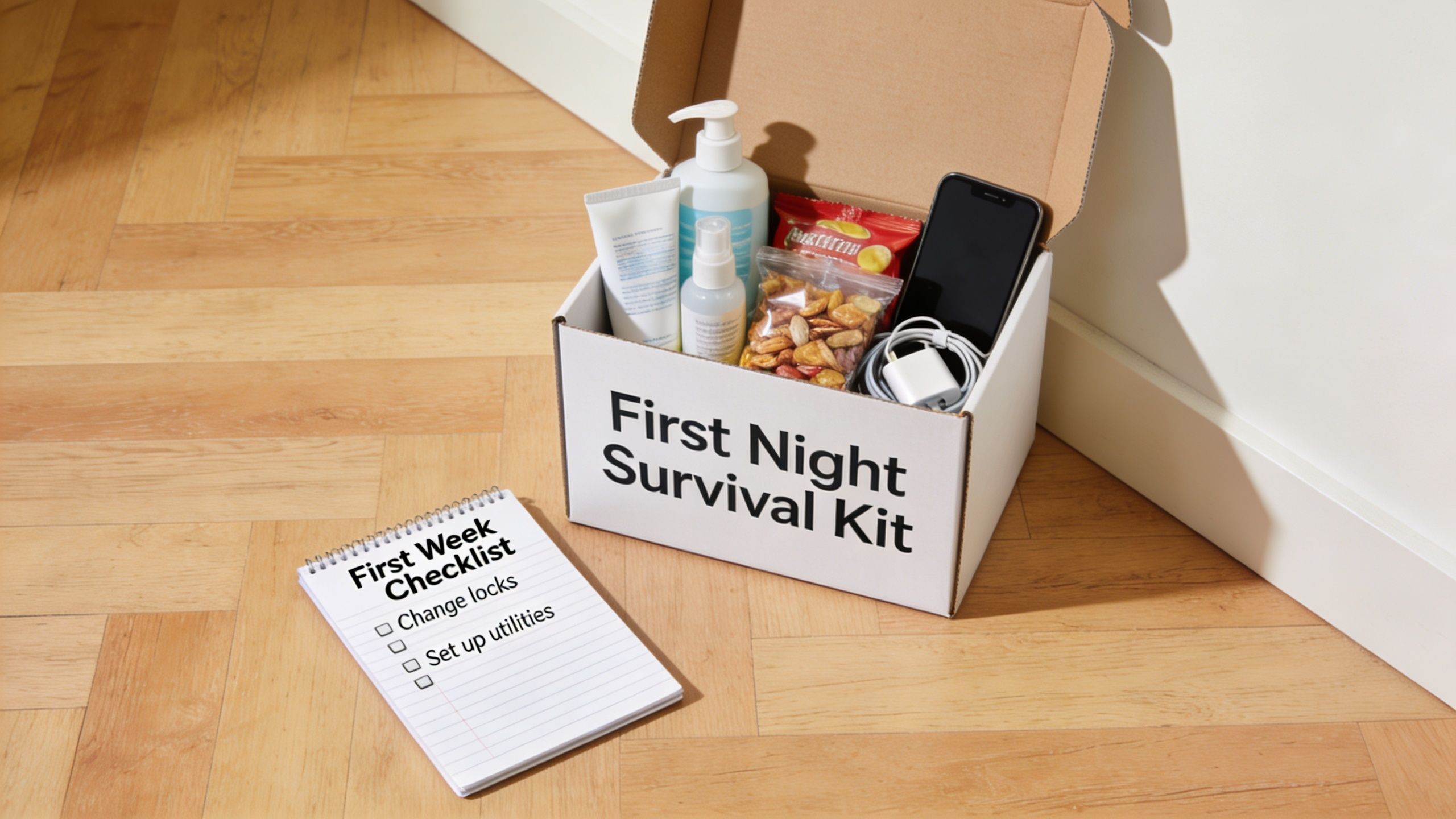
First night box
This box is about comfort and basic function. Nothing fancy.
- Bedding: Duvet, pillows, sheets and a blanket. Even if your bed frame isn't built yet, you'll want clean bedding ready.
- Toiletries: Toothbrush, toothpaste, face wash, shower gel, deodorant and any daily medication.
- Toilet basics: Toilet roll, hand soap and a hand towel.
- Chargers: Phone charger, plug adaptor if needed, and a power bank if you've got one.
- Drinks setup: Kettle, tea, coffee, sugar, mugs and bottled water.
- Easy food: Bread, fruit, snacks, and something simple you don't need a full kitchen to make.
- Cleaning basics: Washing-up liquid, sponge, anti-bacterial spray, bin bags and kitchen roll.
- A small tool kit: Screwdriver, tape measure, Stanley knife or scissors, and a torch.
- Important paperwork: ID, house documents, tenancy paperwork, and any numbers you might need quickly.
Pack this box last and unload it first. You'll use nearly everything in it within an hour of arriving.
First week essentials
After the first night, your goal changes. You're not just surviving now. You're trying to make daily life run properly.
Here's what belongs on the first-week shopping list:
- Kitchen basics: One saucepan, one frying pan, sharp kitchen knife, chopping board, spatula, wooden spoon, plates, bowls, glasses, mugs, cutlery, dish rack and food containers.
- Bathroom setup: Bath towels, bath mat, shower curtain if needed, toilet brush, plunger and basic storage caddy.
- Cleaning gear: Hoover, broom, mop, bucket, microfibre cloths, laundry detergent and washing basket.
- Simple furniture: A bed, somewhere to sit, and at least one usable table or work surface.
- Lighting: Spare bulbs and a lamp if ceiling lights aren't enough.
- Safety items: Smoke alarm check, first aid kit and a fire extinguisher if the property doesn't already have one.
- Everyday practicals: Extension leads, batteries, door mat, coat hooks and a shoe tray.
If you want a sensible cross-check before moving day, these tips for a smooth moving day line up well with what people forget under pressure.
What can wait
A lot can wait, and you'll save yourself stress by admitting it.
- Decorative cushions: Nice later. Useless on day one.
- Matching storage jars: Buy them after you know your cupboard sizes.
- Extra dining chairs: Hold off unless you're hosting immediately.
- Fancy small appliances: Air fryer, stand mixer and coffee machine can come later if you'll use them.
- Wall décor: Live in the space first. You'll make better choices.
Budgeting and Prioritising Your New Home Purchases
You get the keys, open three shopping tabs, and suddenly a “few basics” turns into a four-figure basket. That is how new-home budgets get wrecked.
Set your limit before you buy a single extra thing. Keep enough cash back for the boring costs that always show up after move-in, such as meter readings, replacement locks, missed measurements, and small fixes you did not spot on viewing day. As noted earlier, moving itself is expensive. Household purchases can take a big bite out of the total, which is why this section is where you control the damage.
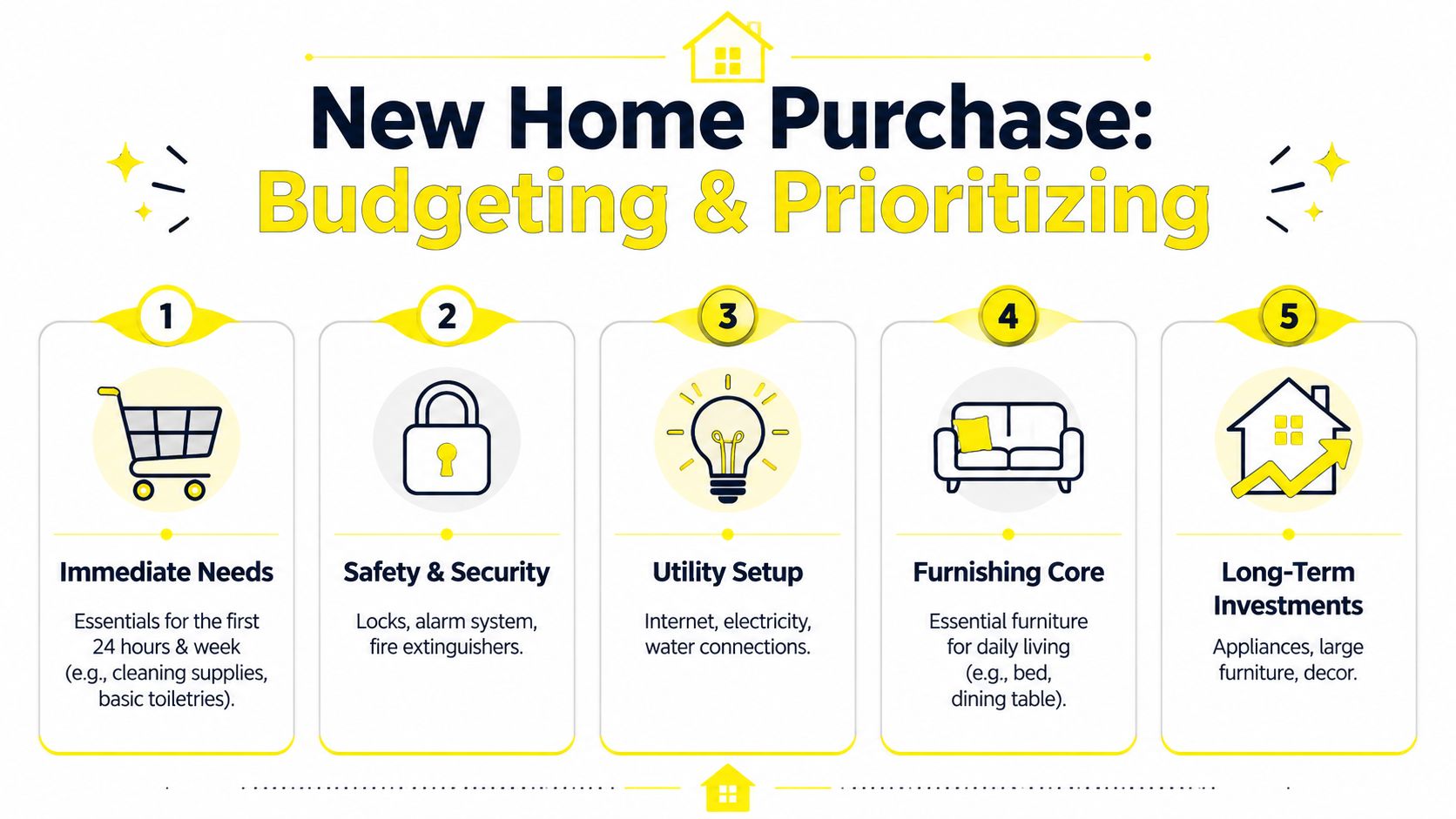
Use a three-tier buying rule
A long shopping list makes everything look urgent. It is not. Sort purchases into three tiers and stick to them.
| Tier | What belongs here | Buying rule |
|---|---|---|
| Need now | Bed, bedding, basic cookware, cleaning kit, towels, lighting | Buy before move-in or in the first 48 hours |
| Need soon | Sofa, wardrobe, storage units, dining table, desk | Buy after measuring properly and using the space for a week or two |
| Can wait | Decorative pieces, occasional furniture, niche appliances | Leave alone until the home works day to day |
This method works because it stops you buying for a fantasy version of the house. Buy for the life you are living in it.
Spend properly on function, not excitement
Put more of the budget into items that affect daily comfort and get used constantly. A good mattress, decent bedding, reliable pans, sturdy storage, and cleaning tools are worth paying for because you notice bad versions every single day.
Cut back hard on items with easy temporary substitutes. Side tables can be crates. A guest bed can wait. Fancy hallway furniture can wait. Decorative storage can definitely wait until you know what needs storing.
A room that functions beats a room that looks finished.
Shop after you sort
This is the part people skip, and it is why they overspend.
If you have not decluttered first, you do not know what storage you need, what furniture still fits your routine, or what duplicates are hiding in boxes. Sort your belongings, decide what is coming into the house now, and park the rest elsewhere before buying more. If you need a practical method, start with this guide on the best way to declutter your home.
Short-term storage helps here because it gives you breathing room. You can keep useful but non-urgent items out of the way, furnish the rooms you use, and avoid panic-buying shelves, drawers, and cupboards for stuff that may not even stay. If you want a benchmark before booking, compare providers and compare self storage costs and sizes.
Track every purchase in one simple list
Do not build a complicated spreadsheet unless you enjoy that sort of thing. A basic list is enough.
Use four columns:
- Item
- Room
- Priority
- Bought or waiting
Then use one rule. If the item does not solve an immediate function, improve daily comfort, or fix a clear storage problem, leave it for 48 hours. Half of your “urgent” buys will stop feeling urgent once the boxes are open and the room is in front of you.
Declutter and Plan with Temporary Self-Storage
Before buying more, deal with what you already own.
This is the bit people skip because buying feels productive and sorting feels boring. But sorting first is what keeps a new home from turning into a holding pen for old clutter. UK data indicates that 28% of households have more possessions than storage space, and temporary self-storage used for decluttering can reduce on-site packing time by 40% and potentially save £300 to £500 on van hire through a more organised move, according to the Self Storage Association UK.
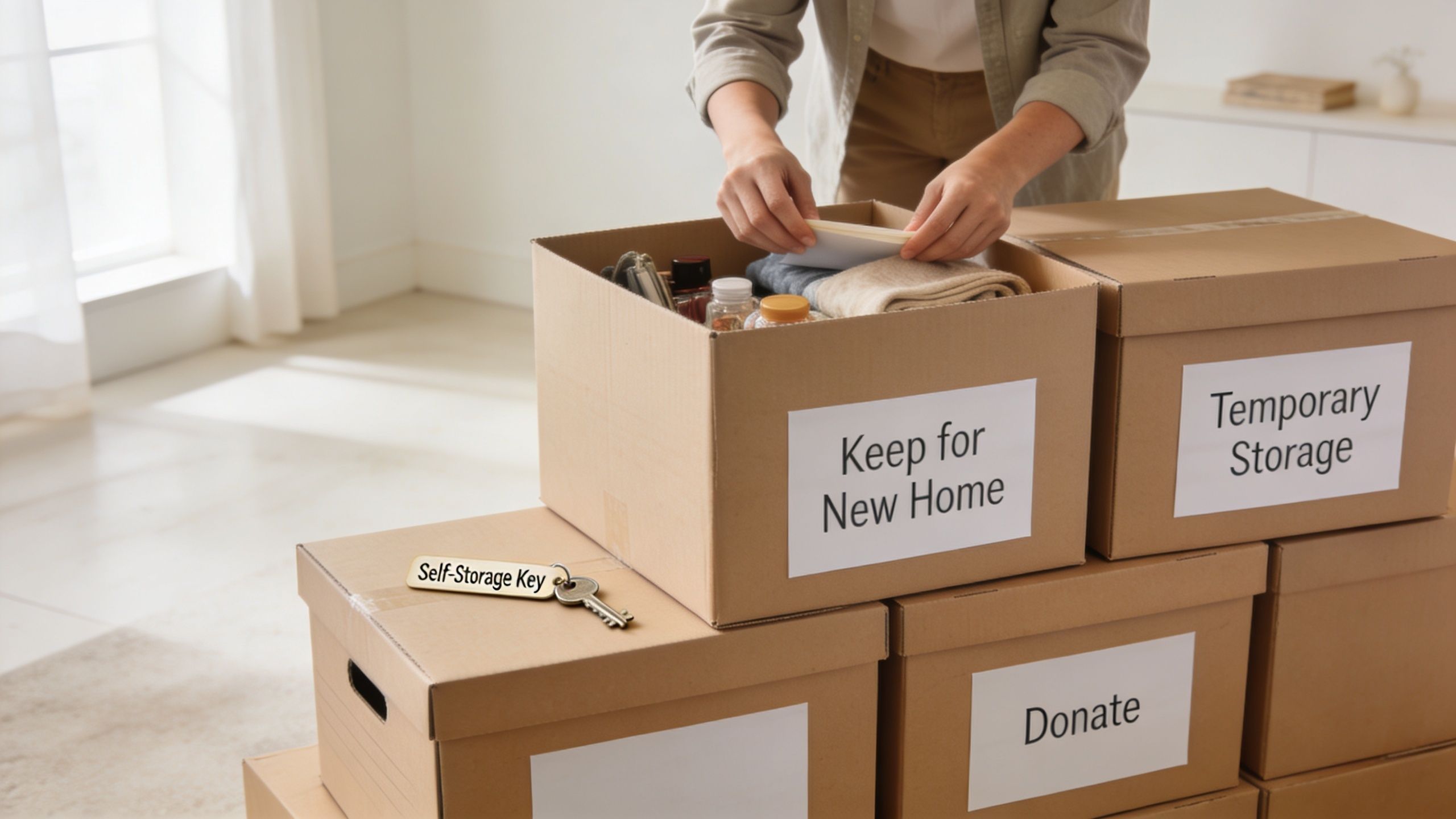
Use storage as a sorting zone
Storage is often considered for excess. I think it's better used as decision space.
When you move, you've usually got four categories of belongings:
- Use immediately
- Keep, but not now
- Unsure
- Get rid of
The mistake is dragging all four categories into the new house. That clogs every room from day one. A short-term storage unit lets you move the “keep, but not now” and “unsure” piles out of the way so you can organise the home around what you use.
That includes things like:
- Bulky furniture that might work later but not straight away
- Seasonal items such as winter coats, garden kit or Christmas boxes
- Duplicate household goods you haven't decided to keep, sell or donate
- Archived paperwork and sentimental boxes that don't need immediate access
Declutter before you shop
If you don't know what's staying, you can't buy properly. You'll end up buying storage furniture for clutter instead of buying the right items for the room.
Use this sequence:
- Empty one category at a time. Clothes first, then kitchenware, then books, then decorations.
- Be strict about duplicates. You do not need five chopping boards and three half-working desk lamps.
- Measure your new rooms before deciding which large items make the cut.
- Move non-essential keepers out of the way so the new home stays manageable.
- Buy only after the space is clear enough to show what's missing.
If you need a practical method to get started, this guide on the best way to declutter your home is worth using as a working checklist.
Pick the right kind of unit
A tiny locker and a drive-up container solve different problems. Choose based on what you're storing, not on guesswork.
| Storage need | Best fit |
|---|---|
| Boxes, paperwork, décor, smaller household items | Indoor room |
| Large furniture, white goods, bulky move-overflow | Drive-up container |
| Items you need to load and unload quickly | Ground-level access |
| Items you won't touch often | Secure short-term space with simple access |
If you're trying to judge what size might make sense before booking, this guide to compare self storage costs and sizes helps you think through the practical side.
Storage works best when it removes pressure. If a room isn't ready, don't force the contents into it.
A calm move is nearly always a cheaper move. You make fewer panic purchases, fewer rushed layout decisions, and fewer expensive mistakes.
The Ultimate Room-by-Room New Home Checklist
Often, people overbuy at this stage. A room looks empty, so they assume they need to fill it. You don't. You need to make it useful.
If you want a broader planning list to support the room-by-room shopping process, keep this moving house packing checklist handy while you unpack and assess what's missing.
Kitchen
The kitchen becomes functional fast if you buy the right basics. It becomes cluttered even faster if you buy gadgets before you've cooked a single proper meal in the house.
Core essentials
- Cookware you'll use: One saucepan, one frying pan, one baking tray.
- Prep tools: Sharp chef's knife, paring knife, chopping board, colander, grater.
- Cooking utensils: Spatula, tongs, wooden spoon, ladle and can opener.
- Eating basics: Plates, bowls, mugs, glasses and one set of cutlery per person plus a little extra.
- Cleaning setup: Washing-up bowl if needed, washing-up liquid, sponge, tea towels, bin and liners.
- Food storage: Reusable containers and a few freezer-safe bags.
- Small appliance minimum: Kettle and toaster. A microwave helps if you rely on quick meals.
Nice-to-haves
- Coffee machine: Buy it if you know you'll use it daily.
- Air fryer: Great for some households, pointless for others.
- Stand mixer: Brilliant if you bake often. Dead weight if you don't.
- Matching jars and organisers: Wait until you know the cupboard layout.
- Extra serving pieces: Trays, platters and speciality cookware can come later.
Living room
Your living room needs somewhere to sit, some light, and a way to keep cables and clutter under control. That's enough to begin with.
Core essentials
- Seating: Sofa, armchair, or even temporary folding chairs if you're waiting for the right piece.
- Lighting: Floor lamp or table lamp if overhead lighting feels harsh.
- Window covering: Curtains or blinds for privacy.
- Cable management: Extension lead, surge protector and clips or ties.
- A practical surface: Coffee table, side table, or temporary nesting table.
- Soft basics: Throw and a few cushions if they improve comfort, not just appearance.
Nice-to-haves
- Large rug: Worth considering, but wait until the main furniture is in place.
- Media unit: Useful only if you need storage or TV support.
- Decorative shelving: Better once you understand how you use the room.
- Statement chair or ottoman: Add later if there's real space for it.
- Wall art and mirrors: Live with the walls first. You'll hang fewer regrets.
If a room is still full of boxes, don't buy décor for it. Clear the room, then style it.
Bedroom
The bedroom should be sorted quickly because poor sleep makes every part of settling in harder. This is not the room to leave half-finished.
Core essentials
- Bed and mattress: Priority one. If budget forces a choice, protect the mattress quality over the bed frame style.
- Bedding: Mattress protector, fitted sheets, duvet, pillows, pillowcases and spare set of bed linen.
- Blackout solution: Curtains, blinds or temporary paper blinds if privacy and sleep matter.
- Clothes storage: Wardrobe, chest of drawers, rail or even neatly organised boxes for the short term.
- Laundry basics: Washing basket and somewhere sensible for worn clothes.
- Bedside practicals: Lamp, phone charger access and a small surface for essentials.
Nice-to-haves
- Bedside tables: Helpful, but crates or stools work short term.
- Full-length mirror: Useful once clothes storage is organised.
- Bench or blanket box: Nice for larger bedrooms, unnecessary for smaller ones.
- Extra decorative pillows: Skip them unless you enjoy making the bed that way.
- Matching furniture sets: Don't buy the whole showroom look out of convenience.
Spare bedroom or home office
This room often becomes a dumping ground. Don't let it. Give it one job first.
Core essentials
If it's a guest room:
- Usable bed or sofa bed
- Basic bedding
- A lamp
- One clear storage option for guests' bags or clothes
If it's a home office:
- Desk with enough surface area
- Supportive chair
- Lamp or task light
- Extension lead and cable management
- Simple storage such as a filing box, drawers or shelf
Nice-to-haves
- Printer station
- Bookshelves
- Day bed
- Decorative storage baskets
- Accent chair
Keep this room flexible if you're still deciding. Buying too specifically too early usually means buying twice.
Bathroom
Bathrooms are small, which is exactly why they get messy quickly. Buy for access and hygiene first.
Core essentials
- Toilet roll and holder if missing
- Hand soap
- Bath towels and hand towels
- Shower curtain and liner if needed
- Bath mat
- Toilet brush and plunger
- Storage caddy or shelf for daily-use items
- Cleaning products suitable for bathroom surfaces
Nice-to-haves
- Matching accessories set
- Decorative mirror
- Extra shelving
- Aesthetic dispensers
- Spa-style extras such as bath tray or luxury robes
Hallway and utility bits people forget
These are the purchases people remember too late.
Core essentials
- Door mat
- Hooks for coats and bags
- Shoe rack or tray
- Torch
- Basic tool kit
- Spare bulbs
- Batteries
- Step stool
- Bins for the rooms that need them
Nice-to-haves
- Console table
- Decorative mirror
- Umbrella stand
- Bench seating
- Fancy hallway storage furniture
A simple buying filter
Before adding anything to basket, ask three questions:
- Does this solve a problem I already have in the house?
- Do I know exactly where it will go?
- Will I still want it after I've lived here for two weeks?
If the answer is no to any of those, hold off.
Beyond the Basics Furnishing for the Future
Once the home works, you can start making it better.
Longer-term purchases matter for your space. Sofas, dining tables, wardrobes and larger storage furniture shape how the house feels day to day, so they're worth more thought than a late-night online order. Measure properly. Check delivery access. Think about how you use the room, not how a showroom styled it.
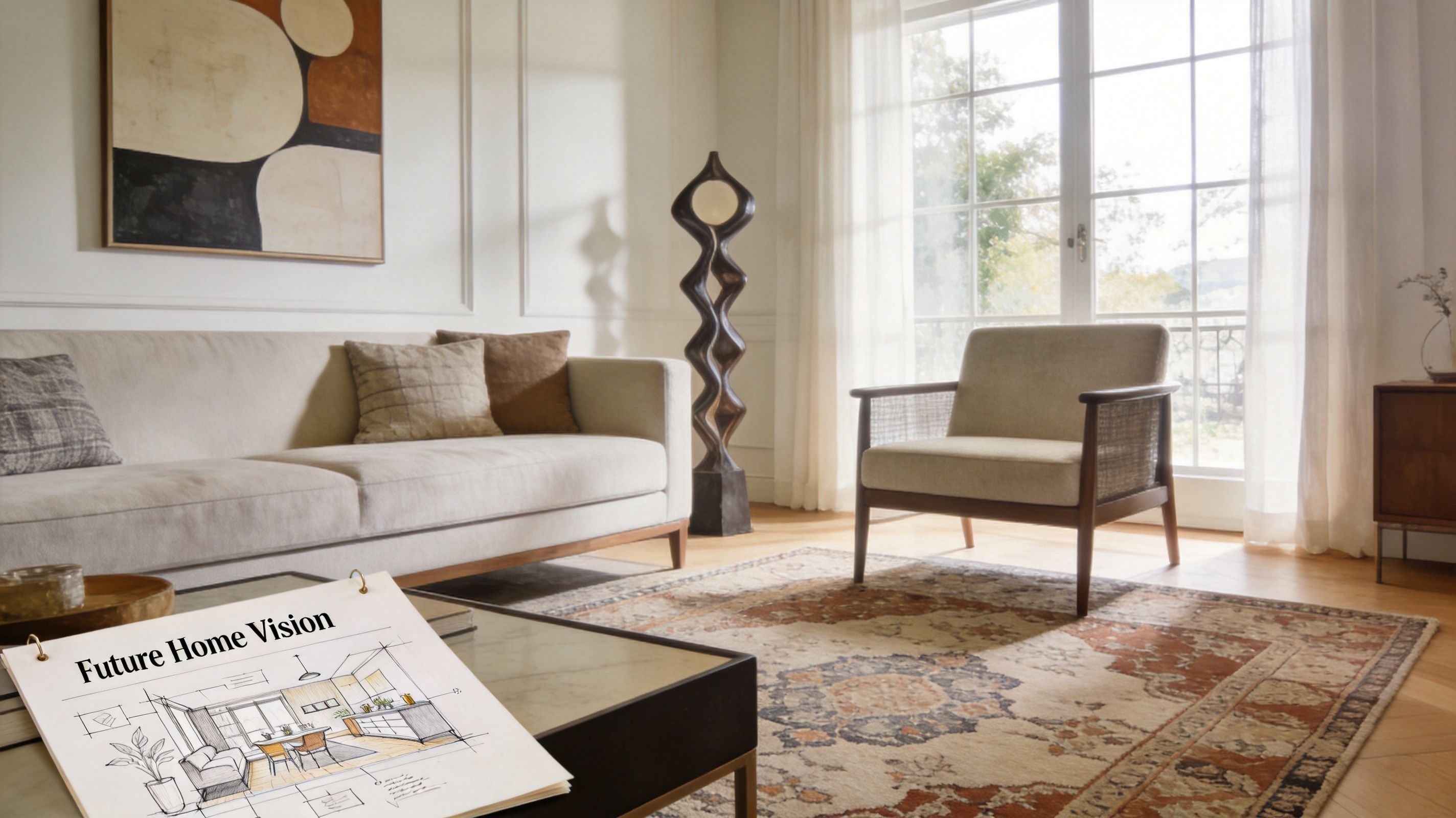
Buy big furniture with a long view
For major pieces, use a stricter standard than “I like it”.
- Sofa: Sit on it if you can. Check seat depth, fabric durability and whether the size makes sense for the room.
- Dining table: Buy for normal life, not Christmas. Extendable tables are often the sensible middle ground.
- Wardrobe: Prioritise practical internal layout over appearance.
- Storage furniture: Choose pieces that solve a real storage issue, not just fill a wall.
A good rule is to spend more on pieces that get daily use and less on items that are mostly visual.
Think about future-proofing
A lot of buyers now want more than furniture. They want a home that runs better.
In the East Midlands, 66% of new homeowners invest in smart home upgrades post-move, spending £850 on average, and that marks a big shift from a decade ago when 12% prioritised electronics, according to this new home checklist reference. That doesn't mean you need every connected gadget going. It means people are choosing practical upgrades that improve comfort and control.
Useful smart buys include:
- Smart thermostat for easier heating control
- Video doorbell for convenience and security
- Smart bulbs in key rooms
- Smart plugs for lamps and occasional appliances
- Basic alarm or camera setup if security is a priority
Buy tech that removes friction from daily life. Skip tech that gives you another app and another charger.
Leave room to change your mind
The first version of your home doesn't need to be the final version. In fact, it shouldn't be.
Live in the rooms. Notice where bags get dropped, where cables collect, where lighting feels wrong, where storage falls short. Those observations are worth more than any trend list. The best homes are usually shaped slowly by use, not rushed into place in one expensive month.
How Self-Storage Makes Your New Home Setup Seamless
A storage unit is useful long after the decluttering stage.
It gives you a buffer. That matters when deliveries arrive before a room is ready, when you're decorating in stages, or when you've bought a larger item but don't want it sitting in the hallway for two weeks. Keeping that overflow out of the house protects your momentum. You can unpack one room properly instead of tripping over three unfinished ones.
Where storage helps most
- Furniture deliveries: If your timing is awkward, a unit gives you a place to hold larger items until you're ready.
- Decorating projects: Keep furniture and boxes out of the way while you paint, lay flooring or sort built-in storage.
- Room-by-room setup: Store items for the guest room, office or dining room until those spaces are ready.
- DIY and tools: Keep equipment secure and out of your living space while work is ongoing.
There's also a mental benefit. A clear room is easier to organise than a room full of “I'll deal with that later” piles. Temporary storage gives you time to make better decisions about layout, furniture and what belongs in the house.
If you're considering that route, it helps to look at the practical options for self-storage units before moving day rather than after you're overwhelmed.
You don't need to buy everything at once, and you definitely don't need to keep everything in the house while you're still working it out. The smoothest moves usually come from having a little extra space at exactly the right moment.
If you want a simpler, less stressful move, Container Self Store gives you that breathing room. With flexible storage options in Nottingham and Nottingham, it's a practical way to hold furniture, boxes, household overflow or business items while you get organised properly. Use it to declutter before the move, create a buffer during unpacking, and set your new home up at a pace that makes sense.