

Feeling overwhelmed by the sheer amount of stuff in our homes is practically a national pastime here in the UK. But reclaiming your space doesn't have to be some monumental, soul-crushing task. The secret to finding the best way to declutter your home is picking a method that actually clicks with your personality, turning what feels like a huge project into a series of small, satisfying wins.
Finding the Right Decluttering Method for Your Home

The temptation is to dive straight in, pulling things out of cupboards and creating an even bigger mess. But hold on. I’ve seen it time and again: without a clear plan, motivation fizzles out fast, and you’re left feeling defeated. The key to decluttering for good is choosing a strategy before you touch a single item.
Forget trying to replicate a sterile show home from a magazine. The real goal is to create a space that feels calm, functions brilliantly for you, and is easy to maintain. It’s about more than just tidying; it’s about understanding why the clutter built up in the first place, from sentimental attachments to just not having the right systems.
Choosing Your Decluttering Strategy
There's no single "best" method that works for everyone. Some of us thrive on a weekend-long, high-intensity blitz, while others need a slower, more measured approach to avoid feeling overwhelmed. A great starting point is to explore different philosophies to see what clicks, like these 10 Pro Methods to Declutter Your Home for Good.
To help you decide, here’s a quick rundown of the most popular approaches I see people have success with.
| Method | Best For | Key Principle | Time Commitment |
|---|---|---|---|
| The KonMari Method | Those seeking a mindful, whole-home reset and who connect emotionally with their belongings. | Sort by category, not location. Keep only what "sparks joy." | High (can take several days or weekends). |
| The Four-Box System | Practical, decisive people who prefer a room-by-room approach and clear, simple rules. | Sort every item into one of four boxes: Keep, Donate/Sell, Store, or Bin. | Medium (can be done one room at a time over several weekends). |
| The 15-Minute Rule | Busy individuals, procrastinators, or anyone who feels easily overwhelmed by big projects. | Tackle one tiny area (a single drawer or shelf) for 15 minutes every day. | Low (short, daily bursts that build momentum over time). |
Ultimately, the best strategy isn't the most famous one: it's the one you'll actually do.
The most effective strategy is one you can stick with. Whether you dedicate a whole weekend or just a few minutes each day, consistency is what will deliver a tidy, more organised home.
By taking a moment to choose your path now, you're setting yourself up for success. You’re turning a vague, stressful idea ("I need to declutter") into a concrete, manageable plan.
How to Prepare for a Successful Declutter
Ever tried to declutter on a whim, only to end up sitting on the floor, surrounded by piles of stuff, feeling more stressed than when you started? We’ve all been there. Diving in without a bit of prep is a surefire way to create an even bigger mess and lose motivation fast.
Getting your head and your space ready before you touch a single thing is the secret to a calm, productive, and lasting declutter. It’s about switching from a vague, overwhelming thought like "I have to sort this house out" to having a clear, actionable plan. Let's get you set up for success.
Define Your 'Why'
Before you even think about bin bags, take a minute for the most crucial question: Why are you doing this? Your motivation is the fuel that will get you through the tough decisions and moments of doubt. A strong 'why' makes it so much easier to let things go.
Your reason doesn't have to be life-changing; it just needs to resonate with you.
- Craving a new function? Maybe you’re dreaming of turning that junk room into a home office or a yoga space.
- Tired of the daily chaos? Perhaps you just want to find your keys in the morning without a 10-minute search or make a cup of tea in a clear, organised kitchen.
- Getting ready for a big change? You could be preparing for a house move, downsizing for a new chapter, or making room for a new baby.
- Just want some peace? Sometimes, the goal is simply to create a calm, restful home you can truly relax in.
Think of a specific, tangible outcome. Something like, "I want to be able to host friends for dinner without a frantic, last-minute tidy-up." That powerful mental picture turns a chore into a positive step toward the life you want.
Gather Your Decluttering Toolkit
With your motivation sorted, it’s time for the practical stuff. The last thing you want is to break your flow because you need to hunt for more boxes or a marker pen. Get your simple decluttering kit ready before you start.
You don’t need anything fancy, just the basics:
- Sturdy Boxes: Have a few ready for things you plan to keep, donate, or sell.
- Durable Bin Bags: For general rubbish.
- Labels and a Marker: Crucial for knowing what’s in each box later. Seriously, don’t skip this – you will not remember what’s in that "random" box.
- Basic Cleaning Supplies: A cloth and an all-purpose spray for wiping down shelves and drawers as you empty them.
This simple setup is the backbone of most good sorting methods, including the Four-Box System we’ll get to in a bit.
Get Your Household on the Same Page
Let’s be honest, clutter is rarely a one-person issue, and trying to tackle it can easily cause friction at home. It’s a major stress point in UK households; in fact, 61% of us argue about clutter at least once a month, and for over a third, it’s a weekly squabble. As this study on UK clutter habits shows, these little disagreements can really build up.
To keep the peace, present the declutter as a team effort with a shared reward. Explain your 'why' to your family. Instead of an accusation like, "We have to get rid of all this junk," try framing it positively: "Wouldn't it be brilliant if we could actually find the board games for a family night?"
Give everyone control over their own belongings, with a bit of guidance, of course. A child is far more likely to part with old toys if they feel they are in charge of the decisions. Working together not only halves the workload but also helps everyone build better habits for keeping the house organised down the line.
A Room-By-Room Action Plan Using the Four-Box Method
Alright, you've got your mindset sorted and your supplies at the ready. Now for the satisfying part: actually clearing the clutter. We’re going to use a system I’ve relied on for years because it’s simple, effective, and stops you from just moving piles around. It's called the Four-Box Method.
This approach gives every single item a clear destination, which is the secret to avoiding decision fatigue. For each area you work on, you'll have four designated containers: boxes, bags, or even just marked-out zones on the floor will do.
- Keep: For things you genuinely love, use all the time, and that have a proper home.
- Donate/Sell: Good-quality items you no longer need but someone else will be thrilled to find.
- Store: Think seasonal items (like the big winter duvet) or sentimental things you're not ready to decide on. This is a temporary holding bay, not a black hole.
- Bin: Anything that’s broken, past its use-by date, or simply unusable. Be honest and let it go.
By forcing a definite choice for everything you touch, you sidestep that classic trap of shuffling clutter from one surface to another.
Start Small to Build Momentum
The biggest mistake I see people make is trying to tackle the Mount Everest of clutter first. Don't start with the loft or the garage. You'll burn out before you even get going. The key is to secure a quick, visible win to build confidence and momentum.
Pick a small, low-stakes area. That one 'junk drawer' in the kitchen, the bathroom cabinet, or the console table in the hallway are perfect candidates. These spots are usually filled with stuff we have zero emotional attachment to, making the decisions much easier. Spending just 20 minutes here can make a real, visible difference, and that feeling is incredibly motivating.
When you feel overwhelmed, it's a signal to shrink the task, not abandon the project. This flowchart breaks it down perfectly.
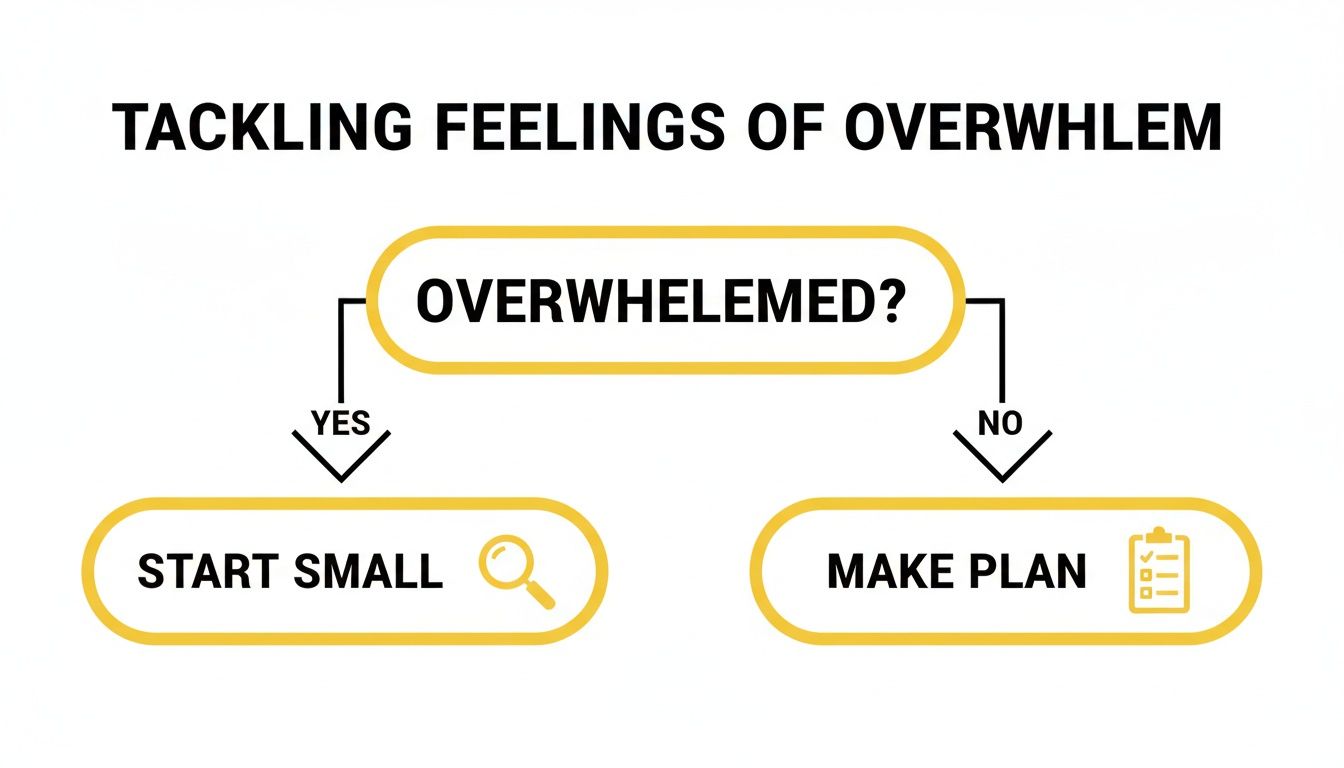
Once you’ve had that first taste of success, you'll feel ready to move on to bigger challenges like the spare room or that jam-packed wardrobe.
Making Decisive, Guilt-Free Choices
This is where the process can grind to a halt. We get paralysed by "what if I need this one day?" To keep the momentum going, you need a few hard-and-fast rules.
Here are the guidelines I always come back to:
- The One-Year Rule: A classic for a reason. For clothes and seasonal gear, if you haven't used or worn it in the last 12 months, it's a prime candidate for the 'Donate/Sell' box.
- The 20-Minute, £20 Rule: If you’re holding onto something "just in case," ask yourself this: could I replace it for less than £20 in under 20 minutes? If the answer is yes, the space it's occupying is probably more valuable.
- The Container Concept: This one is a game-changer. Your cupboards, shelves, and drawers are all finite containers. Once a container is full, you can't add anything new without taking something out first. This simple reality forces you to prioritise what's truly worth keeping.
Your home is for living in, not just storing things. Every item you keep should earn its place by being useful, beautiful, or truly meaningful. If it’s just taking up space out of guilt or obligation, it's time to let it go.
Tackling High-Clutter Zones
With a few small wins under your belt, you’ll be ready to face the clutter hotspots. These areas demand more time and mental energy, but the reward is a space that feels brand new.
The Wardrobe
The wardrobe is often a great place to start your room-by-room plan. The best way is to pull everything out and sort it into categories (jumpers, trousers, dresses). For a deep dive into this process, check out these brilliant tips for decluttering your wardrobe.
The Kitchen
In the kitchen, clutter often comes from duplicate utensils, novelty gadgets that seemed like a good idea, and an army of chipped mugs. Be ruthless. Bin expired food, donate the single-use appliances you never touch, and reclaim your worktops. The goal is to find what you need without an archaeological dig.
What About Sentimental Items?
Ah, the final boss of decluttering. Sentimental items can stop even the most productive session dead in its tracks. My advice is always to tackle these last, after you've built up your 'decluttering muscle' on easier things.
Instead of keeping boxes and boxes of your child’s primary school artwork, pick a few masterpieces to frame. You can photograph the rest to create a digital album that takes up zero physical space. For inherited items, ask honestly if they fit your current life and style. Sometimes, holding onto the memory is more important than holding onto the object itself.
A fantastic strategy is to create a single, dedicated 'memory box' with a strict size limit. This honours your past without letting it cramp your present. For larger sentimental pieces you can't part with but have no room for, a secure storage unit can be the perfect compromise. We share some great container storage ideas in our guide on how to use a self storage unit for exactly this purpose.
Using Self Storage to Make Decluttering Easier
Let's be honest. The biggest hurdle to decluttering isn't usually a lack of desire: it's a lack of space. Trying to sort through years of accumulated belongings in an already cramped room is a surefire recipe for stress. This is where a self-storage unit can be a game-changer, turning an overwhelming project into something you can actually manage.
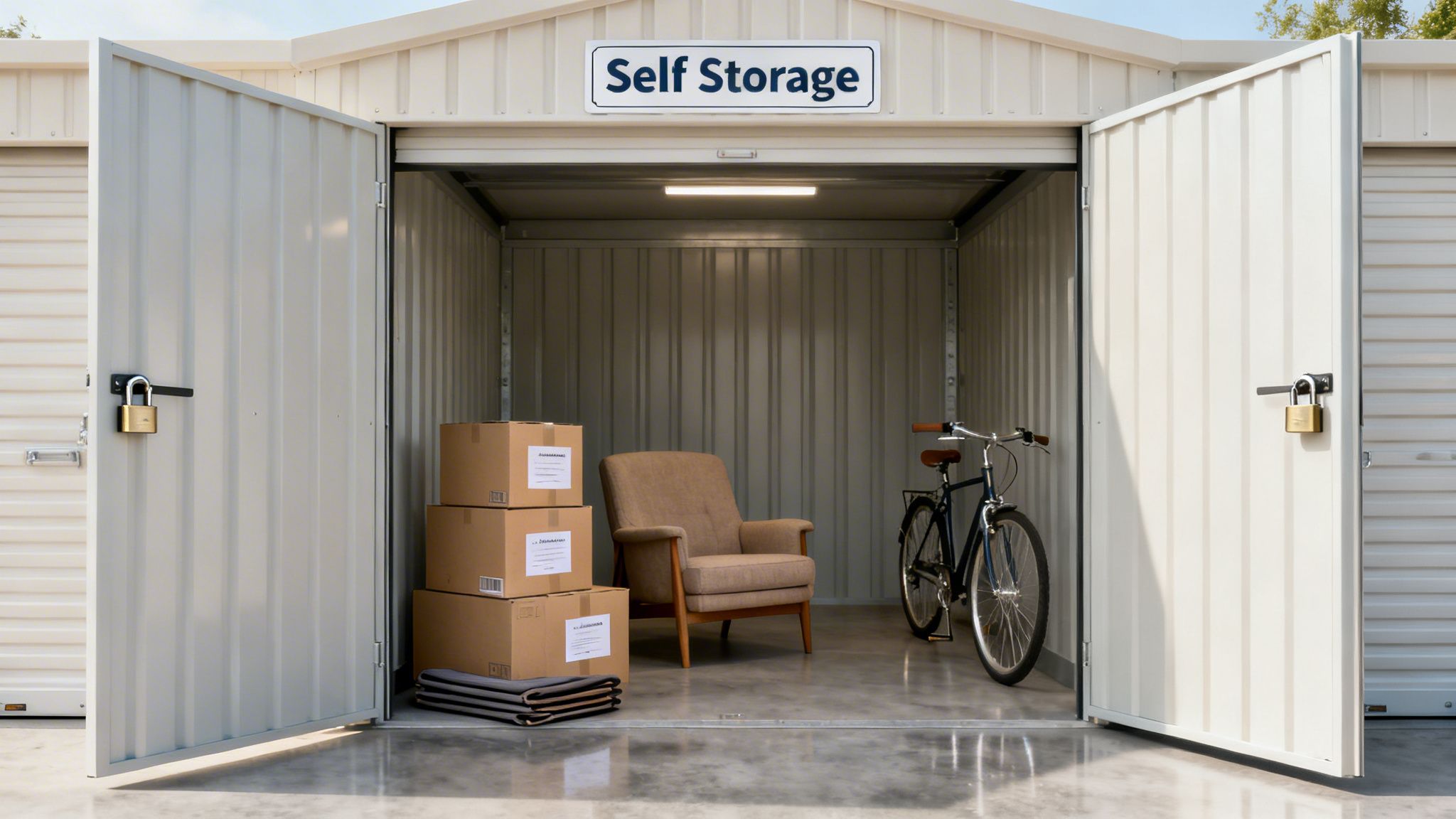
Think of it as creating a 'decluttering half-way house'. By shifting bulky furniture, seasonal gear, or those endless 'maybe' boxes into a secure unit, you instantly create the breathing room you need. This physical space gives you mental space, allowing you to make clear, unhurried decisions without the chaos closing in.
Give Yourself Room to Think Clearly
The only way to declutter properly is methodically, and that’s just not possible when you’re tripping over chairs or can’t even see the floor. A temporary storage unit is like a pressure-release valve. It lets you empty a room almost completely, so you can see the space with fresh eyes and decide what truly deserves to come back in.
This strategy works brilliantly for:
- Bulky Furniture: That inherited armchair or spare bed you're not quite sure about? Move it to storage. It gives you months to see if you actually miss it before making a final call.
- The 'Maybe' Pile: We all have one. For items you’re struggling to let go of, putting them in storage for a set time, three to six months is a good rule of thumb: helps break that emotional attachment. If you haven't needed them or even thought about them, letting go becomes so much easier.
- Seasonal Items: Those giant boxes of Christmas decorations, winter duvets, and garden furniture can all live off-site. This frees up valuable cupboard and loft space for the things you use every day.
Using storage isn’t about hiding your clutter. It’s about giving yourself the time and space to deal with it properly. It turns a frantic weekend rush into a controlled, thoughtful process of curating your home.
How Self Storage Works in the Real World
Self storage is an incredibly flexible tool that fits all sorts of situations, especially when decluttering is part of a bigger life change. The needs might vary, but the goal is always the same, making life a bit simpler. If you're weighing up your options, checking out providers offering temporary storage near me is a great way to find a convenient and secure local solution.
Here are a few real-world examples of how our units provide the perfect fix:
- Students in Nottingham: When term ends, students often have to clear out their rooms. An indoor storage locker is the perfect size for books, clothes, and personal bits, keeping everything safe until the new term starts and saving them from lugging it all back home.
- Tradespeople in Nottingham: A self-employed plumber or electrician needs a secure, accessible place for tools and materials that won't fit in the van. Our drive-up 10ft container units offer ground-level access, making it dead easy to load and unload equipment without filling up the family garage.
- Families in Daventry Preparing to Move: Decluttering before you put your house on the market can make it look bigger and far more appealing to buyers. A 20ft container can hold the contents of a small family home, letting you stage the property properly and get a huge head start on packing.
Choosing the Right Size Unit
Getting the unit size right is key. You don't want to waste money paying for space you don't need, but underestimating can cause a real logistical headache on moving day.
Here’s a quick guide to our most popular options:
| Unit Type & Size | What It Typically Holds | Ideal For |
|---|---|---|
| Indoor Lockers (9 – 25 sq ft) | A good few boxes, a suitcase, student essentials, or small business archives. | Students needing term-time storage or anyone with a few boxes of sentimental items. |
| 10ft Container (approx. 80 sq ft) | The contents of a one-bedroom flat, including some furniture, appliances, and around 50-70 boxes. | Couples downsizing, clearing out a spare room, or tradespeople needing tool and material storage. |
| 20ft Container (approx. 160 sq ft) | The contents of a two or three-bedroom house, with large furniture, white goods, and plenty of boxes. | Families moving house, tackling major renovations, or businesses storing significant stock. |
By picking the right unit, you’re essentially creating an organised, off-site extension of your home. It gives you the control and flexibility to tackle your decluttering plan at a pace that actually works for you, so you can finally get that calm, organised living space you deserve.
Dealing With the Aftermath: What to Do With Your Clutter
Right, you’ve sorted your belongings into piles and made the tough calls. That’s a huge step. But now you’re staring at the ‘Donate/Sell’ and ‘Bin’ piles, and they need to actually leave the house. This is the final, satisfying part of the process: where you reclaim your space for good.
This is also where your hard work can literally pay off. It’s amazing what we hang onto. The average Brit is sitting on around £514 worth of unused stuff, which adds up to a staggering amount of wasted value across the country. And it’s not just about money; clutter affects how we feel at home. Research shows that nearly 50% of homeowners feel too embarrassed by their mess to invite people over. You can read more about the real-world impact of clutter on Organise My House.
Turning Clutter into Cash
Fancy a financial bonus for all your effort? Selling your unwanted items is a brilliant way to top up your bank account. With a little bit of smart prep, you can get a great return on things that were just collecting dust.
Your go-to platforms will be places like Vinted, eBay, and Facebook Marketplace. To get the best results, focus on the details.
- Good Photos are Everything: This is the one thing you can't skip. Find some natural light, use a plain background (a clean wall or a bedsheet works well), and snap photos from every angle. Be sure to capture any nice details or, just as importantly, any flaws.
- Honest and Clear Descriptions: Tell people exactly what they’re getting. State the brand, size, and condition clearly. Little things, like mentioning it's from a smoke-free home, can make a real difference.
- Price It to Sell: Have a quick search for similar items to see what they’re actually selling for. If you price your things competitively from the start, they’ll shift much faster.
Donating Your Items with Purpose
If the thought of selling feels like another job you don't have time for, donating is a fantastic, feel-good alternative. Your old things can be a huge help to UK charities and people in your local community.
Most high streets have charity shops that would be grateful for your pre-loved items, but it’s always worth checking what they accept before you make the trip.
- British Heart Foundation: A great all-rounder, accepting clothes, books, homewares, and even furniture. For bigger items, they often have a free collection service which is a massive help.
- Local Hospices and Shelters: Don’t forget smaller, local organisations. They often have specific needs and rely entirely on community support. An animal shelter, for instance, would be thrilled with your old towels and bedding.
- Book and Media Banks: Keep an eye out for dedicated collection points, often found in supermarket car parks, for any books, DVDs, or CDs you're parting with.
Just remember, the idea is to give an item a useful second life. Only donate things that are clean and in good working order. If it's broken, stained, or damaged, it’s not really a donation: it’s just passing on your rubbish.
Dealing with the 'Bin' Box Properly
Finally, let’s tackle that 'Bin' pile. This isn't just about chucking everything into black bags; disposing of things responsibly is just as important as selling or donating. Our goal is to send as little as possible to a landfill.
Your local Household Waste Recycling Centre (HWRC), or 'the tip' as most of us call it, is your best bet. They are set up to handle a massive range of materials that can’t go into your regular household bins.
- Textile Recycling: Clothes and fabrics that are too worn out to be donated can often still be recycled. Look for textile banks at your local tip or supermarket.
- Electronics (WEEE): Never, ever throw old electronics in the bin. Anything with a plug or a battery, from a broken toaster to an old phone, is classed as WEEE (Waste Electrical and Electronic Equipment) and needs to be disposed of safely. Your HWRC will have a special container for it.
- Hazardous Waste: Items like leftover paint, old batteries, light bulbs, and garden chemicals need special treatment. Check your local council’s website for clear instructions on how to get rid of them safely and legally.
Making these final decisions can be tricky. If you’re left with a significant amount of stuff you want to keep but just don’t have space for right now, a self-storage unit could be the perfect solution. To get an idea of what might work for you, have a look at our guide on what size storage unit you might need.
Keeping the Clutter Away for Good
Right, you’ve done the hard graft. The sorting, the clearing, the organising: it's all behind you. Your home finally has room to breathe, and so do you.
The real challenge, though, isn't what you’ve just done. It’s what you do next. Keeping that hard-won sense of order is the only way to stop that slow, creeping return of clutter. This isn't about another massive clear-out; it's about shifting your mindset and building a few simple, smart habits that make tidiness the new normal.
The 'One-In, One-Out' Philosophy
I can't recommend this enough: adopt the 'One-In, One-Out' rule. It’s brilliantly simple. Every time a new item crosses your threshold, something similar has to leave.
Just bought a new jumper? An old one goes in the charity bag. A new book arrives? One from your shelf gets passed on to a friend. This one simple change forces you to think twice before you buy, stopping those impulse purchases from turning into tomorrow’s clutter. It’s less of a rule and more of a philosophy for keeping what you own in check.
Master the 'Sunday Reset'
There’s a reason the "Sunday Reset" has become so popular: it works. It’s just an hour or two you set aside each week to hit the reset button on your home, stopping tiny messes from becoming a huge, overwhelming problem.
Let's be honest, clutter is a huge source of friction in many homes. In fact, research shows that 61% of UK households row monthly over clutter, often because the job feels too big to even start. A 'Sunday Reset' gives you a clear, manageable structure to work with. If you're curious about how clutter affects UK homes and want more tips, this Compare and Recycle decluttering guide is a great read.
Your own reset could look something like this:
- A quick 15-minute blitz in each room, just putting things back in their proper home.
- Sorting through the week’s post and any lurking paperwork.
- Wiping down kitchen and bathroom surfaces.
- A bit of meal prep for the week ahead to clear out fridge clutter and reduce food waste.
Make this a non-negotiable appointment with yourself. It’s not a chore; it’s the routine that protects your peace and quiet. This is how you get to enjoy a calm, organised home for good, without the constant stress of things piling up.
Your Decluttering Questions, Answered
Even the best-laid plans can leave you with a few nagging questions. It’s completely normal. Over the years, we’ve heard just about every query there is when it comes to decluttering a home, so we’ve put together answers to the most common ones we hear.
How Long Should It Take to Declutter a Whole House?
This is the big one, isn't it? The honest answer is: it depends. The time it takes is tied directly to your home’s size and just how much stuff has piled up over the years.
For a typical three-bedroom house, a realistic pace is to tackle one room each weekend. This spreads the work out over a couple of months, which feels much more achievable. The real secret here is consistency, not speed. Committing to just 15 minutes a day makes a massive difference over time and is the best way to avoid burnout.
I Feel Too Overwhelmed to Start – Where Do I Begin?
Feeling overwhelmed is the number one reason people put off decluttering. When the task feels monumental, the trick is to shrink it right down. Forget about the whole house for a moment. Don’t even think about a whole room.
Start with the smallest, most contained space you can think of. That one junk drawer in the kitchen? A single shelf of a bookcase? Even the glove box in your car counts.
The aim is to score a quick, visible win. It’s amazing how that small success builds the momentum you need to keep going. Set a timer for 15 minutes and focus only on that one tiny area.
How Do I Handle Sentimental Items I Can’t Part With?
Ah, the sentimental items. This is where decluttering gets tough for almost everyone. The key isn't to get rid of everything that holds a memory, but to curate your collection.
Instead of keeping every single piece of your child's artwork from nursery, pick a few absolute favourites to frame. You can then photograph the rest and create a digital album to look back on. This honours the memory without taking over your loft.
Another great strategy is to create a dedicated 'memory box'. Give it a strict size limit. If an item doesn't fit, you have to make a hard choice about what means the most. It helps you keep what's truly precious without letting it become clutter.
If you’ve sorted through your belongings but realise you need a secure, flexible home for seasonal gear, furniture between moves, or those newly-created memory boxes, Container Self Store can help. Find the perfect unit size for your needs and get a free, no-obligation quote today at https://containerselfstore.com.