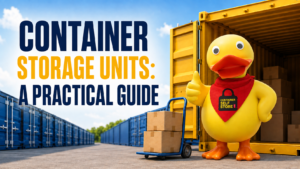
Picture this: an affordable, scalable warehouse you can access any day of the week, but without the headache of a long-term commercial lease. That’s exactly what a modern storage facility business brings to the table. It's so much more than just a place to stash a few things; for countless businesses, it’s a secret weapon for flexible, smart growth.
Why a Storage Facility Is Your Next Strategic Asset
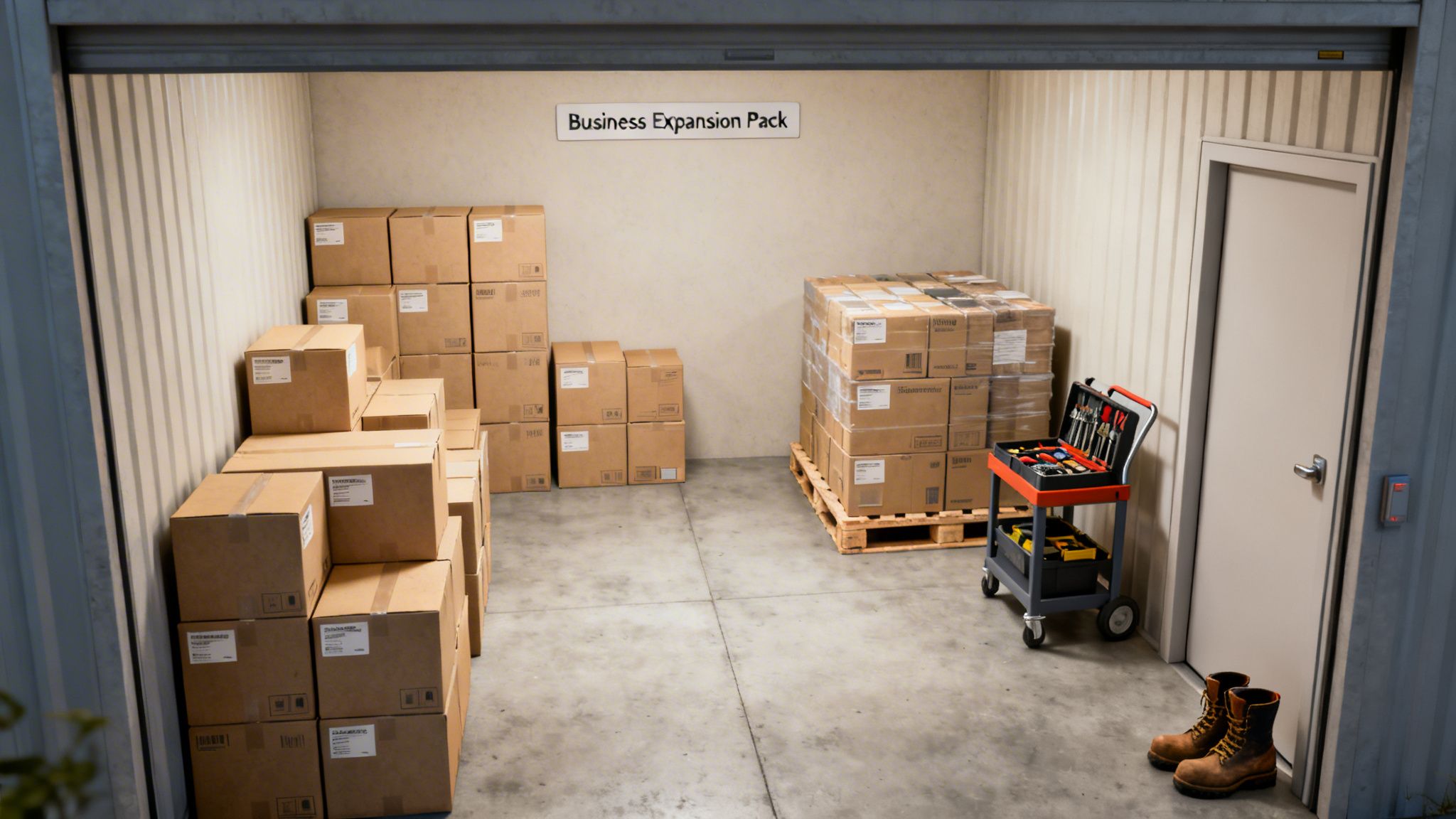
When most business owners and tradespeople think about commercial space, their minds jump to long leases, hefty overheads, and terms that feel set in stone. A good storage facility flips that script entirely. It's best to stop thinking of it as a dusty old cupboard for your overflow and start seeing it as a 'business expansion pack' you can activate on demand.
This kind of flexibility is a massive advantage. Are you an e-commerce seller with stock levels that yo-yo throughout the year? A tradesperson who needs to grab tools and materials at the crack of dawn? Or a growing business that needs to stay nimble? Self-storage provides a genuinely practical solution, letting you scale your space up or down as you need it, without facing any financial penalties.
The Growing Importance of Flexible Business Space
The clamour for this kind of adaptable space is getting louder every year, and the numbers don't lie. The UK self-storage industry has exploded, proving just how vital it has become to the economy. This is especially true for container storage, a favourite for businesses that need easy, ground-level access. You can see a full comparison of how containers stack up against traditional warehouse self-storage.
The sector’s growth has been staggering. By 2024, its annual turnover hit a massive £1.2 billion. That growth is backed by a 7.2% increase in available space, bringing the UK’s total to 64.3 million square feet. Container self-storage makes up a huge slice of this, 39% of the market, and is incredibly popular with tradespeople and online retailers, pushing occupancy rates as high as 90-99%.
This infographic puts the sheer scale of the UK's self-storage sector into perspective.
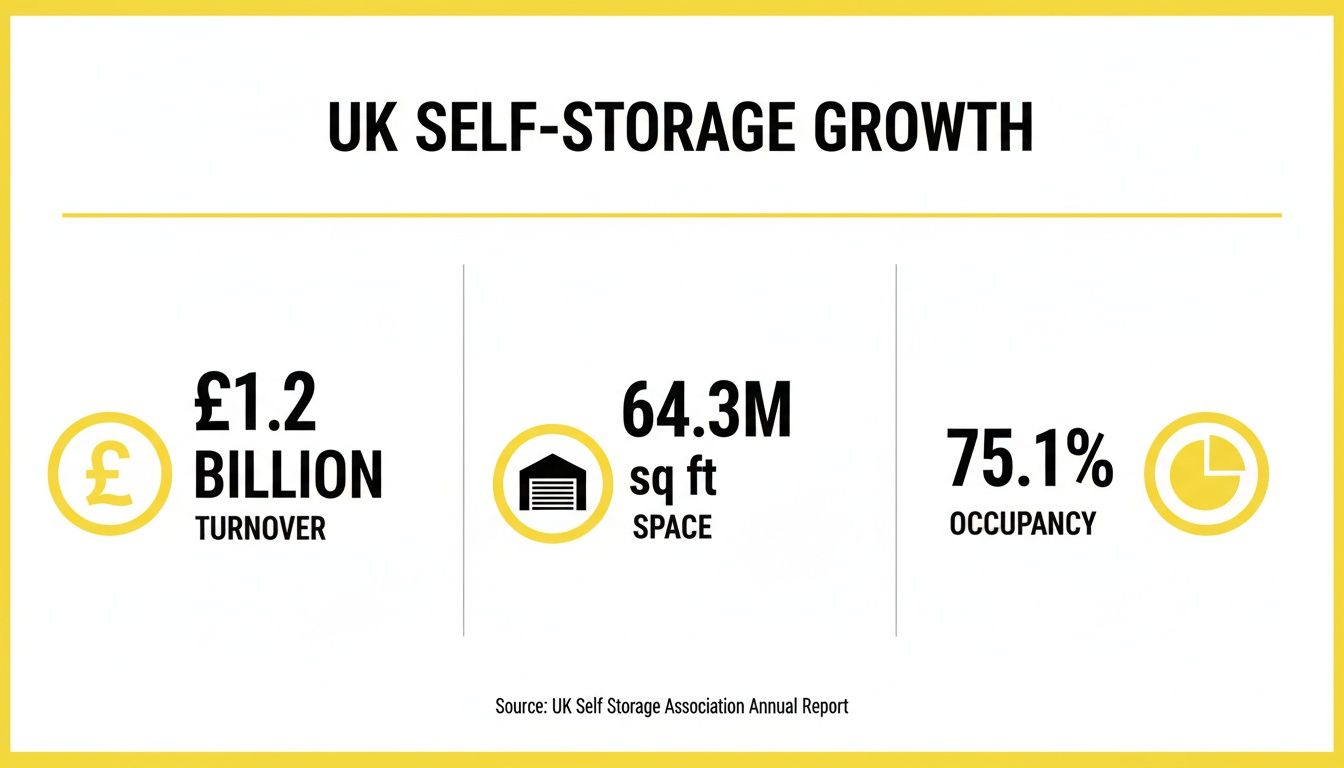
These figures aren’t just numbers on a page. They show a market that’s constantly adapting to what businesses actually need, from simple stock holding to fully kitted-out business pods.
By knocking down the barriers of high costs and long-term commitments, storage facilities level the playing field. They give businesses the physical room to grow, adapt, and compete without being shackled to expensive property contracts.
Of course, for massive operations, more specialised warehousing solutions might be the right fit. For most small to medium-sized businesses, though, the blend of affordability and adaptability offered by a storage facility business is far more practical. It's a tool for smarter logistics, leaner overheads, and a much more efficient way of working.
Matching Your Business Needs to the Right Storage Unit
Choosing a storage unit isn't just about finding a space to dump your stuff. It’s a decision that can either streamline your business or create daily headaches. Picking the wrong unit is like buying the wrong size van – you’ll either be paying for empty air or constantly fighting to cram everything in.
The trick is to find a space that feels like a natural part of your business, not a detached inconvenience. To do that, you need to think about how you’ll use the unit just as much as what you’ll put in it. Let’s walk through the main options to find the perfect fit for you.
Indoor Rooms vs Drive-Up Containers
The first big choice you'll face is between an indoor room and an outdoor drive-up container. They’re built for completely different jobs, and your line of work will almost always point you towards one over the other.
Indoor units are exactly what they sound like: rooms inside a main building. This gives them an added layer of protection from the British weather, making them the only real choice for anything sensitive to damp or extreme temperatures.
Drive-up containers, on the other hand, are all about speed and convenience. You can pull your van right up to the door and start loading or unloading immediately. No corridors, no lifts, no fuss.
Here's a simple way to think about it:
Indoor Storage Rooms (9 sq ft – 200 sq ft): Think of these as a secure, off-site stockroom or archive. They're perfect for e-commerce businesses holding stock like electronics or clothing, or for professionals who need to archive documents that must stay in perfect condition.
Drive-Up Containers (10ft / 20ft): These are the workhorses of the storage world. If you're a plumber, builder, or landscaper, this is for you. They’re designed for you to load heavy tools, bags of cement, and bulky equipment straight from your vehicle.
Which Storage Unit Is Right for Your Business?
To make the choice even clearer, let's put the two options side-by-side. Your decision will likely come down to what you value more: climate protection or instant access.
| Feature | Indoor Storage Rooms (9 – 200 sq ft) | Drive-Up Containers (10ft / 20ft) |
|---|---|---|
| Best For | Document archives, e-commerce stock (e.g., clothing, electronics), excess office furniture. | Tools, construction materials, large equipment, market trader stock, bulky items. |
| Access Method | Internal corridors, often with trolleys provided. Access may involve lifts or stairs. | Direct drive-up access. Park your vehicle right at the door for easy loading. |
| Climate | More stable environment, protected from extreme temperatures and the elements. | Ventilated to prevent condensation, but subject to external temperature changes. |
| Typical User | Online sellers, legal firms, accountants, SMEs needing clean and secure archiving. | Electricians, plumbers, builders, landscapers, and event companies. |
| Size & Scalability | A wide range of smaller sizes available, making it easy to scale up or down. | Fewer size increments (typically 10ft or 20ft), but offers significant volume. |
Ultimately, taking a moment to think about your day-to-day needs will save you a lot of time and money in the long run.
Visualising the Space You Need
It’s tough to guess how much space you’ll need just from looking at a number. Renting a unit that’s half-empty is a waste of money, but trying to operate out of one that’s too small is a logistical nightmare waiting to happen.
Let's put it in real-world terms. A standard 10ft container offers about 80 sq ft of floor space, which is roughly the size of a large garden shed. You could fit the contents of a one-bedroom flat in there, or about 150-200 medium-sized archive boxes. For a tradesperson, that’s plenty of room for tools, supplies, and even a cement mixer.
A 20ft container doubles that to 160 sq ft, giving you the same space as a single car garage. It can hold the contents of a three-bedroom house, making it ideal for businesses holding larger stock, like several pallets of goods or a market trader's entire stall setup.
Getting the unit right is the first step to making off-site storage work for you. Match the type and size to your workflow, and it becomes a cost-effective extension of your business – not just another bill to pay.
By analysing your inventory and how often you'll need to access it, you can make a smart choice from the get-go. For a more detailed look at what's available, exploring a local provider's options for business storage near you is a great next step to find a unit that fits your operational rhythm and budget.
Security and Access: What to Look For to Ensure Your Peace of Mind
When you’re storing valuable stock, tools, or archives off-site, you need absolute certainty that they’re safe. Choosing a storage facility business is about more than just finding space; it’s about finding a partner you can trust with your livelihood. Think of it like a bank for your business assets: you want to know there are multiple layers of protection in place so you can get on with your day without worrying.
This isn't just a feeling; it’s based on real, tangible security measures. The best facilities don't cut corners. They build a secure environment from the perimeter fence right up to the lock on your unit door, giving you the confidence that your gear is protected around the clock.
Core Security Features to Look For
Top-notch security isn't about one single feature; it's a combination of several defences working in concert. As you tour potential sites, keep an eye out for these essential elements. They're non-negotiable.
- Perimeter Fencing and Gated Access: The first line of defence is always a sturdy, high fence. This should be paired with electronic gated access, ensuring only authorised people can get onto the site in the first place.
- Comprehensive CCTV Coverage: Look for cameras. Lots of them. A good facility will have 24/7 CCTV monitoring all key access points, driveways, and corridors. It’s a powerful deterrent and provides a crucial record if an incident ever occurs.
- On-Site Staff Presence: Automation is great, but nothing beats having real people on site. Staff presence during business hours adds a vital layer of security, acting as a visible deterrent and ensuring someone is there to respond to any issues.
- Individual Unit Security: The site itself might be secure, but your unit is your personal vault. Insist on solid steel construction and a facility that requires you to fit your own high-security lock. You should be the only person with a key.
A truly secure site makes you feel safe from the moment you drive through the gate to the second you snap the lock shut on your unit. Every detail should tell you that your assets are being looked after properly.
If you’re interested in the technology behind modern security, it’s worth reading up on access control for business security to see how these systems work.
Why 7-Day Access is a Game Changer
For any business owner, flexibility is key. The standard 9-to-5 working week rarely applies anymore. A plumber might need to grab materials on a Sunday for an early Monday morning job, or an online retailer might be packing orders late on a bank holiday to keep up with demand.
This is precisely why 7-day access has gone from a nice-to-have to an absolute must. A storage facility that locks you out over the weekend or after 5 pm can quickly become a major headache, disrupting your workflow and costing you valuable time.
When you're comparing options, make sure to ask about access hours. A provider that offers access seven days a week gets it: they understand that a business runs on its own schedule. It shows they're set up to help you, not hold you back. And while the facility provides security, don't forget your own protection. It’s wise to explore contents insurance for storage units to ensure your goods are fully covered, just in case.
Getting the Price Right: Contracts, Costs, and Dodging Hidden Fees
When you're running a business, the last thing you need is an unexpected bill landing on your desk. The price you’re quoted for storage should be the price you actually pay, but some contracts are littered with hidden costs that can quickly turn a good deal sour.
Getting to grips with pricing isn't just about finding the cheapest rate; it's about finding a transparent storage facility business that works with you, not against you.
The first thing you need to understand is the difference between a rigid, long-term lease and a flexible rolling contract. A fixed-term lease might look tempting with a lower monthly price, but it can become an expensive liability if your business needs change. Think of a landscaper during a quiet winter or an online retailer after the Christmas rush, being locked into a space you don't need is just burning cash.
Fixed-Term Leases vs Flexible Rolling Contracts
This is where a flexible, rolling contract really comes into its own. It’s the agile approach that modern trades and businesses thrive on. Usually billed monthly, this model lets you scale your space up or down as your workload dictates, without facing any penalties.
Land a big job and need to stockpile materials? No problem, just upgrade your unit for a month or two. Heading into a quieter period? You can easily downsize and cut your overheads. This ensures you’re only ever paying for what you genuinely use, which is just smart cash flow management.
A good storage partner won't try to catch you out. They'll offer clear, all-inclusive pricing and a straightforward contract, so you can focus on running your business, not poring over the small print.
The Critical Questions to Ask Before You Sign
To make sure there are no unwelcome surprises down the line, you need to ask some direct questions before committing. Any trustworthy provider will be happy to give you clear answers. Don't feel awkward about digging into the details: it’s your money, after all.
Here are the key things to clarify:
- What's the notice period? You need to know exactly how much warning you have to give to move out. A business-friendly facility will usually just ask for a reasonable notice, like one month.
- Is insurance compulsory? Most places will insist your goods are insured. Ask if they have their own policy you can join or if you need to sort it yourself. You’ll also want to know the minimum cover they require.
- Are there any extra charges? This is where you uncover hidden fees. Ask about everything: high-security padlocks, access outside of standard hours, or charges for them to accept deliveries for you.
- What does the price actually include? Get them to confirm if the quote includes VAT and all service charges. An "all-in" price makes budgeting a whole lot simpler.
Finding a provider with honest, simple pricing is every bit as important as finding a secure and convenient location. It builds trust and turns the relationship into a proper partnership, one that helps you manage costs and grow your business without the financial headaches.
Why the Location of Your Storage Unit Matters More Than You Think
Let’s be honest, the best storage unit in the world is a complete waste of time if it's stuck in the wrong place. We often focus on size and price, but the location of your storage facility business isn't just a pin on a map. It's a choice that weaves itself into your daily routine, affecting everything from your fuel budget to your stress levels.
Pick a site that’s a pain to get to, and you’re signing up for hours of wasted travel every week. For any tradesperson or business juggling stock, tools, or a team on the move, that’s a killer. A poorly placed unit quickly becomes a bottleneck, turning a simple stock run into a frustrating chore. That lost time is lost money, plain and simple.
On the other hand, get the location right, and the unit becomes a seamless part of your operation. It’s less of a detour and more of a tactical pit stop that helps your entire day run like clockwork. Before you even think about signing a contract, you need to be realistic about how a facility’s location will fit into the real-world map of your business.
Getting Close to the Action: Major Transport Links
Think about the roads you use every single day. For most of us working across the East Midlands, that means the big arteries like the M1, A52, or A45. Finding a storage facility that’s just a couple of minutes from one of these main routes is a game-changer. It means your team can grab what they need and get moving without battling through congested town centres or navigating winding country lanes.
This is more than just a minor convenience; it’s about pure, practical efficiency. Shaving 15-20 minutes off each trip might not sound like a lot at first. But if you’re visiting the unit daily, that adds up to hours of saved labour and a noticeable drop in your fuel bill every single week.
A well-connected location delivers real-world advantages:
- Less Wasted Travel: Spending less time in traffic directly translates to more time on the job, fitting in that extra client, or simply finishing the day on time.
- Lower Fuel Bills: Shorter, faster routes mean less money poured into your fuel tank. For a business running several vans, these savings are substantial.
- Better Agility: Need to respond to an emergency call-out or make a last-minute change of plans? Being near a major road lets you react faster and keep customers happy.
Choosing a storage facility near a major motorway or A-road is like giving your business a permanent head start every single morning. It directly cuts waste and boosts your bottom line.
Mapping Out Your Own Territory
The "perfect" spot is different for everyone. To find yours, you first need to get a clear picture of your own "operational footprint." Where are your team travelling to and from most often? Pinpoint your key suppliers, your most common job sites, and your main delivery areas.
Get a map out and actually plot your typical routes. You're looking for a central point or, even better, a location that sits naturally along the paths you already travel. A unit that forces you on a long detour will become a source of frustration sooner than you think.
For instance, a plumber based in Nottingham whose work is mostly in Derby and Leicester would find a facility near the M1 incredibly useful. It's right in the corridor of their daily travel. A unit tucked away in a suburban industrial estate on the other side of town? Not so much. By matching the site to your actual work patterns, your storage unit stops being just a box and becomes a genuine logistical asset for your storage facility business.
Upgrading from Storage to a Functional Workspace
There comes a point when just having a box to keep things in isn't enough. Many business owners are finding that the best storage facilities have cottoned on to this, offering something that blurs the line between a storage unit and a proper base of operations.
This is a huge step up from simply dropping off tools at the end of the day. We're seeing the simple steel container evolve into a genuine, functional workspace you can operate from. These souped-up units, often called ‘Business Pods’ or ‘Trade Pods’, are changing how tradespeople and small businesses think about storage.
So, What Turns a Unit into a Business Pod?
Think of a standard unit as a place for passive storage – it holds your stuff. A Business Pod, on the other hand, is built for active work. The difference isn't just a name; it's about the practical, on-the-ground amenities that are included. These pods are kitted out to serve as a small, private workspace right on site.
What really sets them apart are a few essential features:
- Internal Lighting: Good overhead lighting is a must. It means you can see what you’re doing, whether you're sorting tiny components or checking over plans, no matter the time of day.
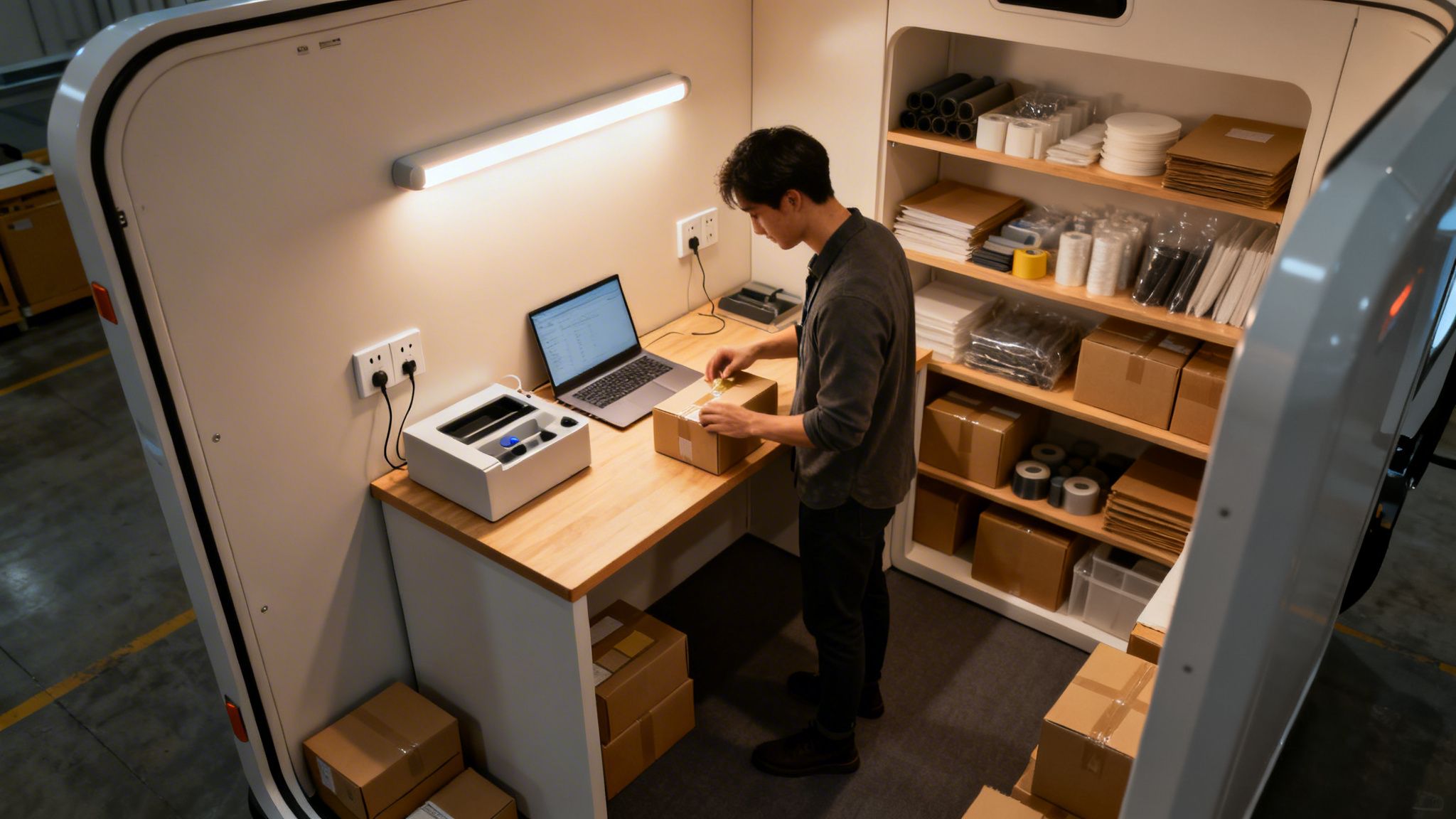
- Power Sockets: This is probably the biggest upgrade. Having electricity on tap lets you charge cordless tool batteries, fire up a laptop, run a small heater in the winter, or even operate packing machinery.
- Wi-Fi Access: For any business today, being connected is vital. With on-site Wi-Fi, you can update your job management software, process online orders, or email a client without having to burn through your mobile data.
With these features, the unit stops being a place you just visit. It becomes a place where you can actually get things done, giving you the affordability of self-storage with the utility of a small workshop or office.
Real-World Examples in Action
It’s one thing to list features, but it's another to see how they solve real-world headaches for business owners every single day.
A Business Pod bridges the gap between basic storage and a costly commercial lease. It provides a professional, functional workspace at a fraction of the cost, empowering small businesses to operate more efficiently.
Let’s look at how two very different businesses put their pods to work.
Case Study 1: Dave the Landscaper
Dave runs a small landscaping firm. His old routine was chaotic. At the end of a long day, the team would dump their muddy equipment into a dark container and head off. The next morning was always a mad dash to find charged batteries and sort out the right gear for the job.
Switching to a Business Pod has completely changed their workflow. Now, they can clean and organise their tools properly under bright lights. They plug all their power tool batteries in to charge overnight, so everything is ready to go at 7 am. Dave can even hop on the Wi-Fi to check the next day’s weather forecast and tweak his plans from the unit. It’s become their professional HQ, not just a messy locker.
Case Study 2: Chloe’s Craft Business
Chloe sells handmade jewellery online, and for a long time, her spare room was overflowing with beads, boxes, and bubble wrap. As her business took off, she moved everything to a basic storage unit. But that created a new problem – she had to ferry stock back home every single time an order came in.
By moving into a Business Pod, Chloe built her own mini-fulfilment centre. She keeps all her stock and packaging materials in one organised space. When an order pings on her phone, she can head to her pod, use the power for her label printer, pack the order professionally, and have it ready for the courier. It's a clean, efficient setup that’s let her reclaim her home and operate like a much bigger business.
Common Questions About Business Storage
Once you’ve explored the options, it’s natural to have a few practical questions. Thinking through the day-to-day details is what separates a good plan from a great one. Let’s walk through some of the most common queries we get from business owners trying to figure out if self-storage is the right fit for them.
What Kind of Insurance Do I Need for My Business Goods?
This is a big one. Almost any professional storage facility will insist that you have insurance. It’s a non-negotiable step to make sure everyone is protected. Some sites will offer their own insurance policies as part of the package, while others will ask you to arrange your own.
First things first, check your current business insurance. Many standard policies don’t cover goods or equipment stored off-site, or they might have very low limits. If that’s the case, you’ll need a specific self-storage insurance policy.
Before you commit, get clear answers from the facility manager:
- What’s the minimum cover level they need to see?
- Does the policy have to cover specific risks like fire, theft, and flood damage?
A final tip from experience: keep a detailed inventory of everything in your unit. Photos and receipts are your best friends here. If you ever have to make a claim, this simple bit of admin will make the process infinitely smoother.
Can I Have Deliveries Sent Directly to My Storage Unit?
For e-commerce sellers and tradespeople, getting deliveries sent straight to your unit can be a huge time-saver. Whether it’s possible really comes down to the individual facility, but it’s a feature that most modern, business-friendly centres have sorted.
Some places allow couriers to access your unit for drop-offs, following a specific procedure. A more common and often more convenient setup is where the reception team accepts parcels and even pallets for you. They’ll sign for them and keep them safe until you can pop over and move them to your unit.
Always have a quick chat with the on-site staff before you schedule your first delivery. They'll run you through their exact process, let you know about any rules for drivers, and confirm if there are any small fees for the service.
Are There Restrictions on What I Can Store?
Yes, absolutely. For safety, legal, and insurance reasons, every storage facility has a strict list of prohibited items. These rules aren't flexible: they’re in place to protect you, your goods, and everyone else on site.
While the specifics can vary slightly, the banned list is fairly universal. You can pretty much guarantee you won’t be able to store:
- Flammable or explosive materials: Think petrol, gas canisters, paint thinner, or fireworks.
- Perishable goods: Anything that can rot, go off, or attract pests is a definite no.
- Illegal or hazardous substances: This includes controlled drugs, toxic chemicals, and other dangerous materials.
- Live animals or plants: A storage unit is no place for any living thing.
If you’re storing machinery, you’ll likely need to drain all fuel and oil from things like lawnmowers or generators first. To be safe, just ask the provider for their complete list of prohibited items before you sign on the dotted line. It ensures there are no surprises later.
Ready to find a flexible, secure space that works as hard as you do? Container Self Store offers practical business storage solutions in Nottingham and Nottingham, with everything from compact units to powered Business Pods. Get your free, no-obligation quote today and see how easy it is to get the space your business needs.