
If you've ever typed "business storage near me" into a search bar, you're in good company. All over the UK, savvy business owners are ditching expensive warehouse leases for the flexibility of self-storage. It’s a smart move to become more agile, slash overheads, and keep valuable assets safe without getting tangled in long-term contracts.
This guide will walk you through finding the perfect local solution for your business.
Why Today's Businesses Are Turning to Self-Storage
The era of being shackled to a rigid, costly commercial lease is well and truly over. In today's economy, agility is everything. From online start-ups to seasoned tradespeople, businesses are waking up to the fact that traditional property rentals often create more headaches than they're worth. This is why the search for a local, flexible alternative has become so common.
This shift is a direct response to the real-world needs of running a business. Take an online retailer, for example. Their stock levels are constantly in flux, spiking at Christmas and dipping in January. A long-term warehouse lease means paying for empty, unused space during those quieter months. Self-storage, on the other hand, lets them scale their space up or down on a monthly basis. This keeps their storage costs perfectly aligned with inventory, protecting their bottom line.
The Move Towards Smarter, More Flexible Operations
It's a similar story for a self-employed electrician or plumber. They don't need a sprawling industrial unit; they need a secure, easy-to-access spot for their tools, equipment, and materials. A drive-up container unit is the ideal solution: a compact, secure hub they can get to at the crack of dawn, without the crippling overheads of a traditional workshop.
The advantages go far beyond just saving money; they strike at the heart of business efficiency.
- Dramatically Lower Overheads: You can sidestep the hefty costs that come with warehouse leases, like business rates, utility bills, and maintenance fees.
- Unmatched Agility: The power to change your storage size with just one month's notice is a game-changer for seasonal businesses or companies in a growth spurt.
- Serious Security: Good facilities offer layers of protection like CCTV, gated access, and on-site staff, often far more than a small business could afford on its own.
- A More Organised Workspace: A dedicated storage unit helps declutter your main premises, creating a more organised and productive environment for everyone. Learn more about how warehouse storage can streamline your operations.
This isn't just a trend; the numbers back it up. The UK self-storage industry now has over 2,900 facilities and generates £1.2 billion in annual turnover. Revenues are set to climb by 8.77% each year, with the booming e-commerce sector being a major driving force. For a deeper dive, check out the latest UK storage statistics on theboxco.co.uk.
Pinpointing Your Business Storage Requirements
Before you even start searching for “business storage near me,” it’s vital to get a crystal-clear picture of exactly what you need. It's a step many businesses rush, and that's often where the problems start. You either end up paying for a huge space you'll never fill or, worse, cramming your operations into a unit that just isn't fit for purpose.
Taking a bit of time upfront to nail down your requirements will save you a ton of hassle and money down the line.
This is about more than just estimating square footage. Think about how you’ll use the space. An electrician storing heavy cable reels and tool chests has completely different needs to an e-commerce seller with stacks of small, individually picked items. That electrician might find a 10ft drive-up container is a perfect, no-fuss solution. The online retailer, however, probably needs a 150 sq ft indoor unit where they can set up a mini-warehouse with proper shelving.
A solid storage plan also goes hand-in-hand with overcoming inventory management challenges, ensuring your stock is organised and accessible from day one.
What Are You Storing, and How Much Space Do You Need?
The best place to start is with a proper inventory audit. Make a detailed list of everything you intend to store, from bulky machinery and palletised goods to boxes of old files and marketing banners. It's not just about the total volume; it’s about understanding how you need to interact with it all.
Ask yourself a few key questions:
- What's the nature of your items? Are they fragile electronics, documents sensitive to damp, or robust building materials that can handle the elements?
- How will you organise it? Do you need to install freestanding shelving, pallet racking, or just clear floor space for stacking?
- How heavy and awkward is it? Bulky or heavy items almost always demand ground-level access to avoid back-breaking work every time you load or unload.
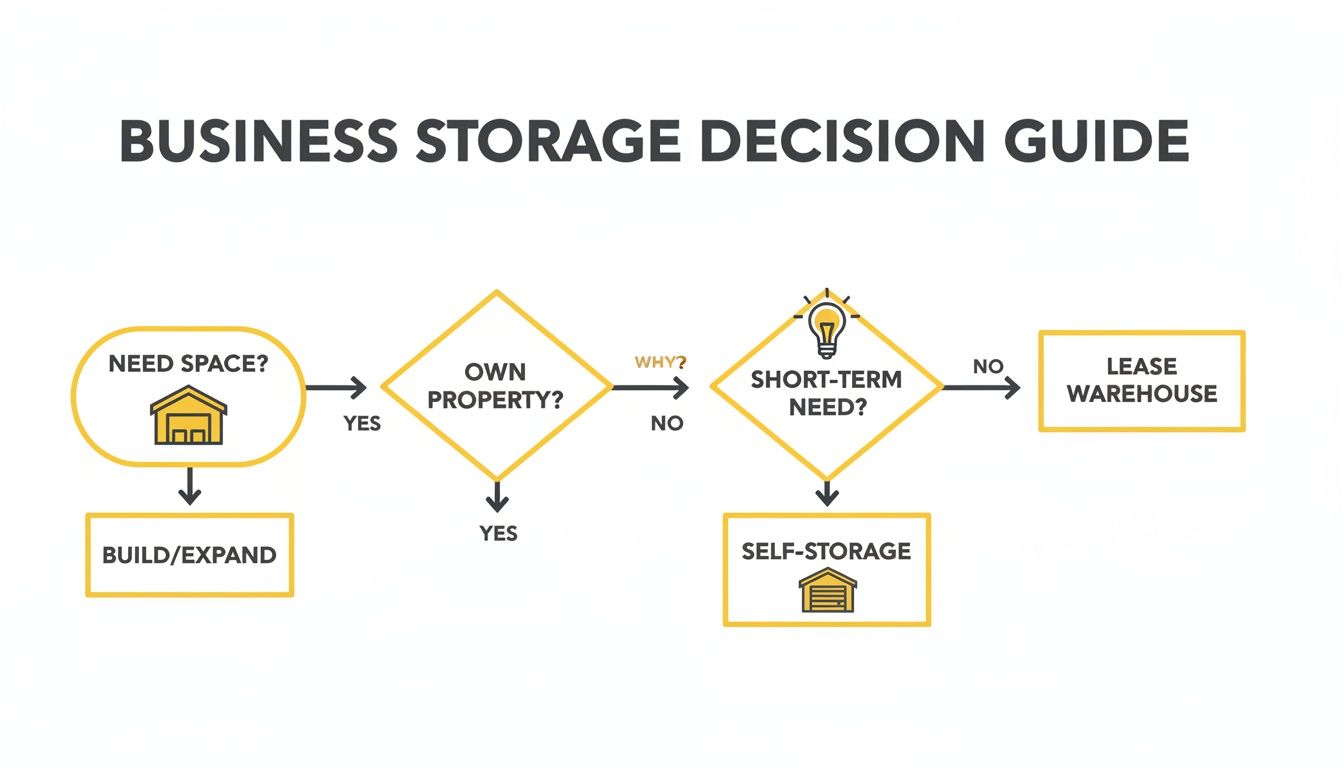
As you can see, the 'why' behind needing storage, be it for stock, tools, or archives, is the first domino that determines the right type of facility for you.
Matching Your Business To The Right Storage Type
To make things a bit clearer, here’s a quick-reference table that matches common business needs with the type of storage that usually works best.
| Business Type Or Use Case | Recommended Storage Type | Key Features To Look For |
|---|---|---|
| E-commerce & Online Retailers | Indoor Unit (50-200 sq ft) or Business Pod | Good lighting, wide corridors for trolleys, extended access hours. |
| Tradespeople (Plumbers, Electricians) | Drive-Up Container (10ft or 20ft) | 24/7 access, ground-level entry, robust security. |
| Archiving & Document Storage | Smaller Indoor Unit (25-50 sq ft) | Climate control (to prevent damp), good security, shelving potential. |
| Market Traders & Event Businesses | Drive-Up Container or Medium Indoor Unit | Easy vehicle access, flexible contract terms for seasonal needs. |
| Excess Stock or Equipment Overflow | Large Container (20ft or 40ft) | Ground-level for forklift/pallet truck access, high-security site. |
This table should give you a solid starting point for shortlisting facilities that genuinely meet your operational needs.
How (and When) Do You Need Access?
Finally, think about your daily, weekly, and monthly rhythm. How often will you actually need to get to your things? Getting this wrong can create a real bottleneck for your business.
A self-employed plumber who handles emergency call-outs, for instance, absolutely needs 24/7 access. No exceptions. On the other hand, a clothing brand that only ships orders Monday to Friday might be perfectly happy with a facility that offers extended hours, say 6 am to 10 pm, seven days a week.
Never underestimate the importance of convenience. A storage unit can have the best price in town, but if it’s a pain to get to or has restrictive hours, it will quickly feel like a burden, not a solution. Getting these details sorted before you sign anything is the secret to finding a storage partner that actually helps your business grow.
What to Look for When Comparing Local Business Storage Facilities
Once you have a clear idea of what your business needs, it’s time to start sizing up the local storage options. But here’s the thing: not all storage sites are built the same, especially when you’re trusting them with things that are vital to your business. Looking for “business storage near me” is about more than just finding the cheapest or closest option; it’s about finding a facility that can genuinely support your operations.
When you get down to it, a great business storage facility really hangs on three key things: security, accessibility, and the practical amenities that make your life easier. Let’s dig into what you should be looking for in each of these areas.
Uncompromising Security
Real security is so much more than a strong padlock on your unit door. For any business, the stock, tools, or documents you’re storing are your livelihood. You need to find a place that takes their protection as seriously as you do. The best facilities have a multi-layered approach that puts off any potential trouble before it even starts.
As you look at different providers, it’s worth getting a feel for their comprehensive warehouse security strategies to see if they’re up to scratch for protecting your business assets.
Here are the non-negotiables for security:
- Secure Perimeter and Gated Access: The entire site needs to be properly fenced off. Access should be controlled by a keypad or fob system that logs everyone who comes in and out.
- Total CCTV Coverage: Look for high-definition cameras covering all the important spots: the entrance, exit, and all the main routes around the facility. And they must be running 24/7.
- Individually Alarmed Units: This isn’t always standard, but it’s a huge plus. It adds an extra layer of protection by sounding an alarm if someone tries to get into your specific unit.
- On-Site Staff: Having people on-site during business hours is a massive deterrent. It also means there’s someone to help immediately if any problems come up.
Practical Accessibility for Business Efficiency
Accessibility is all about how quickly and easily you can get to your stuff. This has a direct impact on your day-to-day operations. The last thing you need is to be dragging heavy boxes down long, poorly lit corridors or waiting ages for a clunky goods lift.
The difference between a ground-floor, drive-up unit and an indoor one on the first floor can easily add hours of labour to your week. For any business that loads and unloads frequently, drive-up access isn’t a nice-to-have: it’s an absolute must.
Can you park your van right at the door of your unit? This is a standard feature at container-based facilities like ours and it’s a complete game-changer for tradespeople shifting tools or e-commerce businesses handling bulky stock. This kind of easy access is a big reason why so many UK businesses are turning to self-storage. If you’re unsure what you’ll need, check out our guide on how to figure out what size storage unit you need.
Business-Focused Amenities
Finally, it’s the little extras that separate an average storage site from a true business partner. These are the thoughtful features that show a facility really gets what its commercial clients need.
This could be anything from having clean, well-maintained toilets on-site to selling a range of packing supplies for when you run out. Good lighting is also crucial for safety, especially if you’re visiting early in the morning or late in the evening.
A huge operational win is finding a facility that can accept deliveries for you. This means you don’t have to hang around waiting for a courier. The on-site team can securely take in the parcel and let you know it’s arrived, so you can collect it whenever suits you. It’s a simple service that can save you a surprising amount of time.
Your On-Site Visit Checklist
You can only learn so much from a website. A slick online gallery and a list of prices don’t tell the whole story, which is why seeing a facility with your own eyes is non-negotiable. This is where you separate the good from the great when you’re searching for “business storage near me”.
Think of it as an inspection. It’s your opportunity to cut through the marketing fluff and get a real sense of what it would be like to store your valuable business assets there day-in, day-out.
First impressions really do count, and the general state of the place often says everything you need to know about the people who run it. This visit is crucial for finding a partner you can trust for the long haul.
First Impressions and a Proper Look-Around
The moment you pull up, just take a look around. Is the site clean? Is it tidy and well-kept? It’s the small details that often give the game away: things like overflowing bins, weeds poking through the tarmac, or a sagging fence can be big red flags.
Next, make sure you see the actual type of unit you’d be renting, not a pristine show unit they keep for tours. Once you’re at the door, give it a quick once-over:
- Look for Damp and Pests: Keep an eye out for water stains on the walls or ceiling, any hint of mould, or that giveaway musty smell. A quick check in the corners for pest traps or droppings is always a good idea.
- Test the Doors: Give the shutter door a go. Does it roll up smoothly, or does it judder and grind its way up? A well-oiled mechanism is a sign they’re on top of maintenance.
- Check the Lighting: How well-lit is the area around your potential unit? If you think you’ll ever need to pop in after dark, this is vital for both your safety and convenience.
Go with your gut. If a place feels a bit run-down or the staff just don’t seem bothered, that’s your cue to walk away. How a company looks after its own property is a pretty clear indicator of how it’ll look after you.
Putting Security and Access to the Test
Now for the security. Don’t just take their word for it: ask them to show you how it all works. See the main gate in action. Does it feel solid? Watch where the CCTV cameras are pointed. Are they covering the entrance, the exit, and the main driveways properly?
A good facility manager will be proud of their security setup and happy to demonstrate it. This is your chance to see if the promises made on the website actually hold up in reality.
Questions to Ask the Manager
Your chat with the person running the site is probably the most valuable part of the visit. It’s the perfect time to clear up any lingering questions. A good manager knows their stuff and won’t have any issue with you getting into the details. Having a few questions prepared means you’ll walk away with all the facts.
Here are a few essentials I’d recommend asking:
- What’s the procedure if a security alarm goes off?
- Are there any other costs on top of the monthly rent? Think admin fees, mandatory locks, or a security deposit.
- What are the exact access hours? And do they change on bank holidays?
- What’s the notice period if I need to move out or change to a bigger or smaller unit?
- Can you take in deliveries for me? If so, how does that work?
Getting straight answers to these questions will save you from any nasty surprises later and helps you be certain their way of working fits with yours.
Right, you’ve done the legwork, visited the sites, and found the perfect spot. Now for the final step before you can move in: the paperwork. It might be tempting to just sign on the dotted line, but spending a little time getting the rental agreement and insurance sorted now will save you a world of headaches later on.
This isn’t just a formality; it’s about protecting your business. Getting these details right from the start means no nasty surprises and gives you total peace of mind.
Getting to Grips with the Rental Agreement
Think of the rental agreement as the rulebook for your new storage space. It’s absolutely essential to read through it properly before signing anything. Don’t feel rushed: if there’s anything you don’t understand, ask the manager to walk you through it. A good facility will be happy to clarify.
There are a few specific things I always tell people to look out for. You need to know the notice period for moving out, how they handle rent increases, and exactly what fees you might be charged.
Here’s a quick checklist of what to double-check:
- Notice Period: How much notice do you have to give before you leave? For businesses, a flexible 30-day notice period is a great feature to look for.
- Late Payment Fees: What happens if a payment is late? Check the grace period and what the penalties are so you’re not caught out.
- Access Rules: The agreement will formalise the access hours you discussed during your visit. Just make sure what’s written down matches what you were told.
If there’s one piece of advice I can give anyone searching for “business storage near me,” it’s to find a facility offering a rolling monthly contract. This gives you the freedom to expand or downsize your unit as your stock levels change, without being tied into a restrictive long-term lease. It’s a game-changer for agility.
Don’t Skip the Insurance
This is a big one, and it catches so many people out. The storage facility’s insurance does not cover your stuff. I’ll say that again: their policy covers their building, not your valuable stock, equipment, or archives. It’s a massive, and potentially catastrophic, mistake to assume your goods are protected by them.
You are responsible for arranging your own business goods insurance. This is your safety net against the unexpected, like fire, theft, or flood damage.
When you’re sorting out a policy, make sure the cover amount matches the total value of what you’re storing. Crucially, you need to confirm that the policy explicitly covers goods stored in an off-site, third-party facility, as some standard business policies won’t. For any serious business, having this protection in place before you move a single box is non-negotiable.
Making The Most Of Your Business Storage Unit
So, you’ve found the right unit after searching for “business storage near me.” That’s a brilliant start, but the real magic happens in how you set it up. A well-organised space isn’t just about being tidy; it’s a genuine operational advantage that can save you time and money. With a bit of foresight, that storage unit becomes a seamless extension of your business.
Of course, what “optimised” looks like depends entirely on your business. An e-commerce seller will want to create a mini-warehouse. I’ve seen clients use freestanding shelving to create proper aisles, set up a small packing station, and keep their best-selling products right by the door for lightning-fast order fulfilment.
A tradesperson, on the other hand, might transform their container into a field base. Think wall-mounted organisers for tools and transparent, stackable bins for small components like screws and fittings. Everything is visible and easy to grab before heading to a job.
Smart Organisation and Inventory Control
Good organisation is all about creating a system that works for you, saving precious time and cutting down on costly mistakes. My advice? Before you move a single box, grab a piece of paper and sketch out a rough floor plan. It sounds simple, but visualising where everything will go helps you avoid blocking access to things you’ll need down the line.
Here are a few tips I always give our business customers:
- Create Clear Pathways: You absolutely need a central walkway. Make sure it’s wide enough to easily navigate with a trolley or a bulky box.
- Label Everything Clearly: This is non-negotiable. Use large, bold labels on every box. Note the contents and maybe even the date you stored it. Future you will be thankful.
- Prioritise Your Stock: Place your most frequently accessed items right at the front. Whether it’s your best-selling products or daily-use tools, make them easy to grab and go.
The goal is simple: spend as little time as possible searching. Every minute you save hunting for a specific item is a minute you can put towards a billable job or processing another order. A good system pays for itself almost immediately.
If you really want to step up your game, a simple digital inventory log is a game-changer. It can be a basic spreadsheet or a dedicated app. To get started, you can learn more about inventory management for small businesses in our detailed article. By putting in the effort up front, you turn a simple storage space into a powerful asset that actively supports your business.
Got Questions About Business Storage? We’ve Got Answers
When you’re searching for “business storage near me,” a lot of questions pop up. Let’s cut through the noise and get straight to the practical answers you need.
What’s the Real Cost of Business Storage in the UK?
Pricing really depends on where you are and how much space you need. To give you a ballpark figure, you could be looking at anything from £15 per week for a smaller space, rising to £60+ per week for a large 20ft container in places like Nottingham or Nottingham.
On a national level, you’ll often see prices quoted around £27-£30 per square foot, per year. My advice? Always ask for a full quote that breaks everything down, including VAT. It’s also smart to check for any other potential costs, like a security deposit or whether their insurance is mandatory, so there are no nasty surprises later.
Can Couriers Deliver Straight to My Unit?
Absolutely. Most modern facilities built with businesses in mind are happy to accept deliveries for you during their office hours. This is a game-changer for many companies, as it means you don’t have to drop everything just to meet a driver. Just make sure you double-check the specific delivery policy with the site manager before you start sending parcels their way.
Should I Go for an Indoor Unit or an Outdoor Container?
This really boils down to what you’re storing and how you plan to use the space.
An outdoor, drive-up container is brilliant if you’re dealing with bulky stock, heavy equipment, or just need to load and unload directly from your van. The convenience is unmatched. On the other hand, an indoor unit offers a more stable environment, which is ideal for sensitive items like electronics, important documents, or valuable inventory that doesn’t react well to temperature swings.
Ready to find a secure, flexible, and cost-effective home for your business stock or equipment? Container Self Store offers a range of container units and indoor storage rooms in Nottingham and Nottingham to perfectly match your needs. Get a quick, no-obligation quote today and see how we can help your business grow. Find your ideal space at https://containerselfstore.com.