A van is half-loaded outside a house near Bramcote, the completion dates don't quite match, and the spare bedroom is already full of boxes. Across Chilwell, similar pressure appears in different forms: a student needs somewhere for belongings between terms, a tradesperson needs tools off the drive, and a small online seller needs stock space without taking on a warehouse.
Choosing a self storage facility in Chilwell isn't just about finding the cheapest available room. You need the right format, reliable access, sensible contract terms, proper security and a route that works with the A52, M1 and surrounding Nottinghamshire roads.
Why Chilwell Residents and Businesses Need Flexible Storage
Chilwell's storage demand comes from several directions. A household may need a temporary unit while a sale completes, then reduce its space once the move is finished. A Nottingham student may want a compact indoor room for boxes and furniture during the summer. A local tradesperson may need a ground-level container for tools and materials that shouldn't sit in a van or come home overnight.
That mix makes flexibility more important than a generic size-and-price table. Domestic use remains a major part of the wider UK market, with 76% of self-storage customers using space for household purposes, while 27% say they don't have enough room at home, according to the UK self-storage industry report. Those figures don't tell us exactly how Chilwell's customers divide between movers, students and businesses, but they do show why a local facility needs to serve more than one customer type.
Chilwell also sits within an established residential and industrial setting. Its roots extend back to the Domesday Book of 1086, and the area later became associated with major industrial and military activity, including redevelopment as a Central Ordnance Depot in 1937, as recorded in the history of Chilwell. Ground-level, practical space fits that long-standing combination of homes, workshops, roads and businesses better than a facility designed only for occasional household access.
Local rule: Choose storage around the job you need to do, not just the volume of items you own.
Before you reserve a unit, decide whether you'll visit weekly, load a van early in the morning, or leave belongings untouched for several months. This guide covers the difference between indoor rooms and drive-up containers, the security checks that matter, the preparation needed for steel storage and the questions to ask before signing. For a useful comparison of nearby options, see storage in Nottingham.
What a Self Storage Facility Actually Offers
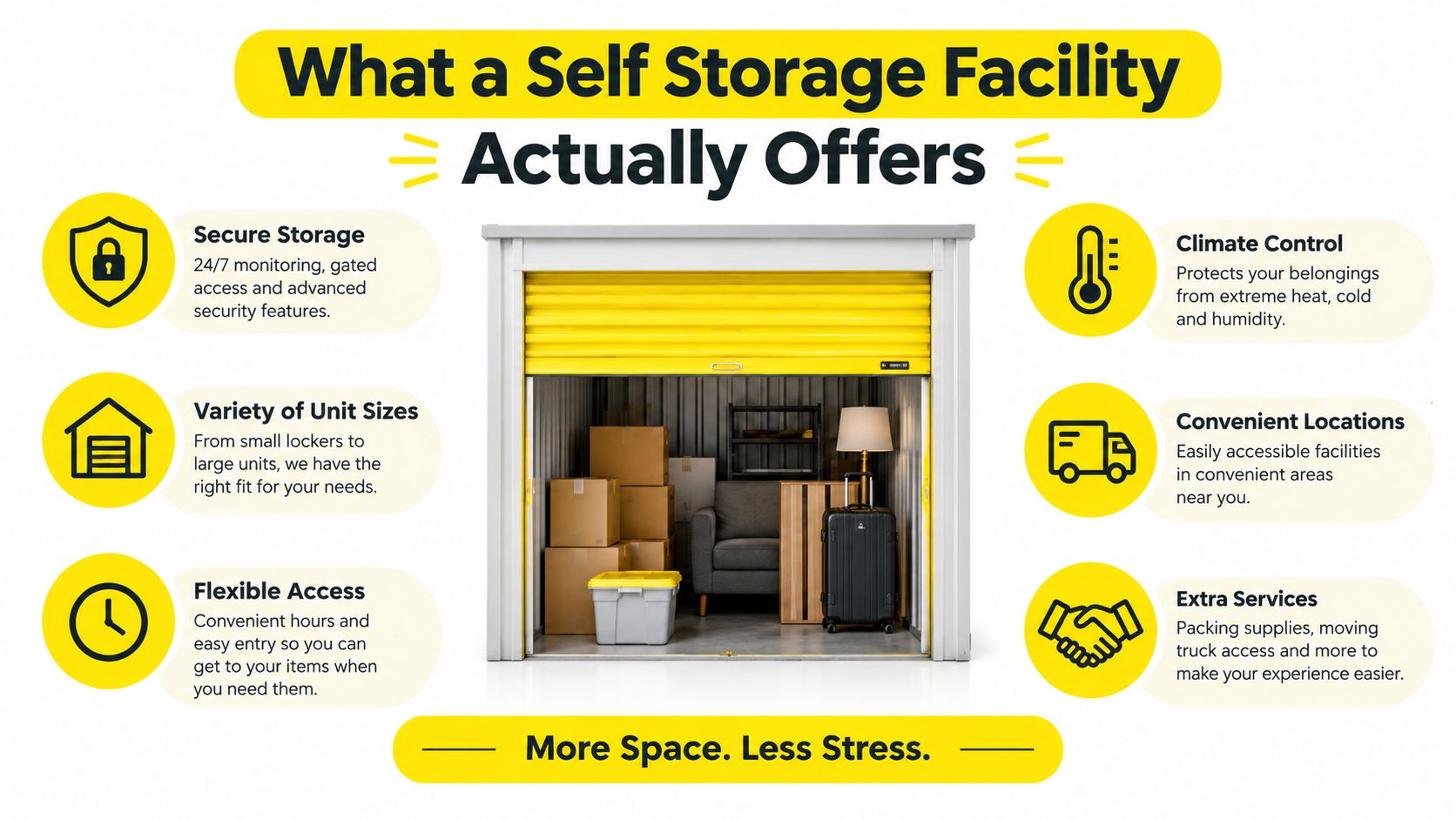
Most facilities near Chilwell offer two basic formats. Think of an indoor storage room as a spare room you rent, while a drive-up container is more like a private garage at the end of a short access road. The best choice depends on what you're storing and how often you'll handle it.
Indoor rooms can start at compact 9 sq ft lockers and extend to units of 200 sq ft, with the range suited to everything from archived paperwork and several boxes to the contents of a full household. These rooms make sense for items that should stay clean, dry and indoors, especially documents, clothing, personal effects and smaller household goods. If you'll be carrying boxes in and out regularly, an indoor corridor may also feel easier than working in an outside compound during poor weather.
Drive-up containers usually come in 10 ft and 20 ft ventilated steel formats. You can reverse a van close to the door, unload bulky furniture without using stairs and keep tools, stock, equipment or building materials together. That convenience comes with a responsibility: steel containers need sensible preparation because ventilation alone doesn't eliminate moisture, as the container condensation guidance explains.
Match the format to the work
Use an indoor room when cleanliness, easy walking access and protection from outdoor conditions matter most. Use a container when you have bulky items, a van, trade equipment or stock that needs frequent loading at ground level.
Some storage providers also work alongside facilities offering Trade Pods and Business Pods, with lighting, power and Wi-Fi for customers who need more than a place to stack boxes. For broader ideas on portable and relocatable storage formats, these tips from Pacific Mobile Structures provide useful background, although you should still check the exact specification of any local unit before committing.
The wider market supports this range of formats. UK self storage has grown to 3,143 stores, with annual turnover of £1.3 billion and total space of 67.5 million square feet, according to the UK Self Storage Annual Report. The sector's 74.5% occupancy across all stores points to established demand, but it also means you shouldn't assume the exact unit you want will always be available at short notice.
Who Uses Self Storage Around Chilwell
A family selling a house may need storage for furniture, garden items and packed boxes while the buyer's timetable catches up. Their priority is usually a straightforward contract and the ability to reduce space after the move, rather than a permanent large unit.
Students have a different need. A compact indoor room can hold clothing, books, kitchen items and a few pieces of furniture between terms, removing the need to transport everything back to a family home. Easy walk-in access matters more to this group than vehicle loading.
Tradespeople generally need the opposite arrangement. A ground-level container lets them load tools and materials directly from a van, often before the working day starts. Security, site lighting and access that works across the week matter more than an attractive reception area.
Small businesses and e-commerce sellers need room that can change with stock levels. Shelving, packaging, seasonal inventory and equipment can quickly overwhelm a home office, yet leasing a warehouse may be unnecessary. Storage gives these businesses a practical place to hold goods while they test demand or expand gradually.
| Your Situation | Best Unit Type | Typical Size | What Matters Most |
|---|---|---|---|
| Between house moves or decluttering | Indoor room or drive-up unit | 50 to 200 sq ft | Flexible terms and convenient loading |
| Student storage between terms | Compact indoor room | 9 sq ft or more | Walk-in access and simple collection |
| Tools and trade materials | Drive-up container | 10 ft or 20 ft | Ground-level loading, security and access hours |
| Online retail stock and packaging | Indoor room or container | 50 to 200 sq ft | Scalable space and room for organised shelving |
| SME equipment or archived files | Indoor room | 9 to 200 sq ft | Clean conditions, clear contracts and access |
Read the local demand properly
Chilwell's position near major roads makes it relevant to both household and business users, but the right unit still depends on the catchment you serve. A mover travelling from the A52 may value fast vehicle access, while a student or homeowner may care more about a manageable indoor room.
Don't assume a single customer profile will fill every unit. The strongest local offer is one that handles short-term moves, regular trade collections and growing business stock without forcing all three groups into the same storage format.
Security and Access Features Worth Checking
A padlock is only one part of storage security. The real test starts at the entrance, where vehicles and pedestrians enter the site, share gates and move through loading areas. If those points aren't controlled and recorded, a high-quality lock on an individual unit offers limited reassurance.
Look for a layered system that includes PIN-coded gates and doors, CCTV covering entry and exit routes, perimeter recording, good lighting and staff on site during opening hours. The Self Storage Association UK identifies CCTV on entry and exit routes as a minimum requirement, while industry guidance reports that 82% of indoor facilities use monitored 24/7 CCTV, as outlined in self-storage safety guidance. Those figures are industry context, not a substitute for inspecting the facility you intend to use.
Ask these questions before signing
- Where are the cameras aimed? Confirm that they cover gates, vehicle routes and loading areas, not just the reception entrance.
- How does entry work? Ask whether each customer uses an individual PIN and whether access records are retained.
- Who is present on site? Check staff hours and the process for reporting a problem outside those hours.
- Can you visit seven days a week? This is particularly important if you load tools on weekends or collect stock around customer orders.
- What does the insurance require? Controlled access and incident records can support insurance underwriting, but you still need to understand the policy and exclusions.
Chilwell's mixed character helps explain why ground-level utility space works well here. The district has developed around homes, industry, transport links and practical employment rather than a single isolated land use. A compound that allows a van to reach a unit directly is often more useful to local customers than a multi-storey building where every collection involves lifts and trolleys.
For a closer look at security considerations, compare facilities using this guide to secure self storage. Don't accept broad claims such as “fully secure” without asking how access, monitoring and incident reporting function.
Choosing the Right Unit and Getting the Contract Right
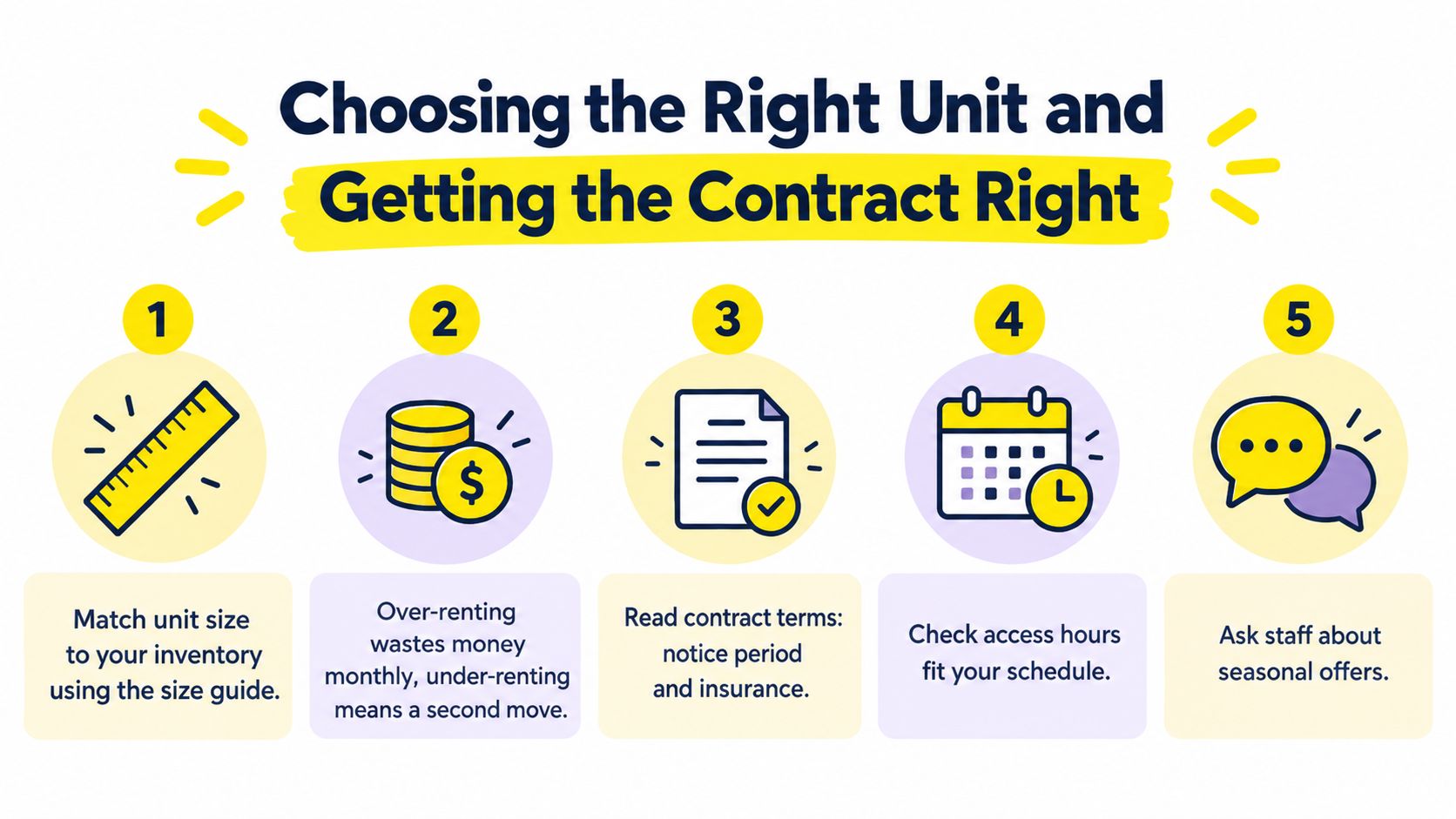
The right unit is large enough to let you retrieve items without emptying the entire space, but not so large that you're paying for unused air. Start with an inventory, group similar items together and use the facility's size guide. A compact locker may suit archive boxes, while household contents or trade equipment usually need more floor area and a loading plan.
Access frequency changes the answer. If everything is going in for a house move and won't be touched, dense stacking may work. If you'll collect tools every week, leave a usable aisle and place frequently needed items near the door. Over-renting wastes money each month, while under-renting creates a second move, extra handling and avoidable frustration.
Container preparation matters
A ventilated steel container isn't a climate-controlled room. Standard vents provide limited air exchange, and airflow can't remove all moisture if furniture, tools or packaging enter the unit damp. Temperature changes can produce repeated warm and cold cycles, which raises the risk of corrosion, mould and weakened cardboard.
Before loading:
- Dry everything thoroughly. Don't store wet furniture, recently washed fabric or damp tools.
- Use moisture absorbers. Place moisture-absorbing packs where air can circulate around stored goods.
- Keep items off the floor where practical. This helps protect boxes and equipment from contact with possible surface moisture.
- Leave air gaps. Don't press furniture and packed goods tightly against every wall.
- Use suitable packaging. Strong boxes and covers should protect items without trapping dampness inside.
Check the contract, not just the quote
A clear online quote is useful, but price alone won't reveal whether the arrangement suits you. Ask about notice periods, insurance, access hours, payment dates, prohibited items and what happens if your storage needs change.
Contract check: A flexible agreement should make it clear how you can scale up or down, how much notice you must give and what protection applies to your goods.
Seven-day access can be valuable for tradespeople and business users, while a student may care more about a simple move-in process. Businesses should also ask whether a unit can accommodate shelving or whether a partner workspace with power and Wi-Fi would be more appropriate. Read the business rates guidance for self storage if you're assessing a facility as part of a commercial operation. In England for 2026-27, the non-domestic multiplier is 43.2p in the pound below a £500,000 rateable value and 48p above it, while the VOA sets the rateable value used by the council.
Finding Container Self Store Near Chilwell
For a practical Nottingham option, Container Self Store operates a site just off the M1 and A52, giving Chilwell customers a direct route through the Nottingham road network. From Chilwell, the A52 is the obvious starting point for reaching the wider corridor, with connections towards surrounding towns and villages without requiring a trip into a city-centre storage building.
The useful distinction is what happens once you arrive. Ground-level units mean you can load directly from a vehicle, without taking furniture or stock upstairs. Customers should expect a gated site, a CCTV-monitored compound, on-site staff and access across seven days, then confirm the precise arrangements before booking.
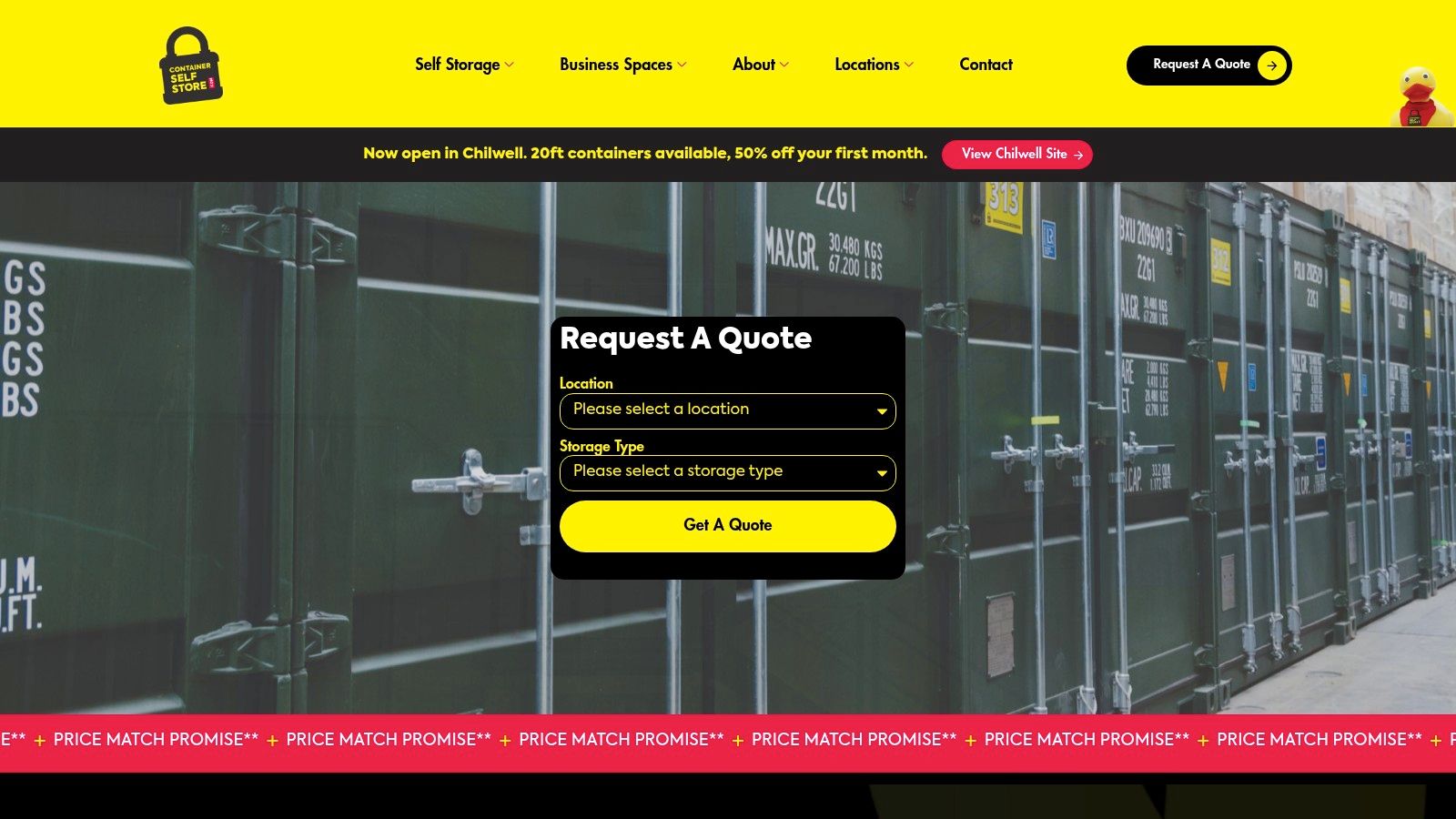
Get a workable quote before travelling
Start online with the unit size guide rather than guessing from a photograph. List the items you need to store, decide whether you require drive-up loading or an indoor room, then request a quote that reflects the likely duration and access pattern.
Container Self Store provides indoor rooms from compact lockers to larger household units, alongside ventilated container options for furniture, tools, stock and equipment. Businesses needing a light operational base can also investigate Trade Pods and Business Pods through the partner brand, with lighting, power and Wi-Fi available where the specific product suits the work.
Chilwell's history, from its Domesday roots to its ordnance depot past, reinforces the local case for accessible, practical space. This isn't a district where storage needs to be hidden behind a premium, city-centre format. For routes, unit types and the online quotation process, review container storage in Nottingham.
Frequently Asked Questions and Your Next Steps
How quickly can I move in after requesting a quote?
That depends on current availability, the unit type and the completion of the booking process. Ask the facility to confirm when the space is ready, what identification or paperwork is needed and when your access credentials become active.
Can I change size during the contract?
Ask whether you can upsize or downsize as your household, stock or project changes. Flexible terms and scalable space are particularly useful for movers and small businesses, but the available options and notice requirements should be confirmed before you sign.
What shouldn't I store?
Perishables, living things and any item prohibited by the facility's terms should stay out of storage. Check the contract for restrictions covering hazardous materials, illegal goods and anything that could create a fire, hygiene or safety risk.
Can storage double as a business workspace?
Some storage arrangements are designed for goods only, while partner Trade Pods and Business Pods may provide lighting, power and Wi-Fi for customers who need a light workspace. Don't assume a standard container is suitable for working in. Ask about the permitted use, facilities and terms before using it as anything beyond storage.
The decision is straightforward. Identify whether you need an indoor room or a drive-up container, match the space to your access frequency, check the gate and CCTV arrangements, dry items before loading steel storage and read the notice and insurance terms. Then request an online quote using the facility's size guide rather than relying on guesswork.
Container Self Store offers indoor rooms, ground-level container units and flexible business space near Nottingham's M1 and A52 connections, with gated access, monitored CCTV, on-site staff and seven-day access. Visit Container Self Store to compare unit sizes, check the online guide and request a quote for your Chilwell storage needs.