
You've finished exams, your tenancy is ending, and your room still looks like you're staying for another month. There's a drying rack in the corner, half a kitchen in a crate, a bike you don't want to drag home, and a mini-fridge that definitely won't fit in your mate's car. That's usually the moment “student storage near me” becomes urgent rather than theoretical.
For students in Nottingham and Nottingham, this problem turns up in the same way every year. The National Union of Students has estimated that around 1 in 2 students relocate accommodation during the year, and university towns tend to see the biggest rush from late June through September when exams finish and leases end. With more than 2.8 million students in UK higher education in recent years according to HESA, this isn't a rare last-minute issue. It's a repeatable moving pattern with the same pressure points every summer. If you want a broader primer on understanding temporary storage needs, that's a useful starting point before you book anything.
The End of Term Scramble for Student Storage
The usual move-out problem isn't just “too much stuff”. It's too much stuff, not enough time, and nowhere sensible to put it.
One student finishes in halls and can't move into the next place for two weeks. Another has a shared house contract ending before a placement starts. Someone else is going abroad for a term and only needs a short stopgap, not a long rental. These aren't unusual edge cases. They're the normal rhythm of student life in university towns.
What catches students out
A lot of people plan the journey home before they plan the actual packing. That's where the stress starts. Bulky items look manageable while they're in your room. They stop looking manageable when they're in the corridor and you're trying to decide what fits in one car trip.
The biggest mistakes are predictable:
- Leaving booking too late and only searching once the landlord wants keys back
- Trying to take everything home even when the journey is awkward, expensive, or both
- Guessing the amount of space needed instead of grouping items properly first
- Forgetting the gap between contracts, which is often the reason storage is needed
A short-term storage unit works best when it removes a transport problem, not when it becomes another one.
In Nottingham especially, the pattern is easy to recognise. Students move between halls, shared houses, internships, home addresses and summer accommodation on fixed dates that rarely line up neatly. Nottingham sees the same practical need from students and nearby catchment areas who want access without being tied into a long commitment.
What actually helps
The calmest move-outs usually follow a simple rule. Store what's awkward to transport, keep what you need immediately, and get the booking sorted before your final week.
That means furniture, kitchen gear, bedding, sports kit and boxes of course materials often go into storage. Daily essentials, valuables, documents and whatever you need over summer stay with you. Once students split belongings that way, the whole thing becomes far more manageable.
Understanding Your Storage Options
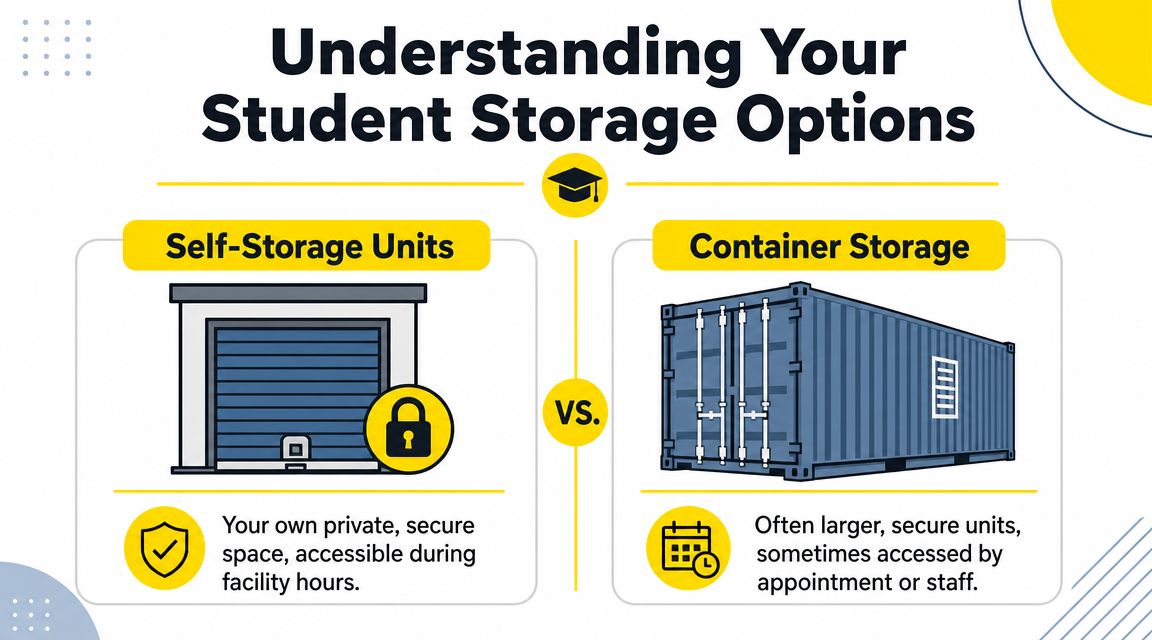
Most students only need to understand two practical choices. Indoor storage rooms, and drive-up container storage. If you know what each one is good at, the decision gets easier very quickly.
Indoor rooms
Think of an indoor room as a private storage space inside a larger building. It suits students who are storing boxes, clothes, small furniture, kitchen items, books and electronics, especially if they want a tidier internal environment and a choice of smaller sizes.
This model works well for shorter academic gaps because you can match the room more closely to what you have. The verified pattern for student storage is that providers in Nottingham and Nottingham commonly offer very small lockers, mid-size rooms and drive-up containers, and that matters because smaller units help students avoid paying for space they won't use. The same practical logic is reflected in the product mix described for UK-style student storage, where unit size and access model matter most for short-term use, as noted in this controlled storage reference.
Drive-up containers
A drive-up container is closer to a mini-garage you can load directly from the vehicle. If you've got a desk, bike, mini-fridge, dining chairs, lamp, folded mattress topper or several heavy boxes, this can save a lot of effort on move day.
You're not carrying everything through internal corridors or lifts. You park close, unload, stack properly, and get out. That's why this option tends to suit students moving out of shared houses or ground-floor flats where the awkward items add up quickly.
Practical rule: If the heaviest item in your load makes you hesitate, check the drive-up option first.
Which one usually fits your situation
A quick comparison helps:
| Storage type | Best for | Less ideal when |
|---|---|---|
| Indoor room | Boxes, suitcases, clothes, books, cookware, smaller furniture | You've got several bulky items and want the fastest possible loading |
| Drive-up container | Bikes, desks, mini-fridges, furniture, heavy mixed loads | You only have a few boxes and don't want extra unused space |
Students often overcomplicate this decision. You don't need the “best” unit in the abstract. You need the one that makes your actual move easier.
If you're mainly storing boxed belongings from a room in halls, an indoor room often does the job neatly. If you're clearing a student house and moving shared furniture between tenancies, drive-up access is usually the more practical choice.
How to Choose the Right Storage Unit Size
The wrong size creates two problems. Too small and move day becomes a game of Tetris with no winner. Too large and you pay for empty air.
For student storage near me searches, this is usually the point where people want a clear answer. The best way to estimate size is to stop thinking in abstract measurements and start thinking in categories of belongings.
Start with the inventory, not the unit
Before you choose any room or container, divide your belongings into four groups:
Boxes and bags
Clothes, bedding, books, shoes, kitchenware and toiletries.Awkward single items
Bikes, mirrors, lamps, desk chairs, mini-fridges and folding tables.Furniture pieces
Desks, shelving, bedside cabinets and disassembled bed parts.Items you'll want access to first
Chargers, documents, course materials, seasonal clothes.
Two students can own the same volume of stuff yet require different layouts. One may have mostly stackable boxes, while the other may have a bike, monitor, mini-fridge, and a chair that wastes more usable space.
A practical way to size up
Here's a sensible working guide for students:
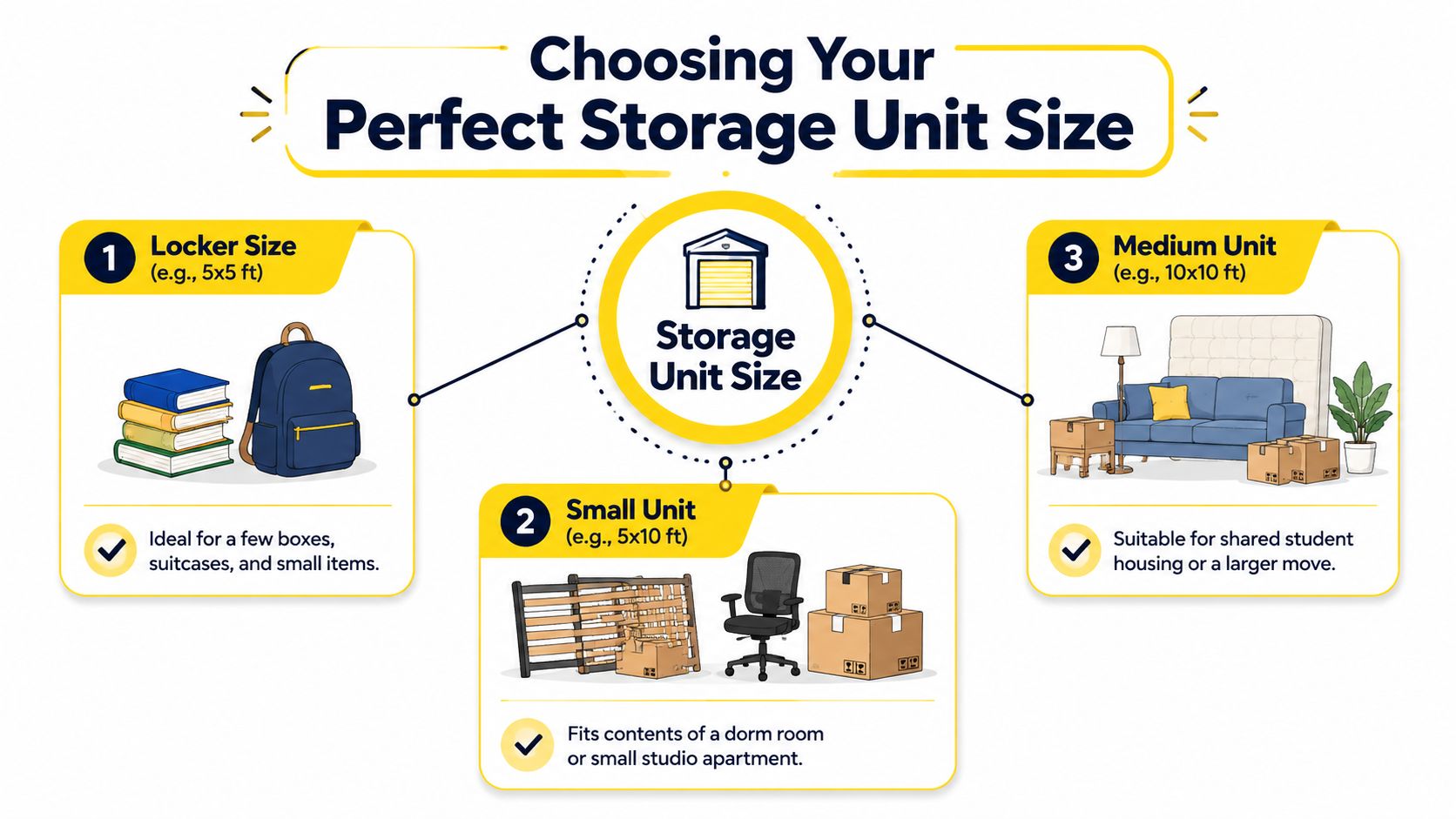
- Locker-sized space works for suitcases, a few boxes, spare bedding and smaller personal items.
- Small unit suits the contents of a typical room in halls if you pack tightly and don't have much furniture.
- Mid-size unit is usually the safer choice for a full room plus bulky extras, or for sharing with a flatmate.
- Container storage makes sense when furniture and heavy items are the main issue, not just volume.
Students in and around Nottingham who need a clearer idea of what different spaces look like can compare options through the Nottingham storage unit guide.
If you're unsure between two sizes, the deciding factor is rarely the number of boxes. It's the shape of the awkward items.
What works and what doesn't
What works is disassembling furniture, stacking similar boxes, standing mattresses or boards carefully where appropriate, and planning a simple loading order. What doesn't work is throwing loose bags into the unit and hoping the rest fits around them.
A few practical checks help before booking:
| Ask yourself | Why it matters |
|---|---|
| Am I storing just room contents or room contents plus furniture? | Furniture changes the unit choice quickly |
| Will I share the space with a friend? | Shared storage often needs more breathing room |
| Do I need regular access, or just move in and move out? | Access needs can influence unit type as much as size |
| Is this for summer, a placement, or longer? | Short academic gaps often favour flexible smaller units |
The best student bookings usually come from honest estimates, not optimistic ones. If your belongings already fill a bedroom, don't assume they'll magically collapse into the smallest room available.
A Student's Guide to Storage Pricing and Discounts
Most students focus on the headline monthly price first. That's understandable, but it can be misleading.
The cheaper-looking option isn't always cheaper once you factor in how easy it is to load, how long you need it for, and whether the terms fit an academic move rather than a standard household move. Good value in student storage near me searches usually comes from the total cost of getting through the gap cleanly, not the lowest number on the page.
What changes the price in practice
Several things affect what you'll pay:
Unit type
Indoor rooms and drive-up containers solve different problems. If one saves you a van trip or several hours of carrying, that matters.Amount of space
Paying less for a unit that's too tight often leads to a second problem on move day.Location and convenience
A site that's easier to reach from campus, major roads or home can reduce transport hassle.Contract flexibility
Students often need short, straightforward terms rather than a long fixed arrangement.
For students comparing offers, it helps to review what's included alongside the rate. The practical details in this guide to self storage for students show the kind of features worth checking before you commit.
How to judge real value
A better question than “What's the cheapest?” is “What will this move cost me if things go wrong?”
For example, a lower advertised price can stop looking attractive if the unit is awkward to access, the size is wrong, or the contract doesn't line up with your tenancy dates. On the other hand, a slightly better fit can save stress, time, and extra transport.
Cheap storage gets expensive quickly if you need a second booking, another vehicle run, or help moving bulky items twice.
What to look for before paying
Use this checklist before booking:
- Clear terms so you know how the rental works over a short student period
- Access details that match when you can move
- Security measures included as standard, not vague promises
- Student offers or introductory deals where available
- A realistic unit recommendation instead of upselling by default
Students on a budget often do best when they split costs with a trusted flatmate, but only if both people are organised. Shared storage saves money when the access plan, payment split and inventory are agreed in advance. Without that, it becomes another end-of-summer argument waiting to happen.
Smart Packing and Security Tips for Your Belongings
Packing well does two jobs. It protects your stuff, and it makes move-in day in autumn much easier.
The students who have the smoothest return aren't always the ones with less stuff. They're the ones who packed with retrieval in mind. If you'll need your kettle, desk lamp and winter coat first, don't bury them behind six boxes of seminar notes and an airer.
Packing methods that save headaches later
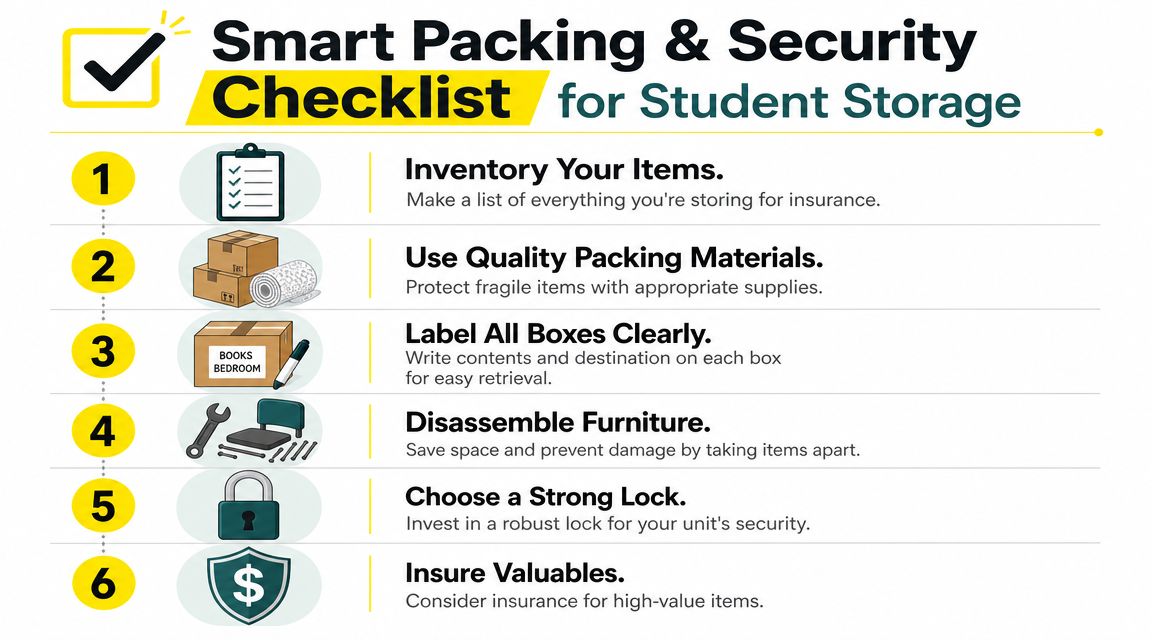
Start with sturdy boxes and keep sizes reasonably consistent. Uniform boxes stack better, which means less wasted space and less risk of crushed contents.
Then label the sides, not just the tops. When boxes are stacked, side labels are the ones you'll still be able to read.
A solid routine looks like this:
Group by use, not just by room
“Kitchen basics” is more helpful than “miscellaneous”.Wrap fragile items with purpose
Glasses, plates and frames need padding that won't shift in transit.Take furniture apart where possible
Remove legs, fold frames, and tape fittings into a labelled bag.Keep soft items working for you
Towels and bedding can cushion delicate belongings.
Loading the unit properly
Bad loading wastes space and damages things. Good loading creates layers.
Put heavier boxes and sturdier items at the bottom. Stack lighter boxes above them. Keep a small path or at least a reachable front section if you may need to collect anything during the rental period.
Store with your return day in mind. The unit should be easy to unload in ten minutes of thinking, not an hour of guessing.
A few items are worth handling carefully before they go in:
| Item | Best preparation |
|---|---|
| Mini-fridge | Empty it, dry it thoroughly, and leave it clean before storage |
| Bike | Wipe it down and keep smaller accessories together |
| Books and papers | Use smaller boxes so they don't become too heavy |
| Electronics | Pack securely and keep cables labelled with the item |
Security habits students often skip
Most facilities use a combination of gated access, CCTV and on-site presence, which helps. Your part still matters.
Choose a strong padlock. Keep a photo inventory on your phone. Save copies of any booking emails and unit details somewhere easy to access. If you're storing anything that would be difficult or costly to replace, check the insurance side before move-in rather than after.
The simple rule is this. Treat your storage unit like a temporary extension of your room, not a dumping ground. Organisation is part of security.
Booking and FAQs for Nottingham and Nottingham Students
Nottingham has a large annual student movement built into the city. The University of Nottingham reports around 34,000 students and Nottingham Trent University reports around 28,000 students, creating a combined base of roughly 62,000 students. In practical terms, that means flexible storage is a normal local service, not a niche extra for a handful of people.
For Nottingham and Nottingham students, the useful difference isn't just whether storage exists. It's whether the site is easy to reach when you're trying to clear a room quickly. Good road access matters, especially if you're borrowing a car, sharing a van, or coordinating with parents around move-out times. Sites near routes such as the M1, A52 and A45 are often easier to work into a tight moving schedule.
A simple booking approach that works
The least stressful bookings usually follow this order:
List what you're storing
Don't book from memory. Walk the room and note the bulky items.Choose the access style
Decide whether you need an indoor room or drive-up loading.Check how you'll get there
Car, van, lift from friends, or family help.Book before final week
Waiting until the tenancy end date narrows your choices.
Students looking specifically at local availability can review self storage units in Nottingham to compare practical options near the city.
Questions students usually ask at the last minute
| Question | Answer |
|---|---|
| How long can I keep a unit for? | Student storage is often most useful for short gaps such as summer, placements or tenancy changeovers. Always check the contract terms before booking. |
| Do I need to bring my own lock? | In many cases, yes. It's worth confirming this in advance so you're not buying one in a rush on move day. |
| Can I share a unit with a flatmate? | Yes, if both of you are organised about payment, access and what's being stored. Shared units work best when everything is labelled clearly. |
| What should I keep with me instead of storing? | Important documents, daily medication, passports, laptops, and sentimental valuables are usually better kept with you. |
| Can I access my things during the rental? | Many facilities offer regular access, but the details vary. Check access arrangements before you book. |
| What can't go into storage? | Restrictions vary, but hazardous, illegal, or perishable items are generally not suitable. Ask before move-in if you're unsure about anything specific. |
If you'll need help from family or friends on one exact day, book around their availability, not just your tenancy end date.
For Nottingham and Nottingham students, the best storage choice is usually the one that fits the actual move route. Campus, house, major road, storage site, then home or summer address. Once that route is clear, the rest tends to fall into place.
If you need a straightforward student storage option in Nottingham or Nottingham, Container Self Store offers flexible indoor rooms, drive-up containers, clear access arrangements and secure facilities that suit summer move-outs, tenancy gaps and short-term student storage. Get an online quote, choose the space that matches your load, and make move-out day much easier.