When you start searching for a "storage container rental near me", it can feel like a bit of a minefield. But honestly, finding the right space is a lot more straightforward than it seems. Whether you're in the middle of a house move, finally tackling that decluttering project, or a local business needing extra room, this guide has you covered.
Let's start by breaking down the two main players: drive-up container units and the more traditional indoor storage rooms.
Your Guide To Finding Local Storage Rentals
Deciding you need a storage unit is the easy part. It’s the first step towards getting organised, whether at home or for your business. But before you jump in, it's worth getting to grips with the basics. A good starting point is to understand what a shipping container is, as these repurposed steel boxes are the foundation of modern, secure, and surprisingly affordable storage.
This guide is here to walk you through your options, so you can make a choice with real confidence. We’ll look at all the important bits and pieces to consider, making sure you find a solution that's a perfect fit for what you need and what you want to spend. There’s no single "best" answer for everyone, but with the right info, the decision becomes much clearer.
What This Guide Covers
To make things simple, we've broken down the whole process into easy-to-digest steps. Here’s what you’ll learn:
- Choose the Right Type of Storage: We’ll put drive-up containers and indoor units head-to-head, helping you decide which is better for your situation – whether that’s storing bulky garden furniture or delicate business files.
- Select the Perfect Size: Don't get caught paying for space you don't need. Our practical tips will help you match the unit size to what you're actually storing.
- Understand Key Features: We'll cover the essentials that give you peace of mind, from 24/7 CCTV monitoring and secure access to proper ventilation.
- Demystify Pricing: Find out what really affects the rental cost and how our flexible, straightforward contracts offer fantastic value without locking you in.
If you're in the East Midlands, a great way to see what high-quality storage looks like is to check out facilities like our secure self-storage units in Nottingham. By the time you've finished this guide, you’ll have all the knowledge you need to find the ideal storage container rental right on your doorstep.
Drive-Up Containers Vs Indoor Units: Which Is Right For You?
When you start looking for self-storage, one of the first big decisions you'll face is whether to go for a drive-up container or an indoor unit. They might seem similar, but they're designed for very different purposes. Getting this choice right from the start will make a massive difference to how you store, access, and protect your stuff.
Think of a drive-up container as your personal, ground-level garage. The biggest plus? You can pull your car or van right up to the door. This is a lifesaver when you’re dealing with heavy furniture, bulky equipment, or anything awkward to carry. It's no wonder they’re a firm favourite with tradespeople who need to grab tools and materials on the fly, or e-commerce businesses managing a constant flow of stock.
An indoor unit, on the other hand, is more like a highly secure room inside a larger building. Because they’re not exposed to the outside, these units offer an extra shield against the British weather, keeping out dust and damp. This creates a much more stable environment, making them perfect for items that don't react well to big temperature swings – think important documents, electronics, family photos, or antique wooden furniture.
Convenience Versus Protection: A Quick Comparison
So, what's the right call? It really comes down to what you’re storing and how often you'll need to get to it.
A drive-up container is all about speed and easy access. It’s built for things you need to load and unload regularly. An indoor unit, however, prioritises creating a controlled environment, giving you that extra peace of mind for your more precious or delicate belongings.
If you’re still weighing things up, this flowchart can help you think through whether your need for storage is more business or personal.
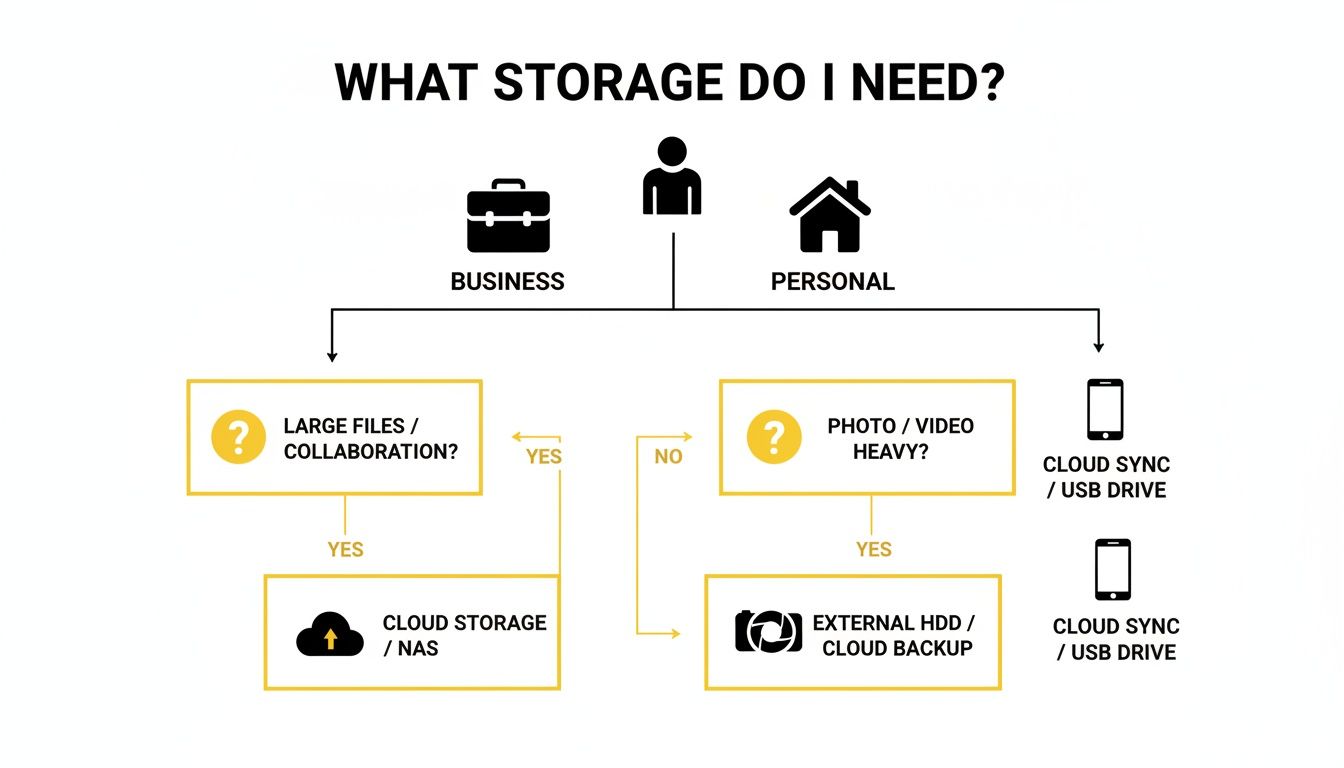
As you can see, business storage often puts a premium on direct access and being able to handle things in bulk, whereas personal storage tends to lean towards protection and environmental control for those items you just can't replace.
Making the Final Decision
At the end of the day, your choice hangs on a simple trade-off: easy access versus a stable environment. Here’s a quick summary to help lock in your decision:
- Go for a Drive-Up Container if: You're storing large furniture, garden equipment, trade tools, or business stock. You need to be able to load and unload straight from your vehicle for maximum speed and minimum hassle.
- Go for an Indoor Unit if: You’re storing anything sensitive to changes in temperature, dust, or humidity. This includes electronics, delicate wooden furniture, artwork, textiles, and important paperwork that needs to be kept in pristine condition.
By thinking about these points, you can confidently pick the type of unit that gives you the right blend of convenience, security, and protection for whatever you’re storing. It’s the best way to make sure you get exactly what you need from your storage rental.
Choosing The Perfect Storage Unit Size
“What size storage unit do I actually need?” It's the first question nearly everyone asks, and for good reason. Getting it right is the secret to getting great value for your money. After all, you wouldn't rent a five-bedroom house for yourself, so why pay for storage space you’ll never use?
The trick is to stop thinking in abstract measurements like square feet and start picturing familiar spaces. Think of our popular 10ft container as being about the size of a large garden shed. It’s the perfect solution if you're clearing out a one-bedroom flat or if you're a tradesperson who needs a secure spot for tools and materials.
If you’re in the middle of a bigger house move, you'll need something more substantial. Our 20 ft container storage units are your answer. They offer the same amount of space as a standard single-car garage, easily holding all the furniture, boxes, and bits and bobs from a typical three-bedroom house. This size is also a firm favourite with small businesses looking to store stock or equipment.
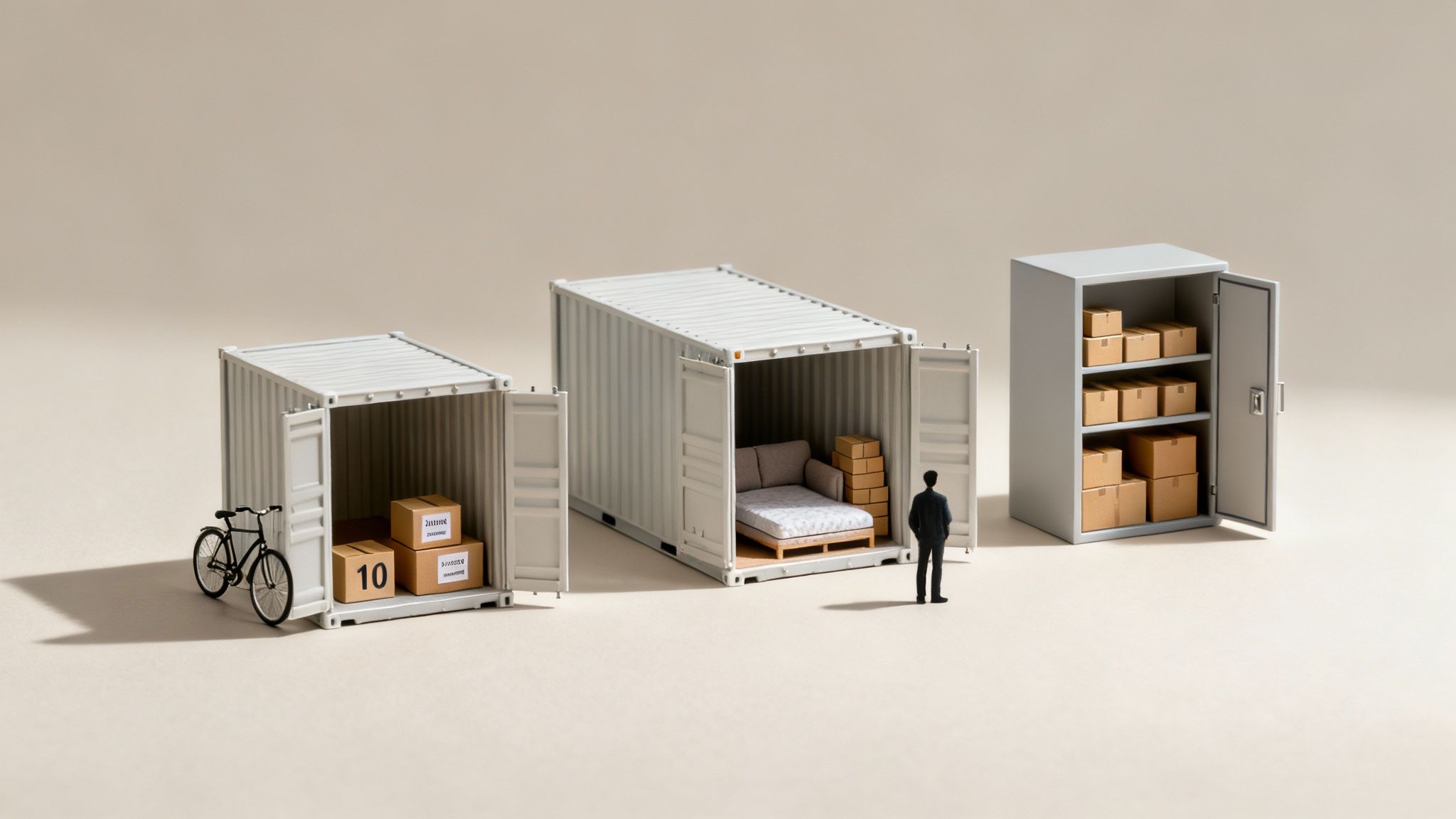
From Small Lockers To Large Rooms
Our indoor units offer a different kind of flexibility. With options starting from compact lockers and going all the way up to large, warehouse-like rooms, you can find a space that’s just right.
- Small Lockers (9 sq ft): Perfect for students stashing books over the summer or for anyone needing to get a few archive boxes out from under their feet at home.
- Medium Rooms (50-100 sq ft): These comfortably hold the contents of a two-bedroom flat, including sofas, beds, white goods, and boxes.
- Large Rooms (150-200 sq ft): Got a large family home to clear? This is the one for you. It's also ideal for businesses needing to archive documents or store office furniture.
A Pro Tip: It's always better to go a little bigger than you think you need. A common mistake is packing a unit so tightly that you can't get to anything at the back. Leaving yourself enough room to create a small walkway will save you a massive headache later on when you need to retrieve something.
Visualising Your Storage Needs
To help you get a better feel for it, we've put together a quick-reference table. It breaks down what you can realistically fit inside our most common unit sizes, helping you make the smart, cost-effective choice.
Storage Unit Size And Capacity Guide
| Unit Type & Size | Typical Contents | Ideal For |
|---|---|---|
| Small Locker (9 sq ft) | About 20 archive boxes, suitcases, or small personal items. | Students, decluttering a spare room, or document archiving. |
| 10ft Container (75 sq ft) | Contents of a 1-bedroom flat, including furniture and appliances. | House moves, tradespeople's tools, or garden furniture. |
| 20ft Container (150 sq ft) | Contents of a 3-bedroom house or a standard single garage. | Full house moves, small business stock, or large equipment. |
Hopefully, this gives you a much clearer picture of what you might need. By matching your belongings to the right space, you can be confident you’re getting the best possible value.
Security, Access, and the Features That Matter
When you’re looking for a storage container, you’re not just renting space – you’re buying peace of mind. Knowing your belongings are safe is the top priority, which is why a proper facility relies on several layers of security, not just a single lock.
It all starts with a solid perimeter. The entire site should be enclosed by strong fencing and managed by gated access. This simple but crucial first step ensures that only customers and staff can get onto the grounds, keeping unwanted visitors out.
Keeping a Watchful Eye
Once inside the gate, round-the-clock CCTV monitoring is non-negotiable. High-definition cameras should be positioned to cover all the main driveways and access points, recording everything that happens, day and night. This isn't just for show; it's a powerful deterrent and a way to ensure there's always a record of who is on-site.
But technology can only do so much. Having on-site staff during office hours adds that vital human touch. They’re there to help with any questions, but their presence also adds a professional layer of oversight, ensuring the facility is always well-managed and secure.
At a secure facility, your possessions are housed in an environment that is not just locked, but actively managed and monitored. This combination of physical barriers, electronic surveillance, and professional staff creates a truly secure storage experience.
Getting to Your Things When You Need Them
Top-notch security shouldn't mean sacrificing convenience. You need to be able to get to your unit when it suits you. That's why we provide 7-day access, giving you the freedom to pop in and out as your schedule demands, whether you're sorting things out over the weekend or grabbing business stock during the week.
Inside our container units, we’ve added features to keep your items in great condition. Good ventilation is essential, especially with the unpredictable UK weather, as it helps stop condensation from building up. This prevents damp and mould, protecting everything from your antique furniture to important documents.
Of course, facility security is only part of the equation. For a deeper dive into protecting your belongings, it’s worth reading up on storage unit security best practices.
How Storage Container Rental Pricing Works
Trying to figure out the cost of a storage container can feel a bit like guesswork, but it doesn't have to be. Once you understand the handful of things that go into the final price, you'll be able to budget properly and find a solution that makes sense for your wallet.
It really boils down to three main things. The size of the unit is the most obvious one – a bigger space will naturally have a higher price tag. Then there's the type of storage you choose, as drive-up containers and indoor units are priced differently based on their access and features. Finally, how long you plan to rent for, or the rental term, can also affect the monthly cost.
We're big believers in flexible contracts. Life changes, and your storage should be able to change with it. You won’t be locked into a rigid, long-term deal, so you can easily switch to a larger or smaller unit if you need to.
Key Factors Influencing Your Quote
So, what exactly shapes that final price? Let's break it down.
- Unit Size: As we mentioned, the more space you need, the higher the monthly rent. This is why getting the size right from the start is the best way to get good value.
- Rental Duration: While we offer simple monthly terms, planning for a longer stay can sometimes open up better rates. It's always worth asking.
- Location: Just like with housing, the facility's location and local demand can cause slight variations in price.
The UK self-storage scene has exploded, with over 2,900 facilities now dotted across the country. A big part of this growth comes from businesses that have swapped expensive traditional warehouses for container storage, often saving a massive 40-60% on their overheads. With more than 680,000 UK firms now relying on self-storage, it’s clear this has become a smart, affordable way to operate and grow.
The real value comes from transparency. When you get a quote, you should know exactly what you are paying for – the space, the security, and the flexibility – with no hidden fees.
At the end of the day, knowing what goes into the price lets you plan with confidence. If finding the most budget-friendly option is your top priority, our guide to finding cheap storage units near you has more great tips for getting a fantastic deal. It’s all about making sure you find a solution that fits your needs and your budget.
Getting Ready for Move-In Day: How to Pack Like a Pro
Right, you’ve booked your unit. Now what? A bit of forward planning at this stage can make all the difference, turning a day of potential chaos into a surprisingly smooth operation. It’s all about packing smart to get the absolute most out of your space.
The real work starts before a single box is loaded into the van. Do yourself a favour and get some decent, sturdy boxes of a similar size. They’ll stack properly without collapsing, saving you a world of pain later. And label every box. I mean every single one, on a couple of different sides, with what’s inside and which room it came from. A quick inventory list on your phone or in a notebook is also a game-changer when you’re hunting for that one specific thing weeks later.
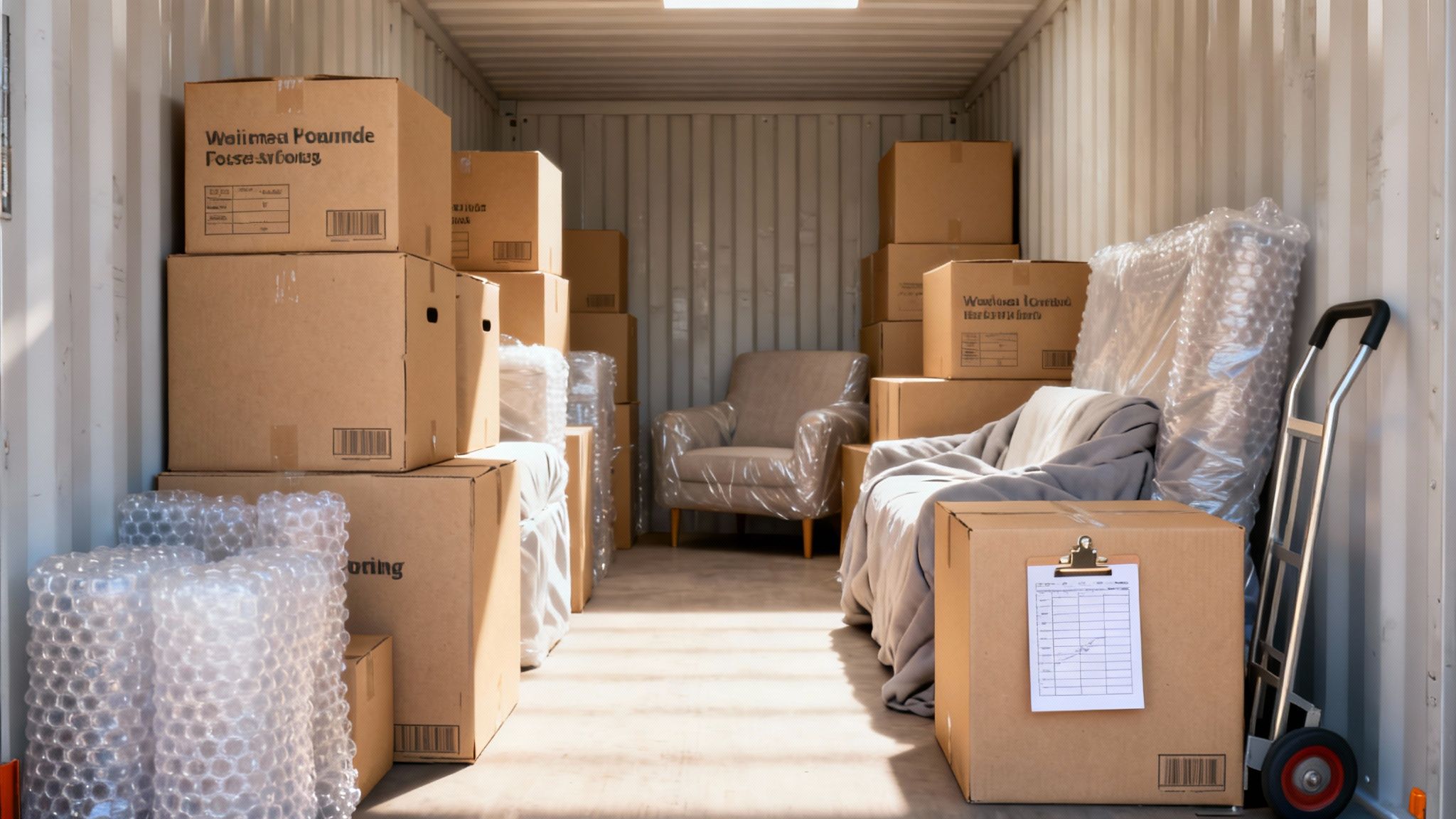
Loading Your Unit the Smart Way
How you load the unit is just as crucial as how you pack the boxes. The goal is simple: think about what you might need to grab later. Treat your storage container rental near me less like a cupboard to cram things into and more like a well-organised library.
- Heavyweights to the Back: Get the big, bulky stuff like fridges, washing machines, and solid furniture in first, right against the back wall. This gives you a solid foundation to build on.
- Leave a Walkway: This is the golden rule everyone forgets. Don't pack everything wall-to-wall. Leave a clear path down the middle so you can actually walk in and get to things at the back without unpacking the entire unit.
- Handle with Care: Anything fragile should be wrapped well, packed in clearly marked boxes, and placed on top of your sturdier items or on shelves if you have them. Never at the bottom!
- Look After Your Furniture: Take apart what you can – bed frames, tables, etc. – to maximise space. Throw some dust sheets or proper covers over sofas, mattresses, and anything with fabric to keep them clean and fresh.
If you’re a business storing stock, this is where you can seriously boost your efficiency. Stack your inventory so the labels face outwards and keep your best-selling or most frequently needed items right by the door. It’s a simple trick that makes picking and packing so much faster.
Got Questions? We've Got Answers
If you're thinking about renting a storage container, you probably have a few questions. It's a big decision, and you want to get it right. Here are some of the most common things people ask us, with straightforward answers to help you on your way.
What Can I Actually Put in My Storage Container?
Pretty much anything you can think of! Our containers are perfect for stashing household furniture during a move, keeping garden tools safe over winter, or holding onto business stock and archived documents. Think of it as your own personal warehouse.
Of course, there are a few common-sense restrictions for everyone's safety. We can't allow flammable materials, perishable foods (no one wants that surprise!), illegal items, or any living things.
Is There a Security Deposit to Pay?
Yes, we do ask for a security deposit when you first sign up. This is a standard practice across the self storage industry, and it's fully refundable.
As long as you leave the container empty, clean, and in the same condition you found it, you'll get every penny back at the end of your rental.
What’s the Shortest Time I Can Rent For?
We know that life doesn't always fit into neat, long-term plans. That’s why we keep things flexible. The minimum rental period is just one month, which you pay for upfront.
After that first month, your agreement simply rolls on monthly. This gives you total control – you can store for as long or as little time as you need without getting locked into a complicated contract.
Ready to get organised? Find the perfect storage solution for your home or business with Container Self Store. Get a free, no-obligation quote today and see how easy it is to create the extra space you need. Visit containerselfstore.com to learn more.