
Long-term storage is a fantastic solution when you need to keep your belongings safe for an extended period, which we usually think of as three months or longer. It’s the perfect answer for those big life moments—moving house, downsizing, or even when a business needs to clear some space for stock or archives. A good plan is your best friend here, ensuring everything stays safe and sound for months, or even years.
Your Guide to Long-Term Storage
Choosing to put things into long-term storage usually happens when life is in flux. You might be in the middle of a house move, reclaiming your home from clutter, or managing a growing business. Whatever the reason, finding a secure home for your possessions can feel like another big task on an already long list. It might seem daunting, but once you get a handle on what’s involved, it’s much simpler than you think.
Most people find they need extended storage during common life events. Maybe you’re downsizing but can’t bear to part with family heirlooms, or you’re a student in Nottingham who needs a spot for your stuff over the long summer holidays. For businesses in Northampton, it’s often a savvy way to store excess inventory or archive documents without paying for a pricey warehouse.
Understanding Your Main Options
When you start looking, you’ll find there are generally two main types of units, and each one is built for different kinds of items and access needs.
- Indoor Storage Rooms: Tucked away inside a building, these units offer the best protection from the elements. They are absolutely the right choice for anything sensitive to temperature swings or humidity. Think wooden furniture, electronics, important paperwork, and fabrics.
- Drive-Up Containers: These are your classic, secure steel units that you can drive right up to. The ground-level access is a game-changer, making it incredibly easy to load and unload bulky, heavy things like sofas, garden machinery, or business stock.
Key Takeaway: The first step is the most important. Simply take a good look at what you’re storing. This will instantly tell you whether you need the climate-controlled protection of an indoor room or the sheer convenience of a drive-up container. Getting this right from the start makes all the difference.
How to Prepare Your Items for Storage
Getting your things ready for long-term storage isn’t just about throwing them in a box. The real work starts well before you even think about loading up a van. It’s this prep work that makes the difference between finding your belongings just as you left them and facing a nasty surprise down the line.
The first thing you absolutely must do is create an inventory. I can’t stress this enough. It’s not just for keeping track of your stuff; it’s a non-negotiable for insurance and, frankly, for your own sanity. A simple spreadsheet is fine, or you could use a dedicated app. For each item, note what it is, its condition, and which box you’ve packed it in (make sure you number your boxes!).
With your list in hand, it’s time to get sorting. There’s no point paying to store things you don’t actually need, want, or love. A really effective way to do this is the three-box method: one pile for storage, one for selling or donating, and one for the bin. Be honest with yourself—every single item you get rid of is money saved and space gained.
This journey, from realising you need space to having a solid plan, is a process. Taking it step-by-step makes it all feel much more manageable.
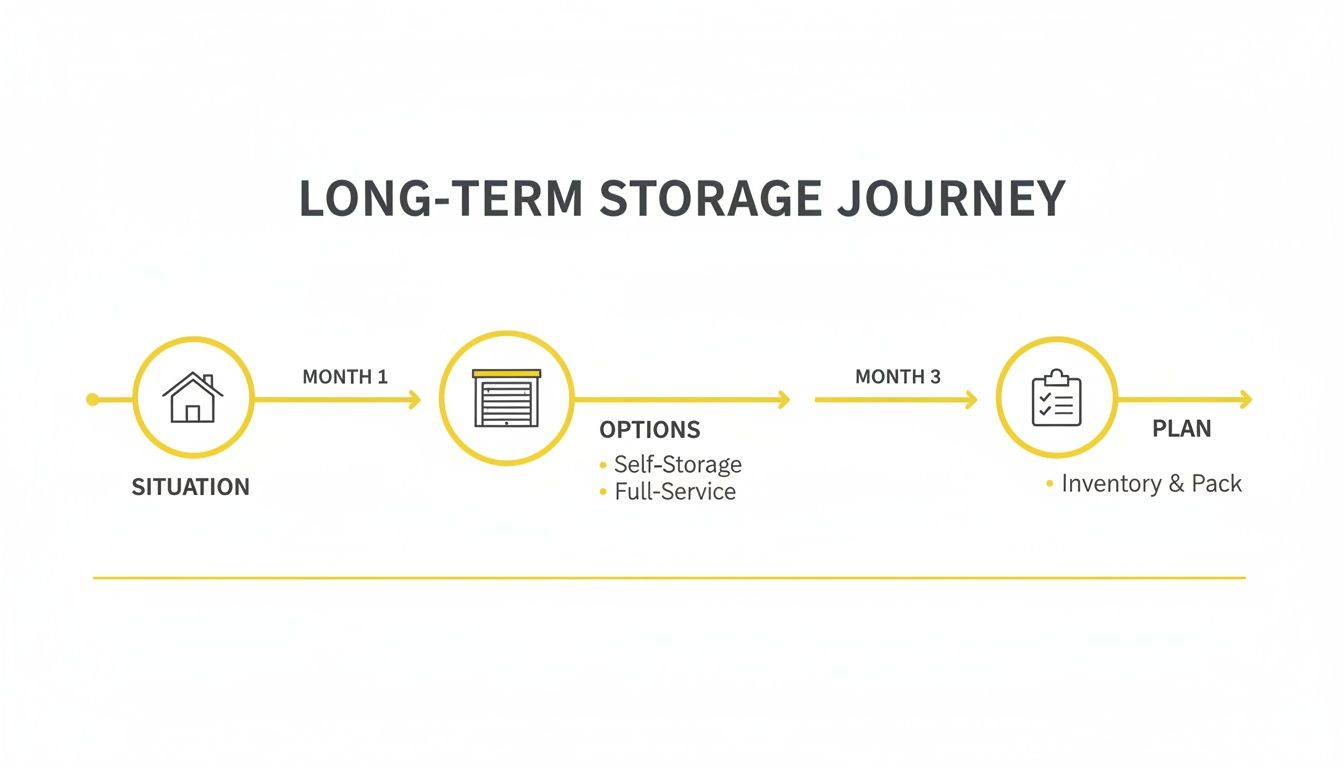
As you can see, a little bit of forethought goes a long way to making the whole experience a breeze.
Cleaning and Repairs: A Crucial Checklist
Putting dirty items into a sealed container for months on end is a recipe for disaster. You’re basically rolling out the welcome mat for mould, mildew, and even pests. Everything—and I mean everything—needs to be sparkling clean and bone dry before it gets packed away.
Here’s a quick mental checklist to run through as you pack:
- Appliances: Fridges and freezers need to be fully defrosted, then wiped down inside with a bicarbonate of soda solution. It’s vital to prop their doors open slightly to stop musty smells and mould from taking hold.
- Fabrics and Upholstery: Any clothing, curtains, bedding, or sofas should be laundered or professionally cleaned. Make absolutely sure they are 100% dry before packing.
- Furniture: Give all wood and plastic furniture a good wipe-down. A layer of polish on wooden pieces offers a bit of extra protection from moisture in the air. We’ve got more specific self storage tips for preparing furniture for storage that can prevent long-term damage like warping.
- Garden Equipment: Drain all fuel and oil from lawnmowers and other machinery. You’ll also want to clean off every last bit of mud and grass to stop rust from forming and to keep pests away.
Taking an hour to fix that wobbly table leg or stitch up a small tear in a cushion now will save you from a much bigger, more expensive problem later. Small issues can easily become major damage when an item is stacked under other things for months.
Finally, your inventory system will be your most valuable tool. Once you’ve sorted your belongings and chosen your unit, creating a detailed off-site storage inventory allows you to keep tabs on everything. This digital map of your unit is a lifesaver when you need to find one specific box months or even years later without having to unpack the entire space.
Choosing the Right Long Term Storage Unit
Picking the right storage unit isn’t just a box-ticking exercise; it’s probably the single most important decision you’ll make for keeping your things safe long-term. This choice is about more than just finding an empty space. You’re looking for a secure environment that will keep your belongings in the exact same condition you left them, whether that’s for six months or six years.
Get this wrong, and you could be facing damage from damp, pests, or worse. A little bit of thought now will save you a lot of potential heartache down the line.
The first big question is usually whether to go for an indoor room or a drive-up container. What you’re planning to store is your best guide here. If your inventory includes anything sensitive to temperature and humidity – think wooden furniture, electronics, artwork, or important documents – an indoor room is almost always the right call. These units shield your items from the UK’s wild temperature swings and damp air, which are the main culprits behind warping, rust, and mildew.
Indoor Rooms vs Drive-Up Containers
On the other hand, for bulkier, less delicate items, a drive-up container is incredibly convenient. We’re talking about things like large sofas, garden machinery, or business stock. The ability to pull your car or van right up to the door makes loading and unloading a breeze. It saves a massive amount of time and back-breaking effort.
Our containers in Nottingham and Northampton aren’t just shipping containers; they’re purpose-built for storage and have proper ventilation to keep air circulating. This makes them a really solid and popular choice for a huge range of long-term storage needs.
To help you weigh it up, here’s a quick side-by-side look at the two options.
Indoor Room vs Drive-Up Container: A Comparison
Deciding between an indoor unit and a drive-up container comes down to what you’re storing and how you need to access it. This table breaks down the key differences to help you find the perfect fit.
| Feature | Indoor Storage Room | Drive-Up Container |
|---|---|---|
| Best For | Electronics, documents, fabrics, wooden furniture, artwork. | Bulky furniture, garden tools, machinery, business stock. |
| Climate Protection | Excellent protection from extreme temperatures and humidity. | Good protection from elements, often ventilated for airflow. |
| Accessibility | Requires moving items through corridors and sometimes lifts. | Direct vehicle access for easy loading and unloading. |
| Typical Location | Inside a main building, offering an extra layer of security. | Secure, gated outdoor compound with CCTV monitoring. |
Ultimately, both are excellent solutions, but they serve different purposes. Your inventory is the best decider.
It’s no surprise that the UK’s self storage industry is now worth around £1.2 billion annually. Container storage is actually the fastest-growing part of the market, now making up almost 40% of all locations. This just shows how many people value the practicality and convenience they offer. You can read more about industry trends in this report from Cleveland Containers.
Security and Accessibility Are Non-Negotiable
Beyond the type of unit, the two things you absolutely cannot compromise on are security and access. You need to be able to lock up your unit and walk away with complete confidence that everything inside is safe and sound, 24/7.
Never settle for a facility that doesn’t take security seriously. At a minimum, you should be looking for:
- High-Quality CCTV: Cameras should be watching over all the main access points, corridors, and the site perimeter.
- Gated Access: A secure gate that requires a code or key fob is essential to ensure only customers can get on-site.
- On-Site Staff: Having a human presence during business hours is a huge deterrent and means there’s someone to help if you need it.
Peace of mind is the true value of good long term storage. Knowing your facility is actively managed and monitored means you can lock your unit and not worry about it until you need access again.
Finally, think about when you’ll actually need to get to your stuff. Life is unpredictable. Most good facilities, including ours, offer 7-day access so you can pop in whenever it suits your schedule. Always check the specific access hours before signing a contract to make sure they work for you.
For a deeper dive into balancing cost with these essential features, have a look at our guide to finding cheap storage units near me. It offers some great insights.
Mastering How to Pack for Durability
Packing for a quick house move is one thing. Prepping your belongings to sit in storage for months, or even years, is a whole different ball game. You’re not just moving things from A to B; you’re essentially creating a time capsule. Your mission is to shield everything from moisture, pests, and the simple wear and tear of time.
Getting this right comes down to using the right materials and techniques. It’s about a careful, deliberate process of preservation to make sure everything comes out looking just as good as it did when it went in.
Investing in the Right Materials
I know it’s tempting to grab free boxes from the local supermarket, but for long-term storage, that’s a mistake. Those boxes might be fine for a day-long move, but they simply don’t have the structural integrity for the long haul. Over time, they sag and crush, putting whatever’s inside at risk.
Your packing arsenal should look a bit more professional:
- Uniform, sturdy boxes: Using boxes of the same size is a game-changer. It lets you build solid, stable stacks that make the most of your vertical space.
- High-quality packing tape: Don’t skimp here. A good quality tape, applied generously to the top and bottom seams, is what stops your boxes from bursting open under pressure.
- Specialised wraps: Bubble wrap is non-negotiable for fragile items like glassware and electronics. For bigger pieces, proper furniture covers or even old duvets and blankets will protect against dust and scratches.
- Acid-free tissue paper: If you’re storing photos, important documents, or collectibles, this is crucial for preventing them from yellowing over time.
Spending a little extra on proper supplies upfront is one of the smartest moves you can make. It’s cheap insurance for your possessions.
Smart Strategies for Furniture and Electronics
Big-ticket items like your sofa, bed, or television need a bit of special attention to survive storage unscathed. Just shoving them into the back of a unit is asking for trouble down the line.
With furniture, the best approach is to dismantle what you can. Taking the legs off a dining table or the headboard off a bed frame saves a surprising amount of room and, more importantly, prevents stress damage to the joints. Pop all the screws and bolts into a labelled plastic bag and tape it securely to the largest piece of the item it belongs to. You’ll thank yourself later.
Electronics are especially vulnerable to damp. Before packing anything, make sure it’s completely powered down, clean, and dry.
Pro Tip: Grab a handful of those little silica gel packets you find in new shoe boxes or handbags. Tossing a few into boxes with electronics, photos, or important paperwork is a brilliant way to absorb any ambient moisture and add an extra layer of defence.
Protecting Fabrics and Valuables
Clothing, bedding, and other fabrics are a prime target for mildew and pests, so prepping them properly is critical. Whatever you do, never store textiles in sealed plastic bags. It seems like a good idea, but it traps moisture, which can lead to mould and discolouration.
Instead, opt for wardrobe boxes to keep clothes hanging, or use breathable plastic containers. For really precious items like a wedding dress or family heirlooms, it’s worth investing in specialised acid-free storage boxes. A few cedar balls or lavender sachets tossed in are also a simple, effective way to deter moths and keep things smelling fresh.
Finally, think about the layout of your unit. My single best organisational tip is to leave a central aisle. It sounds simple, but this walkway means you can get to the boxes at the very back without having to unpack the entire unit just to find one thing.
And please, be a friend to your future self: label everything in detail. Don’t just write “Kitchen.” Write “Kitchen – Pots & Pans, Mixing Bowls, Cutlery Tray.” When you need to find something specific six months from now, that level of detail will turn an exhausting treasure hunt into a simple task.
The Nitty-Gritty: Contracts, Insurance, and Security
Right, you’ve picked your spot. Now for what most people think of as the boring bit – the paperwork. But honestly, getting the contract, insurance, and security sorted is what lets you lock up your unit and walk away without a single worry. This is where peace of mind really comes from.
Don’t just glance at the rental agreement before you sign. It’s a legal document, and it lays out the rules of the game for both you and the storage facility. Pay close attention to the details on price increases, how much notice you need to give before moving out, and any rules on what you can and can’t store. A clear, straightforward contract is always a good sign.
Why You Can’t Afford to Skip Insurance
A common mistake is assuming your home insurance has you covered. Nine times out of ten, it doesn’t. Most standard policies offer very little, if any, protection for items kept off-site long-term. Banking on it is a gamble you don’t want to take.
That’s where specialist self-storage insurance comes in. It’s built for this exact scenario, protecting your belongings against things like fire, theft, and water damage. Here at Container Self Store, we insist that all customers have their goods insured. We can even help you get a policy that matches the value of what you’re storing.
Think of storage insurance as a safety net. For just a few pounds a month, you’re buying complete protection for your valuables. It means that if the worst should happen, you won’t be left high and dry.
The UK self-storage industry is booming, with average rental returns hitting £29.13 per square foot a year. This growth means facilities are more focused than ever on providing top-notch services to keep customers for the long haul. You can dive deeper into what these market trends mean for you in Janus Europe’s industry report.
Sizing Up a Facility’s Security
A good padlock on your unit is just the start. What you really need to look at is the site’s overall security setup. When you visit one of our sites in Nottingham or Northampton, take a proper look around and see how many layers of security are in place.
Here’s what separates a truly secure facility from a basic one:
- Secure Perimeter and Gated Entry: The entire site needs to be properly fenced off. Access should be through a single electronic gate that you can only open with a personal code or fob.
- Wall-to-Wall CCTV: You want to see high-definition cameras everywhere – covering driveways, entrances, and all the main corridors. Crucially, they must be recording 24/7.
- Bright, All-Night Lighting: A well-lit facility is a huge turn-off for thieves. Make sure every corner of the site is illuminated, especially after hours.
- People on the Ground: Having staff on-site during business hours is a massive plus. They’re not just there to help; their presence is a powerful deterrent.
All these features work together to create a fortress for your belongings. Before you commit to anything, make sure your chosen facility has all these bases covered. It’s this level of detail that gives you the confidence to store your things for months or even years.
Using Long Term Storage for Your Business
Think long-term storage is just for house movers and their spare sofas? Think again. For many businesses, it’s a game-changing tool for running a leaner, more efficient operation. It’s the perfect escape from the restrictive and often eye-wateringly expensive commercial leases that can hold a growing business back.
Instead of being locked into a massive warehouse you’re only half-using, a storage unit lets you pay for precisely the space you need, for as long as you need it. This kind of agility is a massive advantage, whether you’re a bustling e-commerce brand or an established tradesperson.
A Hub for Stock and Equipment
For online sellers, a storage unit can become your very own mini-fulfilment centre. Imagine having all your stock neatly organised on shelves, a dedicated corner for packing orders, and a system for managing inventory that doesn’t involve tripping over boxes in your hallway. Our drive-up containers are brilliant for this; couriers can collect orders right from your unit door, smoothing out your entire logistics chain.
It’s a similar story for tradespeople. Our ground-level containers are the ideal solution for keeping expensive tools and materials safe and sound. It’s a far more secure bet than leaving everything in a van overnight, and it gives you a central base to load up for the week’s jobs.
Secure Document Archiving
Most businesses are legally required to keep hold of physical records for several years. From financial paperwork to client files, these documents can quickly swamp your valuable office space. A secure, dry indoor storage room is the perfect answer for long-term document archiving.
If you’re setting up an archive, here are a few tips from experience:
- Stick to sturdy, identical archive boxes. They’ll stack neatly and safely.
- Label every box clearly with what’s inside and, crucially, a destruction date.
- Arrange the boxes in a logical order—chronologically or by client—to make finding things a breeze.
- Keep a simple digital inventory. A quick spreadsheet will tell you exactly what you’ve stored and where it is.
This systematic approach doesn’t just keep you compliant with data protection laws; it frees up prime real estate in your office. It’s an easy win for a more organised business.
The e-commerce boom has completely changed the game for storage in the UK. Online sales now account for a huge 27.1% of all retail sales—a massive jump from just 19% before 2020. This explosive growth has sent the need for flexible storage soaring, driving the industry’s projected revenue to a staggering £38.2 billion. For a deeper dive into the numbers, check out the full IBISWorld’s industry analysis.
This shift proves just how vital adaptable storage has become. Whether you’re juggling seasonal stock, archiving critical documents, or just need a more cost-effective operational base, the right unit can make all the difference. For businesses who’ve outgrown a small unit but aren’t ready for a full-blown commercial property, options like warehouse self storage can be the perfect middle ground, offering a fantastic balance of space, flexibility, and value. It’s simply a smart move for any business with an eye on growth.
Got a Few Questions About Long-Term Storage?
It’s completely normal to have a few questions buzzing around, even after you’ve planned everything out. We get asked all sorts of things by our customers in Nottingham and Northampton, so we’ve put together answers to the most common queries to help you feel completely confident.
What Can’t I Actually Store?
This is a big one, and it’s all about keeping everyone’s belongings safe. As a general rule, you can’t store anything that’s hazardous, illegal, or that could spoil. Think things like petrol, paint, gas canisters, or fireworks – basically, anything flammable or explosive is a definite no.
Likewise, you can’t store perishable items. That means no food, as it’s a magnet for pests which can cause a lot of damage. And of course, living things like plants or animals are not allowed. It’s always worth double-checking the facility’s specific list of prohibited items before you start packing.
A good rule of thumb we tell our customers: if it’s dangerous, edible, or alive, it doesn’t belong in a storage unit. Sticking to this keeps the whole site secure for you and everyone else.
Do I Really Need a Climate-Controlled Unit?
Honestly, it all comes down to what you’re storing. For many everyday items, it’s not essential. But if your belongings are sensitive to the classic British swings in temperature and humidity, then yes, it’s a very wise investment.
Consider it for items like:
- Wooden or leather furniture, which can warp, crack, or fall victim to mildew in damp conditions.
- Electronics and media, as moisture is their worst enemy and can cause permanent damage.
- Paperwork, photos, and artwork, which can yellow, fade, or deteriorate over time.
- Delicate fabrics, like a wedding dress or antique textiles that you want to preserve perfectly.
For sturdier things like your garden tools, plastic patio furniture, or boxes of kitchenware, one of our standard, well-ventilated units will do the job perfectly well.
How Do I Remember What’s in My Unit?
Trust me, there’s nothing worse than needing one specific thing and facing a wall of identical-looking boxes. The trick is to get organised before you load up. Create a simple inventory list as you pack – a spreadsheet on your computer or even just a dedicated notebook works great.
Number each box and jot down a summary of its contents next to the corresponding number. For your more valuable possessions, taking a quick photo is also a great idea for your own records. Some of our most organised customers even sketch a rough map of their unit so they know the general area to start looking. It turns a potential headache into a five-minute job.
Ready to get your belongings safely stored with a local team you can trust? At Container Self Store, we provide secure and flexible long-term storage in Nottingham and Northampton, perfectly suited to your needs. Get your free, no-obligation quote online today.