
Staring at a mountain of boxes with nowhere to put them? We've all been there. When life throws a curveball and you find yourself searching for "temporary storage near me", you're looking for more than just a space. You're looking for a secure, flexible solution that gives you genuine peace of mind.
Why Temporary Storage Is Your Flexible Friend
Life is full of moments when you need a little extra room, and it's often at short notice. Whether you're in the middle of a house move, a big renovation project, or just trying to reclaim your spare room, temporary storage offers a practical, short-term home for your belongings. It's the perfect bridge during life’s biggest transitions, giving you a safe and accessible place for everything from furniture to family heirlooms.
Picture this: you're a homeowner in Nottingham, packing up for the big move, but the new place isn't quite ready. That gap is exactly where temporary self-storage becomes an absolute lifesaver. It's a common story across the country; residential users are the biggest group by far, making up a massive 75% of all self-storage customers in the UK.
This demand is closely linked to the pressures of the housing market. With over 1.2 million home moves annually in recent years, many people find themselves stuck between selling and buying. It’s no surprise, then, that nearly 3% of the UK population now actively uses self-storage – a figure that has steadily climbed from 1.29% back in 2018. It's clear that local, flexible storage is no longer a niche service but a mainstream solution.

Common Scenarios for Needing Short-Term Space
This need for a temporary haven isn't just about moving house. All sorts of situations call for a bit of extra breathing room.
- Home Renovations: Keep your furniture safe from dust, paint, and damage while you decorate or build an extension. It's much easier than trying to work around everything.
- Decluttering: Create more living space by stashing seasonal items (like the Christmas tree), sentimental belongings you can't part with, or things you simply don't use every day.
- Student Storage: Students at universities across Nottingham and Nottingham often need a reliable place to keep their possessions over the summer holidays, avoiding the hassle of lugging it all home.
- Life Events: Downsizing, combining households with a partner, or sorting through an inheritance can all create a sudden, temporary need for extra room.
The real value of temporary storage is its adaptability. It isn't a long-term commitment but a short-term tool that gives you control during periods of change. It allows you to focus on the task at hand without constantly worrying about where to put everything.
Making the Most of Your Storage
Once you've decided to get a unit, a little bit of organisation goes a long way. Knowing the basics of managing your off-site storage inventory isn't just for businesses; it makes your life easier and helps you plan your space effectively. A bit of forward-thinking now ensures you can find that one specific box without having to unpack the entire unit later.
This guide is designed to cut through the noise and show you how local facilities right here in Nottingham and Nottingham offer the perfect stop-gap solution. We’ll dive into the practical details of choosing the right unit, understanding the costs, and making your move into storage completely seamless.
Choosing Your Ideal Storage: Indoor Room vs. Drive-Up Unit
When you start looking for temporary storage, you’ll quickly see it’s not a one-size-fits-all deal. The two main flavours you'll come across are indoor storage rooms and outdoor drive-up containers. Getting this choice right from the start can make a world of difference to how smooth your whole storage experience is.
Think of it like choosing between a high-security locker inside a building versus a garage right at your doorstep. Each has its own distinct advantages, and the best fit really boils down to two simple things: what you’re storing and how often you'll need to get to it.
The Case for Indoor Storage Rooms
Indoor storage rooms are exactly what they sound like – private, secure units located inside a larger building. You access the main facility first, then head to your own space down clean, well-lit corridors. It’s like having a secure extension of your home, just off-site.
The big win here is the extra layer of security and, crucially, protection from the notoriously unpredictable British weather. Because these rooms are completely insulated from the outside world, they provide a much more stable environment. This makes them the go-to choice for anything delicate or valuable that could be damaged by damp, dust, or big swings in temperature.
You’d want to choose an indoor room for things like:
- Electronics and Appliances: Your TV, computer, and kitchen gadgets really don't appreciate moisture or dust.
- Important Documents: Keep business records, legal files, and archived paperwork bone-dry and protected.
- Antique or Wooden Furniture: A stable climate helps prevent wood from warping, splitting, or growing mould.
- Clothing and Textiles: Fabrics, mattresses, and soft furnishings stay safe from damp, mustiness, and pests.
These rooms come in all sorts of sizes, from a compact locker that’s perfect for a few archive boxes to huge spaces that could easily swallow the contents of a three-bedroom house.
The Convenience of Drive-Up Container Units
On the other hand, drive-up units are the undisputed champions of convenience. These are tough steel containers, usually located outdoors on the ground floor, that let you drive your car or van right up to the door. No lifts, no stairs, no long corridors to negotiate. This makes loading and unloading anything heavy or bulky an absolute doddle.
That direct access is a real game-changer if you need to pop in and out of your storage regularly. It saves a massive amount of time and effort, turning what could be a back-breaking task into a quick and easy job. It's no surprise they're so popular with local businesses and tradespeople.
Drive-up containers are perfect for:
- Tradespeople: Electricians, plumbers, and builders can grab tools and materials for the day's job in minutes.
- E-commerce Businesses: Online sellers can manage their stock efficiently, driving right up to pick and pack orders.
- Large Furniture and Equipment: Storing things like garden machinery, big sofas, or heavy equipment is so much simpler.
- House Movers: Anyone wrestling with lots of heavy boxes and furniture will appreciate the ground-level access.
When you choose a drive-up unit, you're prioritising speed and sheer ease of access. For anyone storing heavy gear or needing frequent entry, being able to park right at the door is an unbeatable perk.
Indoor Room vs. Drive-Up Container, Which Is Right For You?
So, how do you decide? It's all about balancing protection against convenience. This quick comparison should help you pinpoint which option is the best fit for your situation.
| Feature | Indoor Storage Rooms | Drive-Up Container Units |
|---|---|---|
| Best For | Sensitive items like electronics, documents, antiques, and textiles. | Bulky goods, heavy equipment, business stock, and frequently accessed items. |
| Access Method | Via internal corridors and lifts after entering the main building. | Direct vehicle access; park right in front of your unit's door for easy loading. |
| Environmental Protection | Excellent protection from weather, dust, and temperature changes. | Ventilated to prevent condensation but more exposed to external temperature fluctuations. |
| Convenience | Requires carrying items through the building, which can take more time. | Ultimate convenience for quick loading and unloading of heavy or numerous items. |
| Typical Users | Homeowners storing valuable furniture, collectors, businesses with archives. | Tradespeople, online retailers, people moving house with large items. |
Ultimately, take a moment to think about what you're putting away. If it's your prized vinyl collection or your grandmother's antique dresser, an indoor room offers peace of mind. But if it's tools, stock, or heavy boxes you need to get to often, a drive-up unit will make your life a lot easier.
Understanding Storage Unit Sizes and Costs
Let's tackle the two biggest questions that pop up when you start looking for temporary storage: 'How much space do I actually need?' and 'What's this going to cost me?'. It's tough to visualise empty space, so let’s break it down into real-world terms you can actually picture.
A small 25 sq ft unit might not sound like much, but think of it as a large walk-in wardrobe. It’s the perfect size for a student's things over the summer holidays, or for stashing around 50 medium-sized boxes out of the way.
Need a bit more room? A 75-100 sq ft unit is about the size of a standard single garage. This is usually the sweet spot if you're clearing out a one or two-bedroom flat, as it can comfortably fit big-ticket items like sofas, beds, and fridges alongside all your boxes.
If you’re in the middle of a full house move, a 160 sq ft container is a lifesaver. It’s generally big enough to hold everything from a three-bedroom house, giving you a central hub to work from during the chaos of moving.
How Storage Costs Are Calculated
The price you see isn't just a random number; a few key things determine what you'll pay. Getting your head around them will help you manage your budget.
- Unit Size: This is the big one. The more space you need, the higher the monthly rent. It’s why getting your size estimate right is so important: no one wants to pay for a huge, half-empty unit.
- Length of Stay: Most places work on a flexible monthly basis, which is ideal for temporary needs. Some might offer a small discount if you commit to a longer-term stay, but for short-term projects, the pay-as-you-go model is your best friend.
- Type of Unit: As we've touched on, an indoor room with climate control might be a touch more expensive than a standard drive-up container of the same size. You're paying a little extra for that added protection from the elements.
- Location: Just like with houses, location matters. A facility right in the city centre might have different pricing than one on the outskirts, simply due to local property costs.
This simple flowchart can help you figure out where to start. The type of unit you need often depends more on what you're storing than how much.
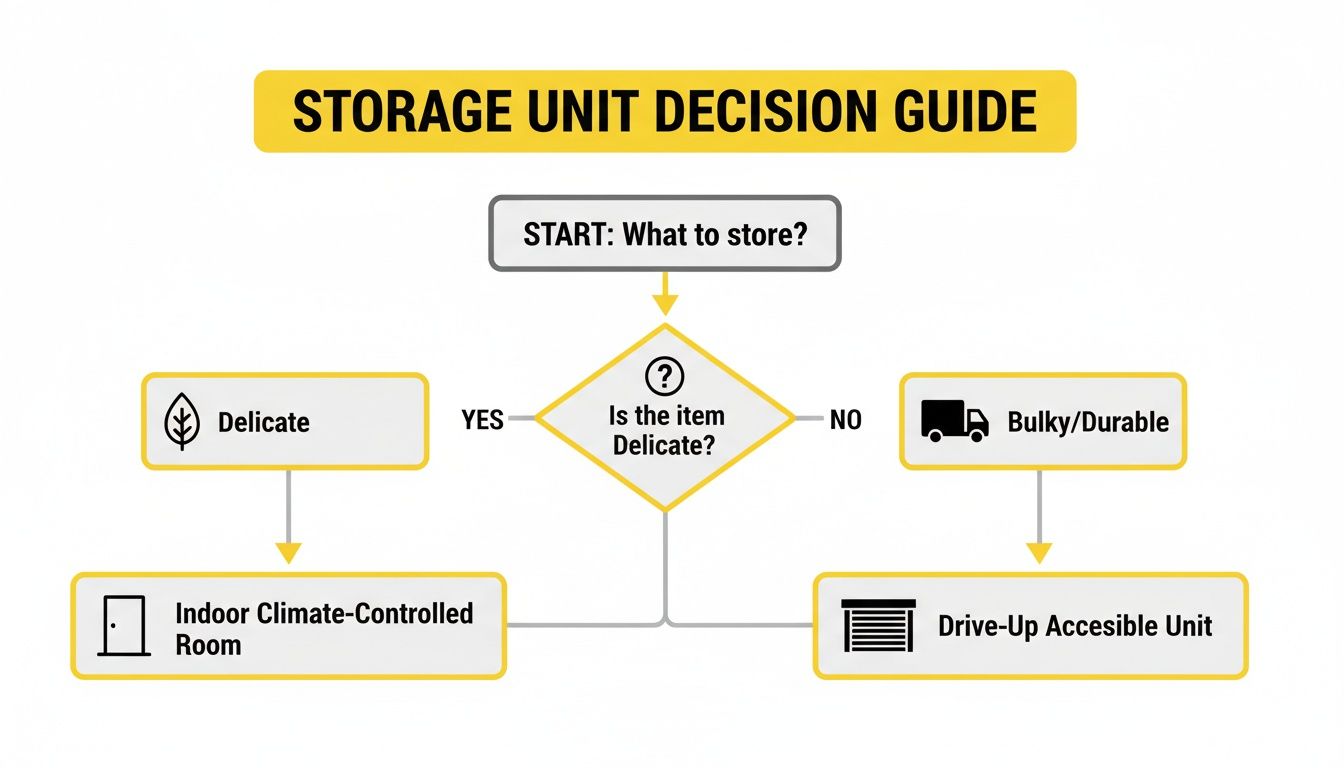
The key takeaway here is that protecting delicate items often makes an indoor room the right call, while you just can't beat the convenience of a drive-up unit for heavy, bulky goods.
Finding Affordable and Flexible Options
The self storage world is always buzzing, especially during the big moving seasons. For students in Nottingham and Nottingham heading home for summer, for instance, demand for temporary storage shoots up.
While UK trends show that 79% of users are aged 40-70, it's often students and younger people driving these short-term seasonal peaks. The industry is incredibly resilient; despite a minor dip in occupancy to 75.1%, turnover recently topped £1.2bn. With short-term storage costing around £2 per square foot per week, even a compact 9 sq ft locker becomes a genuinely affordable option for students. You can see more on these trends by reviewing the full report on UK storage usage from Statista.
The beauty of modern temporary storage is the flexible monthly contract. It ensures you only pay for the space you need, for precisely how long you need it. This model empowers you to scale up or down without being locked into a rigid, long-term lease.
Ultimately, getting the best value comes down to a bit of smart planning. You can explore a variety of options by checking out our complete guide on finding cheap storage units near you. By thinking carefully about your space needs and understanding what drives the price, you can find a solution that’s a perfect fit for both your things and your wallet.
Security, Access, and Insurance: What Really Matters
Finding the right place for your belongings goes way beyond just the size of the room or the monthly rent. When you're searching for "temporary storage near me," you're really looking for a company you can trust to look after your things. That trust boils down to three key elements: solid security, easy access, and the right insurance. Nailing these three will give you genuine peace of mind.
Renting a storage unit without decent security is like leaving your front door wide open. It’s a gamble you just don't want to take. Any good facility will have layers of security, protecting everything from the main gate right down to your individual unit. It's all about making sure your stuff is safe, 24/7.
Think of it like a series of checkpoints. The first line of defence should always be a controlled entrance.
The Security Features You Shouldn't Compromise On
When you pop down to visit a potential storage site, keep your eyes peeled for these absolute must-haves. They're the tell-tale signs of a professional outfit that takes your security seriously.
- Gated Access: The whole site should be enclosed by a proper fence with an electronic gate. This stops anyone who isn't a customer or staff member from just wandering in.
- Decent CCTV Coverage: Look for good quality CCTV cameras covering all the important spots – the entrance, the exit, and the main routes around the units. It's a huge deterrent and keeps a record of everything happening on site.
- People on Site: Having staff around during business hours is a massive plus. Their presence alone is reassuring, and it means there’s someone to react quickly if anything looks out of place. You just don't get that with a fully automated, unmanned facility.
These features all work in tandem to create a secure bubble around your belongings. While you’re the only one with the key to your unit’s padlock, the facility is responsible for keeping the entire environment safe.
Why Flexible Access is a Game-Changer
Security is crucial, but what’s the point if you can’t get to your things when you actually need them? Life isn’t a neat 9-to-5, Monday-to-Friday affair. A facility that offers 7-day access is a huge advantage, letting you get in on your own schedule, not theirs.
This is especially true when you're moving house and find yourself packing late into the evening or over a weekend. For a tradesperson, being able to grab tools first thing in the morning before a job is non-negotiable. Flexible access puts you back in control, making your storage unit feel like a proper extension of your own space.
Don't Skip the Insurance
Even with the best security in the world, the unexpected can still happen. That’s what insurance is for. It’s a common mistake to assume the storage company's insurance covers what's inside your unit – it almost never does. Their policy covers their buildings, not the possessions you put inside them.
Protecting your goods is a team effort. The facility provides the secure space, but you're responsible for insuring the value of your items against things like fire, flood, or theft.
Most professional storage companies will insist on you having insurance before you can move in. This is standard procedure and it's there to protect you. You might be able to add it to your existing home contents policy, but if not, the facility can usually offer a specialised self-storage insurance plan. It's a small but vital cost that provides a safety net, making sure you’re covered, no matter what.
Flexible Storage Solutions for Local Businesses
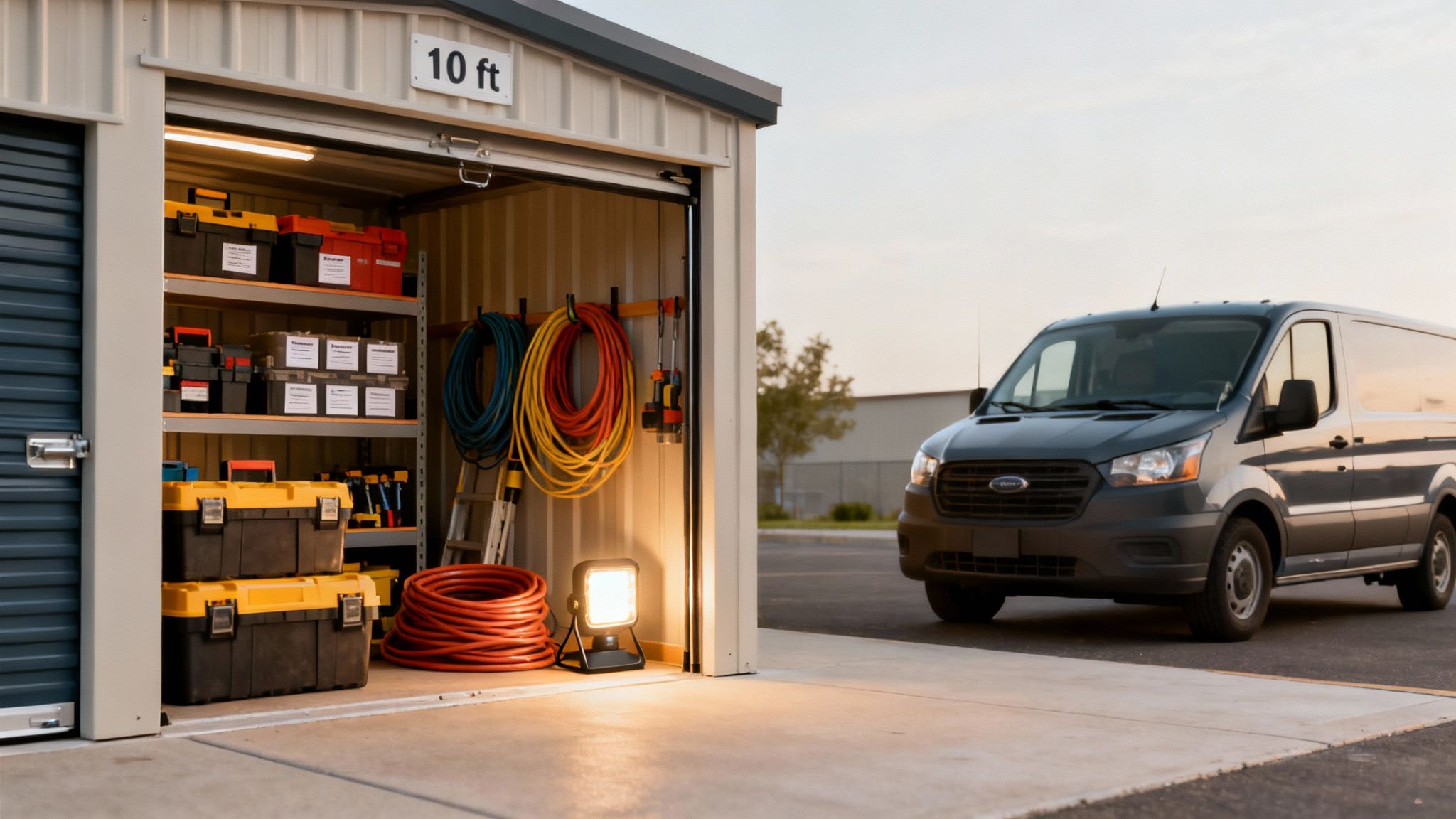
For any business in Nottingham or Nottingham, being able to adapt on the fly isn't just a nice-to-have: it's essential for survival. When you search for "temporary storage near me," you're not just looking for a spare room. You're making a smart move to get an edge on the competition, without being dragged down by a costly commercial property lease. Those rigid, long-term contracts can seriously hamper growth, locking up your cash and killing your ability to pivot when you need to.
This is where temporary business storage comes in as a much smarter, more agile alternative. It gives you the power to scale your space up or down depending on the season, a big project, or your current stock levels. The bottom line? You only pay for the space you need, for exactly how long you need it. This simple switch lets you sidestep the hefty overheads that come with a conventional warehouse, like business rates, utility bills, and constant maintenance.
How Local Businesses Are Already Using It
Let's get practical and look at how businesses on the ground are using temporary storage to work smarter, not harder. These aren't just theories; they're real-world examples of how you can boost efficiency and cut costs.
- The Local Electrician or Plumber: Think of a secure 10 ft container as your own mini-depot. Instead of a van or garage overflowing with gear, all your tools, parts, and equipment are kept safe and organised in one place. With drive-up access, you can load up for the day's jobs in minutes and drop everything off securely at night. No more worrying about theft from the van.
- The E-commerce Retailer: A 20 ft drive-up unit is the perfect micro-warehouse. It's an ideal hub for taking in deliveries, sorting stock, and getting orders out the door. And with access 7 days a week, you can run your business on your schedule, not someone else's, all without the commitment of a huge industrial unit.
- The Landscaper or Builder: Storing bulky kit like cement mixers, mowers, and scaffolding in a ground-level unit keeps it safe, secure, and out of the rain. This frees up valuable space at home and protects your expensive equipment between jobs.
The Clear Financial Advantage
For self-employed tradespeople and online sellers, especially those operating near key routes like the A45 in Nottingham, this kind of flexible storage is a total game-changer. Across the UK, a massive 27% of self-storage renters are using their units for business, storing everything from stock and tools to equipment and archives.
It's helping over 680,000 businesses slash their property costs by an estimated 40-60% compared to leasing a traditional warehouse. The UK's self-storage market just hit £1.2 billion in annual turnover, and a lot of that growth is down to e-commerce, which now makes up over 30% of all retail sales. These businesses need flexible space without fixed overheads to grow. You can dive deeper into the numbers in the UK Self Storage Annual Report.
Temporary storage allows a business to put its money into growth, things like marketing, new equipment, or staff, instead of pouring it into a rigid property lease. It turns a fixed cost into a flexible, manageable one.
Beyond Just Storage: Trade Pods and Business Pods
Sometimes, you need more than just an empty box. You need a functional, compact workspace. This is exactly where specialised units like Trade Pods or Business Pods come into their own. They aren't just containers; they come kitted out with power, lighting, and sometimes even Wi-Fi.
This clever setup can turn a simple storage unit into a secure workshop, an order-fulfilment station, or a small operational base. A tradesperson can charge their tool batteries overnight, ready for the morning. An online seller can set up a proper packing bench with a laptop and label printer. It’s an incredibly cost-effective way to create a professional workspace without the massive price tag. Find out more about how businesses are using warehouse self-storage solutions to get ahead.
Your Simple Checklist for a Stress-Free Move-In Day
Let’s be honest, moving your things into storage can feel like a massive task. But with a bit of forward planning, what seems like a mountain of a job can become a straightforward, stress-free day. Think of this checklist as your game plan.
First things first, get a clear picture of what you're actually storing. It might sound tedious, but making a quick inventory list is a game-changer. It helps you accurately judge the unit size you need, which stops you from overspending on space you’ll never use.
Once you know what’s going, you can gather your supplies. You'll want a good mix of sturdy boxes, plenty of strong packing tape, bubble wrap for anything delicate, and some thick marker pens.
Essential Packing and Loading Strategy
Packing well is about more than just getting things into boxes. It's about protecting your belongings and making your life easier when you need to find something later.
- Balance the Weight: Always put heavier items at the bottom of the box and lighter things on top. It seems obvious, but it prevents your grandmother's fine china from being crushed by a stack of books. And try not to make any single box impossible to lift!
- Fill the Gaps: Use old towels, bedding, or even crumpled paper to fill any empty space in your boxes. This stops things from rattling around and breaking while they're on the move.
- Label, Label, Label: This is the one step you can't skip. Write on at least two sides of every box, detailing the contents and which room it belongs to. If you think you might need something soon, scrawl "ACCESS FIRST" in big, bold letters.
A great way to get everything you need in one go is to grab a dedicated self-storage moving kit. It takes the guesswork out of buying supplies.
Loading Your Unit Like a Pro
How you pack the unit is just as crucial as how you pack the boxes. A little bit of strategy here will save you a world of pain later on.
The golden rule? Always leave a walkway down the centre of your unit. This simple trick means you can get to the boxes at the very back without having to empty the entire space just to find one thing.
Start with your biggest, heaviest items: think sofas, washing machines, and wardrobes. Place them against the back wall, and it's always a good idea to cover them with old blankets or dust sheets for protection.
Next, stack your boxes, with the heaviest on the floor and the lightest on top. Make sure the labels are all facing your walkway so you can see what’s where at a glance.
Finally, anything you marked with "ACCESS FIRST" should go right at the very front, just inside the door. Easy.
For a more detailed breakdown of the whole process, our moving house packing checklist has you covered from start to finish. Following this plan will make finding what you need in your "temporary storage near me" a breeze.
Got Questions About Temporary Storage? We’ve Got Answers
You’re bound to have a few questions when looking for temporary storage. It’s completely normal! To help clear things up, here are some straight-talking answers to the queries we hear most often.
What’s the Shortest Time I Can Rent a Unit For?
We keep things simple and flexible with a straightforward monthly contract. That means you can rent a unit for as little as one month, with no pressure to sign up for a long-term commitment you don’t need. It’s ideal if you’re just trying to bridge the gap between moving house or need to stash some seasonal stock for your business.
When Can I Get to My Stuff?
Life doesn’t just happen Monday to Friday, and neither should your storage access. Our Nottingham and Nottingham facilities are open 7 days a week during standard hours, so you can pop in whenever it suits you. Whether it’s a weekend move or a mid-week stock run, you can get to your belongings without any hassle. Outside of these hours, gated access keeps everything secure.
Being able to get into your unit seven days a week is a real game-changer. It takes the pressure off during a stressful house move and gives business owners the freedom to manage their stock on their own schedule.
Do I Need to Bring My Own Lock?
Yes, you’ll need to provide your own padlock. We do this for a very important reason: it ensures you are the sole keyholder. When you’re the only one with the key, you have complete peace of mind that nobody else can access your unit. If you’re not sure which type to get, our team on-site is always happy to recommend a good, high-security padlock.
Is There Anything I Can’t Put in My Storage Unit?
Absolutely. For the safety of everyone and their belongings, there are some common-sense restrictions on what you can store. This is standard practice across the industry and helps us maintain a secure and clean environment for all our customers.
You can’t store items like:
- Flammable or explosive materials, such as petrol, paint, or gas canisters.
- Perishable goods, like fresh food that could spoil or attract pests.
- Illegal items or anything obtained unlawfully.
- Live animals or plants.
We’ll give you a full, clear list in your rental agreement so there’s no guesswork involved.
Ready to create that extra space you need? Get a free, no-obligation quote from Container Self Store today and see just how easy it can be. Head over to our website to get started.