When life throws you a curveball, that quick search for "short term storage near me" is often the first step to getting things back on track. What you really need is a secure, flexible space that doesn't tie you down with a long contract, whether you're moving house or juggling business stock for a few months. It's all about finding something that just works for right now.
Finding Practical Short Term Storage Near You
Let's be honest, hunting for storage can feel like a chore, especially when you're in a hurry. The trick is to cut through the noise and focus on what matters for a temporary fix: convenience, flexibility, and solid security.
Your needs are unique. If you're clearing out your Nottingham home to make it more appealing to buyers, your priorities will be vastly different from a tradesperson in Nottingham who needs a temporary hub for tools and materials.
Short-term situations demand practicality. This is where you need to think about the type of unit. Sure, indoor units are fine for a few boxes, but drive-up containers are a game-changer for anything bulky. Picture this: would you rather lug a sofa down a long, narrow corridor, or just back your van right up to the door and slide it in? For a stressful move or a packed workday, the answer is obvious.
Focus on Flexibility and Access
The best short-term storage is all about freedom. The non-negotiable feature? A rolling monthly contract. This gives you the space you need without the long-term headache, letting you hand in your notice and walk away when you're done. It’s perfect for those unpredictable life events.
- Bridging a gap between house moves: Your sale went through, but your new place isn't ready. A flexible unit is the perfect stopgap for all your belongings.
- Home renovations: Get your furniture out of the way and keep it safe from dust, paint, and damage while the work is being done.
- Student storage: An absolute lifesaver for students who don't want to drag everything home over the summer break.
- Business stock management: Got a seasonal surge in inventory? A short-term unit lets you scale up without the massive overheads of a warehouse.
This demand for adaptable, easy-access storage is booming. The UK self-storage industry recently hit a staggering £1.2 billion turnover, with container storage leading the charge. There are now 1,135 container-based sites out of 2,915 total facilities in the country. That means nearly 40% of all storage locations are now offering these popular drive-up options.
A truly practical storage facility understands that your time is valuable. This means easy access from major routes like the M1 or A45 and generous opening hours that fit your schedule, not the other way around.
For anyone in the East Midlands, a convenient spot is crucial. Our guide to self-storage units in Nottingham dives into how location makes a real difference to your daily routine. When you're weighing up your options, it's always a good idea to look at local guides that break down security, sizing, and features, like this handy guide to storage units in Perth, to make sure you find the best "short term storage near me".
Short Term vs Long Term Storage Key Differences
To help you decide what's right for you, here's a quick comparison of the two main types of storage contracts and what they typically offer.
| Feature | Short Term Storage (e.g., Container Self Store) | Traditional Long Term Storage |
|---|---|---|
| Contract Type | Rolling monthly contract; cancel with short notice. | Fixed-term contract (e.g., 6-12 months) with penalties for early termination. |
| Flexibility | High. Easy to upgrade or downgrade unit size as needs change. | Low. Often locked into a specific unit size for the contract duration. |
| Best For | Moving house, renovations, student storage, seasonal business inventory. | Archiving documents, storing sentimental items, long-term business storage. |
| Access | Often 24/7 drive-up access for ultimate convenience. | Can have more restricted hours, often requiring access through a main building. |
| Cost | Slightly higher monthly rate but no long-term commitment. | Lower monthly rate in exchange for a longer-term commitment. |
Ultimately, the choice comes down to your timeline. Short-term storage gives you the freedom to adapt, which is exactly what you need when life is in flux.
Choosing the Right Storage Unit Size
Trying to picture how all your stuff will fit into an empty room is trickier than it sounds. Get it wrong, and you're either paying for space you don't need or, even worse, desperately trying to find a second unit on moving day. Let's break it down with some real-world comparisons to help you get it right the first time.
The trick is to think about spaces you already know. A small locker, say around 9-15 sq ft, is perfect for a student needing to store things over the summer. You can easily fit a dozen boxes, a desk chair, and a PC in there. Think of it as a large walk-in wardrobe – ideal for when you just need to get one room's worth of clutter out of the way.
If you're searching for "short term storage near me" because you're moving house, you'll need something bigger. A 50-75 sq ft unit is about the size of a large garden shed and can comfortably handle the contents of a one-bedroom flat. We're talking a sofa, bed, wardrobe, and plenty of boxes.
Sizing Up Drive-Up Containers
For bigger jobs involving bulky furniture or heavy equipment, a drive-up container is your best bet. Being able to park right at the door saves you from navigating lifts and long corridors, which makes loading and unloading a whole lot easier.
The two most common sizes you'll come across are 10ft and 20ft containers:
- 10ft Container (approx. 80 sq ft): This is a fantastic choice for tradespeople. Picture it as a secure extension of your van: perfect for a plumber's tools and materials or a decorator's ladders and paint.
- 20ft Container (approx. 160 sq ft): This is the workhorse for major life events. It's big enough to hold the entire contents of a standard three-bedroom house, making it the perfect solution when you're renovating or between homes.
My Pro Tip: Before you commit to a size, do a quick inventory. Jot down your biggest items, sofas, beds, appliances, and then make a rough guess on how many boxes you'll have. Most storage websites have handy online calculators that give you a brilliant starting point.
This summary really nails the key benefits you should be looking for in any storage solution.
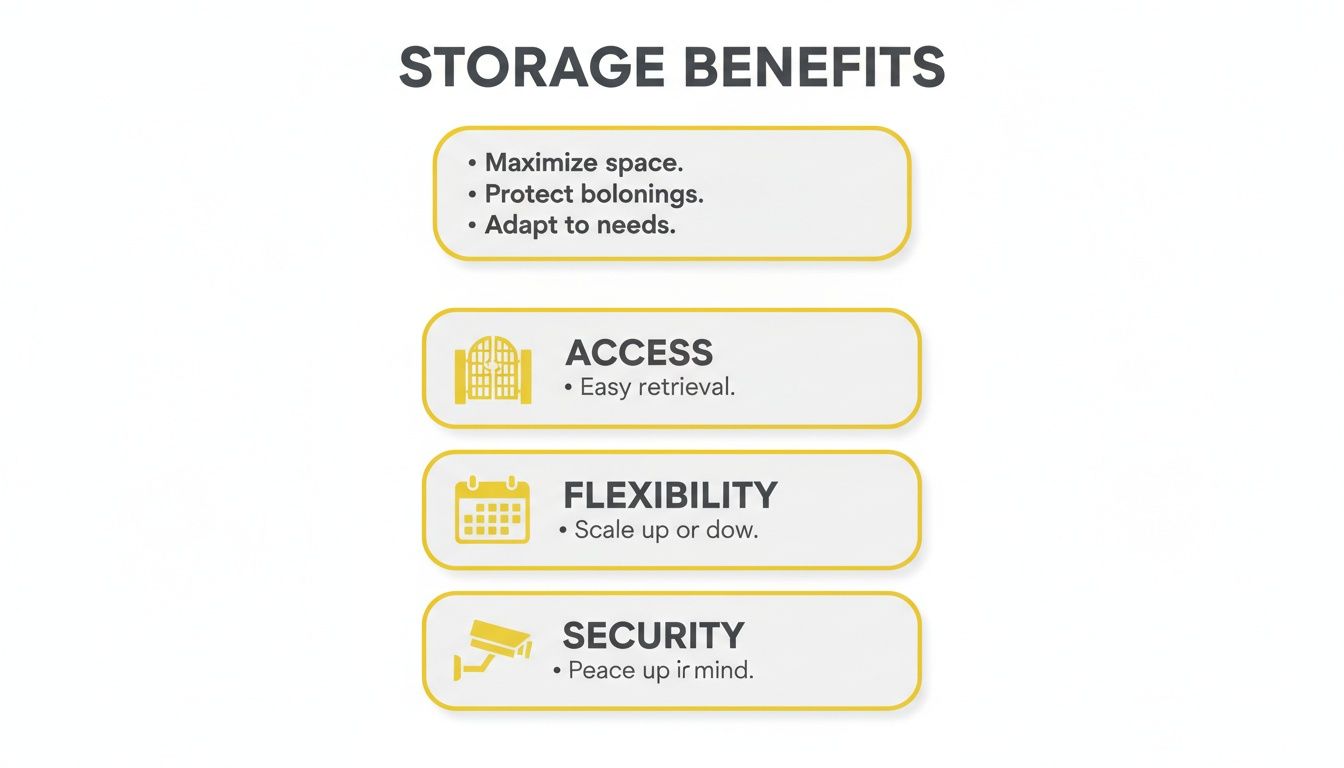
As you can see, it all comes down to easy access, flexibility for timelines that might change, and solid security for your peace of mind. Getting the size right is the first step, but making sure the facility delivers on these promises is just as important. A few minutes spent matching the unit to your actual needs will save you money and stress down the line.
Your Non-Negotiable Checklist for Security and Access
When you're hunting for short-term storage, peace of mind is the real prize. A bargain price means absolutely nothing if the facility is a security nightmare. Before you even think about signing on the dotted line, you need to be sure the provider takes protecting your stuff as seriously as you do.
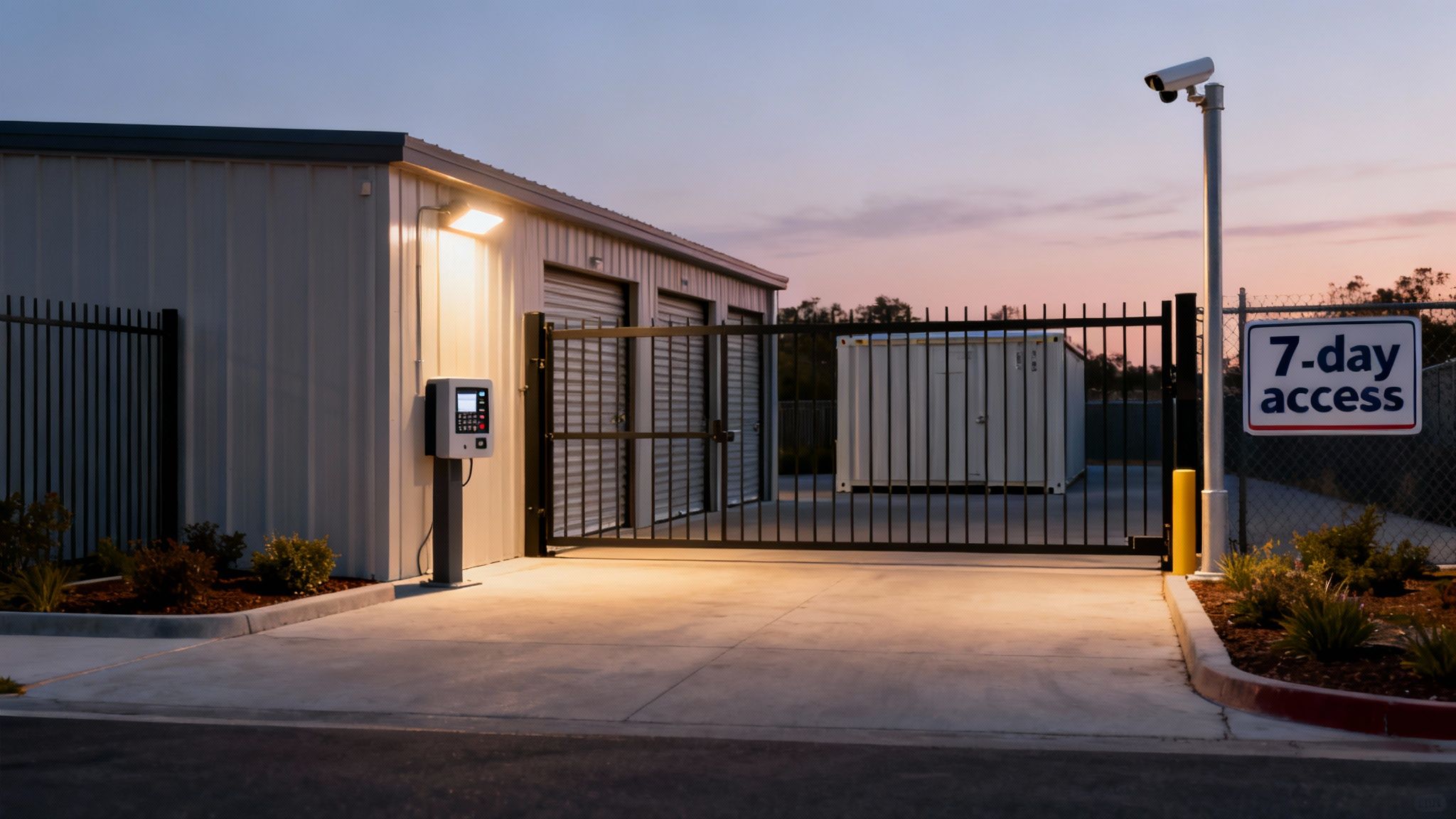
The best sites I've seen use multiple layers of security, creating a tough nut for any would-be thief to crack. Don't just rely on their website claims; ask direct questions and, better yet, go and see it for yourself.
Start with the basics: the perimeter. A fully gated and fenced compound isn't a bonus feature; it's the absolute minimum you should accept. This means only customers and staff can get onto the site, which immediately weeds out anyone just wandering by.
Evaluating Key Security Features
Once you're past the main gate, there are a few other things that are completely non-negotiable. Your personal checklist should cover surveillance, lighting, and the actual quality of the units.
- Comprehensive CCTV Coverage: Are there cameras everywhere? I’m talking high-definition cameras covering the entrance, exit, and all the corridors and laneways. Ask them if it’s actively monitored and how long they keep the footage. If something did happen, this is your first and best line of evidence.
- On-Site Staff Presence: An automated system is one thing, but having actual people on-site during opening hours is a huge deterrent. It means there's someone to keep an eye on things and respond instantly if an issue pops up.
- Sufficient Lighting: A dark, shadowy facility is an invitation for trouble. If you can, swing by in the evening to see what it's like. A well-lit site with bright, motion-activated lights not only puts off intruders but also makes you feel much safer if you need to pop in after dark.
A truly secure storage unit is more than just a locked box. It’s the combination of physical barriers, active surveillance, and a real commitment to safety that lets you relax, knowing your belongings are in good hands.
Why Access and Unit Quality Matter Just as Much
Security isn't just about keeping people out: it's also about letting you in when you need to be. For a tradesperson who needs their tools for a 7 a.m. start, or a family in the middle of a weekend move, 7-day access is essential. Always double-check the specific access hours to make sure they actually work for your schedule.
Think about pure convenience, too. Is the facility a pain to get to? Being a quick and simple drive from major routes like the A52 in Nottingham or the A45 in Nottingham can save you a surprising amount of time and fuel over the weeks or months you're using it.
Finally, take a good, hard look at the unit itself. A quality container or indoor unit needs proper ventilation to stop damp, mould, and mildew from ruining your things. Check that the locking mechanism is solid and that the whole unit is clean and dry before you start moving anything in. It’s this kind of attention to detail that tells you you're dealing with a provider who genuinely cares.
Making Sense of Short-Term Prices and Contracts
Let's be honest, nobody enjoys reading the fine print on a contract. But when it comes to short-term storage, a quick look at the agreement can save you a lot of headaches and money down the line. The good news is, for temporary needs, it should be straightforward.
So, what actually determines the price you pay? A few things, really. Size is the big one – a roomy 20ft container is obviously going to have a different monthly price tag than a compact 9 sq ft locker. Location matters, too. Units in facilities with easy access to major routes or close to a city centre often have higher demand, which can be reflected in the price. The length of your stay can sometimes play a role, but for short-term use, flexibility should always trump long-term discount incentives.
What a Good Short-Term Contract Looks Like
When you're searching for storage, the contract is just as important as the unit itself. You're looking for flexibility, not a long-term commitment.
Here’s what a solid, customer-friendly agreement should offer:
- A Rolling Monthly Agreement: This is the absolute ideal for short-term use. You simply pay month-to-month, meaning you aren't locked into a lengthy lease. You have the freedom to leave whenever you're ready.
- A Simple Notice Period: You shouldn't need to give months of warning. A fair notice period is usually just one or two weeks. This makes it incredibly easy to end your agreement when your plans change.
- The Ability to Change Unit Size: Sometimes you misjudge. You might find you need a bit more space, or you've managed to clear out more than you expected. A good storage provider will let you swap to a bigger or smaller unit without charging you a load of admin fees.
Watching Out for Hidden Costs
A trustworthy company will be completely upfront about what you'll be paying. It’s always smart to ask about any potential costs beyond the monthly rental fee so you can budget accurately. The most common extras are a one-time security deposit (which you should get back) and the cost of a decent padlock.
The one thing you absolutely must clarify is insurance. While the facility secures the site itself, your belongings inside the unit are your responsibility to insure. Most places will ask to see proof of insurance before you can start moving in.
This is your safety net, protecting your possessions against things you can't control, like fire or flooding. Some facilities offer their own specialist insurance policies for convenience, but it's also worth checking if your current home contents insurance already covers items stored away from your property.
For more practical advice on keeping your budget in check, our guide on finding cheap storage units near me has plenty of extra tips.
When Does Short-Term Storage Actually Make Sense?
It's one thing to know that storage units exist, but it's another to see how they solve real-life headaches. Most people searching for "short term storage near me" aren't just looking for extra space; they're in the middle of a big, often stressful, life change. Let’s look at a few common situations you might find yourself in around Nottingham and Nottingham.
Say you're a student at the University of Nottingham. Summer is just around the corner, and the thought of dragging three years' worth of books, a desk, and a mountain of kitchen gear back home is just exhausting. Not to mention, you'll have to haul it all back in September. This is where a small, secure storage unit becomes a lifesaver – think of it as your own personal locker for the holidays, saving you time, money, and a serious amount of hassle.
Now, imagine you're a family in West Bridgford, getting your house ready to sell. The estate agent’s advice is ringing in your ears: declutter to make the rooms look bigger and help buyers picture themselves living there. A temporary storage unit is perfect for this. You can stage your home to perfection, moving out excess furniture and personal bits and bobs without having to sell or give away things you love.
A Game-Changer for Local Trades and Businesses
It's not just personal life that gets complicated; businesses and tradespeople often need flexible space just as badly.
Take a self-employed plumber from Daventry. Their van is probably crammed to the ceiling with tools, copper pipes, and a spare boiler. Renting a proper workshop is a huge expense with a long lease you just don't need. A simple drive-up container, on the other hand, gives them a secure, ground-level spot to keep equipment and materials safe, ready to grab whenever a job comes in.
Or think about a small e-commerce business operating out of the Brackmills industrial estate in Nottingham. It's November, and a massive delivery of Christmas stock has just landed. Rather than letting boxes take over their entire workspace (or their living room), they can pop it all into a short-term unit. It keeps things organised during the rush, and they can simply give up the space once the seasonal peak is over.
The real beauty of the right storage solution isn't just the space itself; it's the immediate flexibility it gives you. For personal or business needs, it perfectly bridges the gap during those tricky transitional periods, letting you get on with things without a massive financial commitment hanging over you.
The Stats Behind the Stories
These examples aren't just hypotheticals; they reflect a huge, growing need. Container storage is especially popular for short-term lets across the East Midlands.
Industry figures tell a compelling story. While 75% of self-storage users are residential, a surprising 24% of people actually run a business from their unit. For many of the 680,000 UK businesses using self-storage, it’s a smart financial move, cutting overheads by 40-60% compared to leasing a traditional warehouse. You can dig into more of these UK storage stats over at The Box Co.
One of the most common reasons people need a unit is for short term storage between leases, which turns the chaos of a house move into a much smoother, less frantic experience. Each of these situations shows why flexible contracts and a good range of unit sizes are so important. It’s all about finding a service that fits your life, not forcing your life to fit a service.
Packing Tips for a Hassle-Free Move into Storage
You've found the perfect short-term storage unit: now for the final hurdle, getting everything packed and moved in. A bit of planning at this stage can be the difference between a day of chaos and a smooth, organised move. It’s not just about keeping things safe; smart packing makes your life so much easier when you need to pop back and grab something.
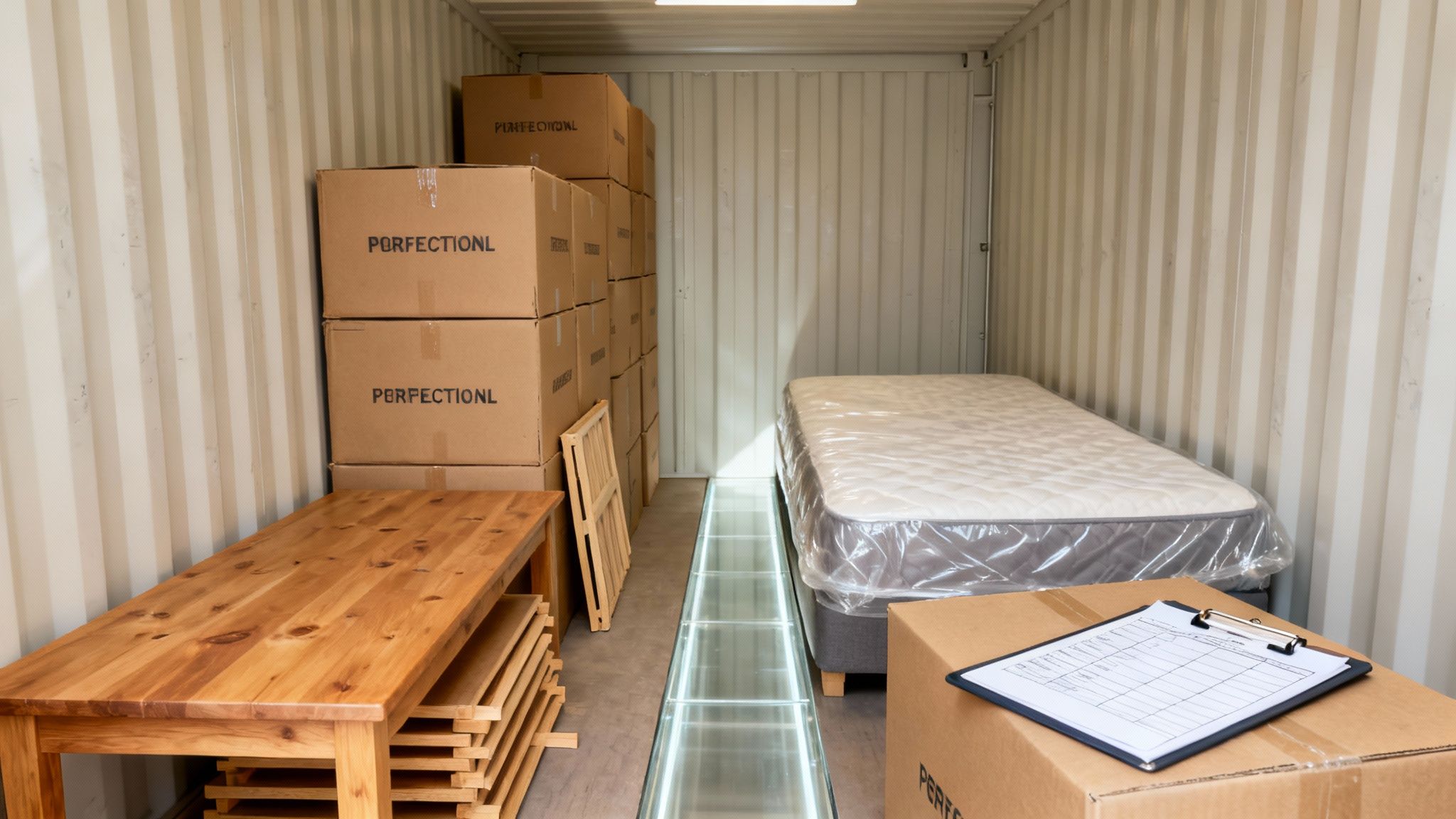
First things first, get the right materials. I always recommend using sturdy, uniform-sized boxes. It’s a simple pro tip that pays huge dividends. They're much easier to stack than a random assortment of supermarket cast-offs, allowing you to maximise every inch of vertical space without worrying about a box-avalanche.
Next up is labelling. Be specific! Instead of a vague "Kitchen," go with "Kitchen – Pots & Pans" or "Kitchen – Mugs & Glasses." It might feel like a chore now, but you’ll be patting yourself on the back when you’re not forced to rip open ten boxes just to find the coffee pot.
Smart Organisation Inside Your Unit
How you load your unit is just as crucial as how you pack the boxes. A classic rookie error is to just shove everything in from back to front, completely blocking off access. Don’t do it. The trick is to think like a librarian and create a small aisle.
A little walkway down the middle or along one wall gives you access to everything. It means you can retrieve a specific box without having to empty the entire container first. For a more detailed guide on this, our moving house packing checklist breaks it all down step-by-step.
Always place your heaviest and bulkiest items at the back and along the sides of the unit: things like sofas, fridges, and wardrobes. This builds a stable foundation. Lighter boxes and anything you think you might need sooner rather than later should go near the front for easy access.
A well-organised unit saves you time and frustration. By creating a clear inventory and a logical layout, you transform your storage space from a cluttered box into a manageable extension of your home.
Protecting Your Possessions
Finally, don’t skimp on protecting your belongings from potential damage. This is non-negotiable for anything fragile, valuable, or sensitive to dust and moisture.
- Dismantle Furniture: Where you can, take apart bed frames, tables, and shelving units. It saves an incredible amount of space and makes the items much easier to carry without scuffing them (or your walls). Keep all the screws and bolts in a labelled bag and tape it securely to the largest part.
- Protect Fragile Goods: Be generous with bubble wrap, packing paper, or even old towels for your glassware, plates, and ornaments. Make sure you mark these boxes clearly as "FRAGILE" on every single side.
- Use Dust Covers: Proper dust covers are a must for sofas, armchairs, and mattresses. They keep the dirt and moisture out but let the fabric breathe, which stops that musty smell from developing over time.
Got Questions? We've Got Answers
If you're searching for "short term storage near me," you probably have a few questions. It’s completely normal. Getting straight answers is the key to feeling confident that you’ve found the right place to keep your belongings safe and sound. Let's tackle some of the most common ones we hear.
How Long Do I Have to Rent a Unit For?
Most of the time, the shortest period you can rent a storage unit for is one month. But don't let that sound like a long commitment. Here at Container Self Store, we run on flexible, rolling contracts.
This means you’re never tied down. When you’re ready to move your things out, you just give us a bit of notice, usually only a week or two. It’s perfect for those unpredictable situations, like waiting for house sale dates to line up or dealing with a temporary stock surplus for your business. You get the space you need without the financial headache of a long-term lease.
Do I Really Need Insurance?
In a word, yes. Insuring your goods is something we strongly advise, and it's nearly always a standard requirement. While a top-notch facility provides robust security for the entire site, your own insurance policy is what protects the actual contents of your unit from things you can't predict, like fire or flood damage.
Think of it this way: our security protects your unit from the outside, but your insurance protects your valuables on the inside. It’s a crucial two-part system for complete peace of mind.
For your convenience, many storage providers can offer you a specialised insurance policy. It's also a good idea to check your current home contents insurance, as some policies cover items stored away from home. Just make sure to confirm everything with the facility before you sign on the dotted line.
When Can I Access My Stuff?
One of the biggest perks of modern self-storage is the flexible access. Most places, including ours, are open seven days a week, typically from early morning until late evening. We know life doesn’t stick to a 9-to-5 schedule.
True 24/7 access is rare because of the high-level security protocols needed to keep the site safe overnight, but the long daily opening hours are designed to work for everyone. Whether you're a tradesperson who needs to grab tools at the crack of dawn or a family managing a big move over the weekend, you'll be able to get to your unit when it suits you. Always double-check the exact hours for the location you choose.
Ready to find the right storage solution without the fuss? Container Self Store offers secure, flexible, and easy-to-access units across Nottingham and Nottingham. Get a free, no-obligation quote online in minutes and see just how simple it can be. Visit us at https://containerselfstore.com.